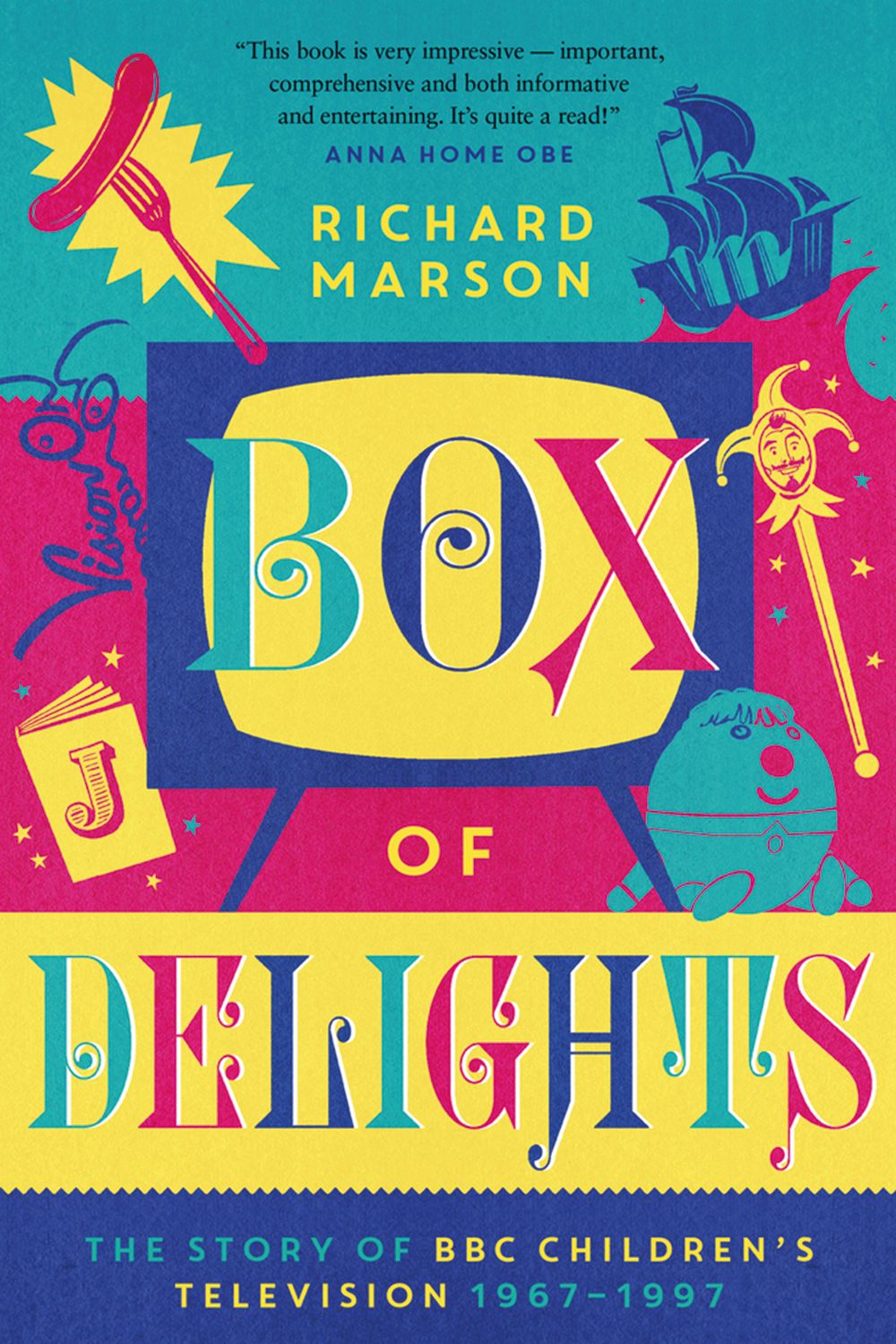
During his downtime while recording episodes of Play School, Johnny Ball would sometimes cheerfully drop-kick Humpty through the round window. That’s just one of the many vivid details contained within Richard Marson’s Box of Delights: The Story of BBC Children’s Television 1967-1997, which serves as both a celebration of and elegy for a lost epoch of creativity pioneered by a colourful gang of mavericks, eccentrics and ideologically dedicated professionals.
A former editor-in-chief of Blue Peter, Marson has authored several excellent books about the ‘golden age’ of British TV, but this may be his magnum opus. It isn’t a nostalgic list-based reference tome – not that there’s anything wrong with those – it’s a meticulously researched, narrative-led piece of history examining the politics and culture of the BBC at a time when the in-house Children’s Department was more or less left to its own ingenious devices.
Read more:
- BBC’s Crongton is a ‘celebration of Alex Wheatle’s incredible life and powerful stories’
- Baroness Floella Benjamin on being Black on TV, Play School and giving hope to children in poverty
- Children’s television has moved online. Parents, be wary
Marson emphasises the important fact that so many of the brilliant producers who thrived during that era were women. He provides detailed character studies of all the key players while also finding room for information on seemingly every single programme the department produced during its heyday.
The epic narrative is anchored by all the behind-the-scenes drama of cornerstones such as Blue Peter, Grange Hill, Jackanory, Newsround, Record Breakers and those Saturday morning live behemoths, the latter of which basically invented a brand new form of TV presentation.
Marson’s mission is ably abetted by an often delightfully indiscreet cadre of interviewees, including Johnny Ball, Zoe Ball, Russell T Davies, Sarah Greene, Chris Packham, Andi Peters, Phil Redmond, Michaela Strachan and Anthea Turner. Their frankness is one of the book’s key assets; at this stage in their lives and careers they clearly have nothing to lose by telling the unfiltered truth as they see it.