H is for Hawk star Claire Foy: ‘I don’t know why we don’t talk about grief more’
Claire Foy plays Helen Macdonald in a film adaptation of their bestselling novel, H is for Hawk
by:
23 Jan 2026
Foy as Helen Macdonald with her hawk. Image: Roadside Attractions
Share
There is no correct way to grieve. Loss is so personal and can feel so unfathomable that no response to it, however unorthodox or unusual, is ever wrong. In their 2014 memoir, H is for Hawk, Helen Macdonald details a year spent training a goshawk called Mabel following the death of their father.
As a meditation on grief and the restorative power of wildlife and nature, the book was superlative. The haunting, lyrical portrait became a bestseller, readers drawn in by the honesty and descriptive brilliance of Macdonald’s writing. A new film adaptation starring Claire Foy is equally captivating – steeped in sadness, but always edging towards the light.
“The privilege of my job is that you get to do these emotionally extreme things, which is sort of an exercise in life, in a way,” says Foy, when she meets Big Issue in Central London.
“This film felt very truthful. And it felt very exposing in a way that was unique in anything I’ve ever done. I don’t really know what that is, and don’t know whether I want to find out. But it feels like a very significant thing for me as a person to do.”
Read more:
Advertising helps fund Big Issue’s mission to end poverty
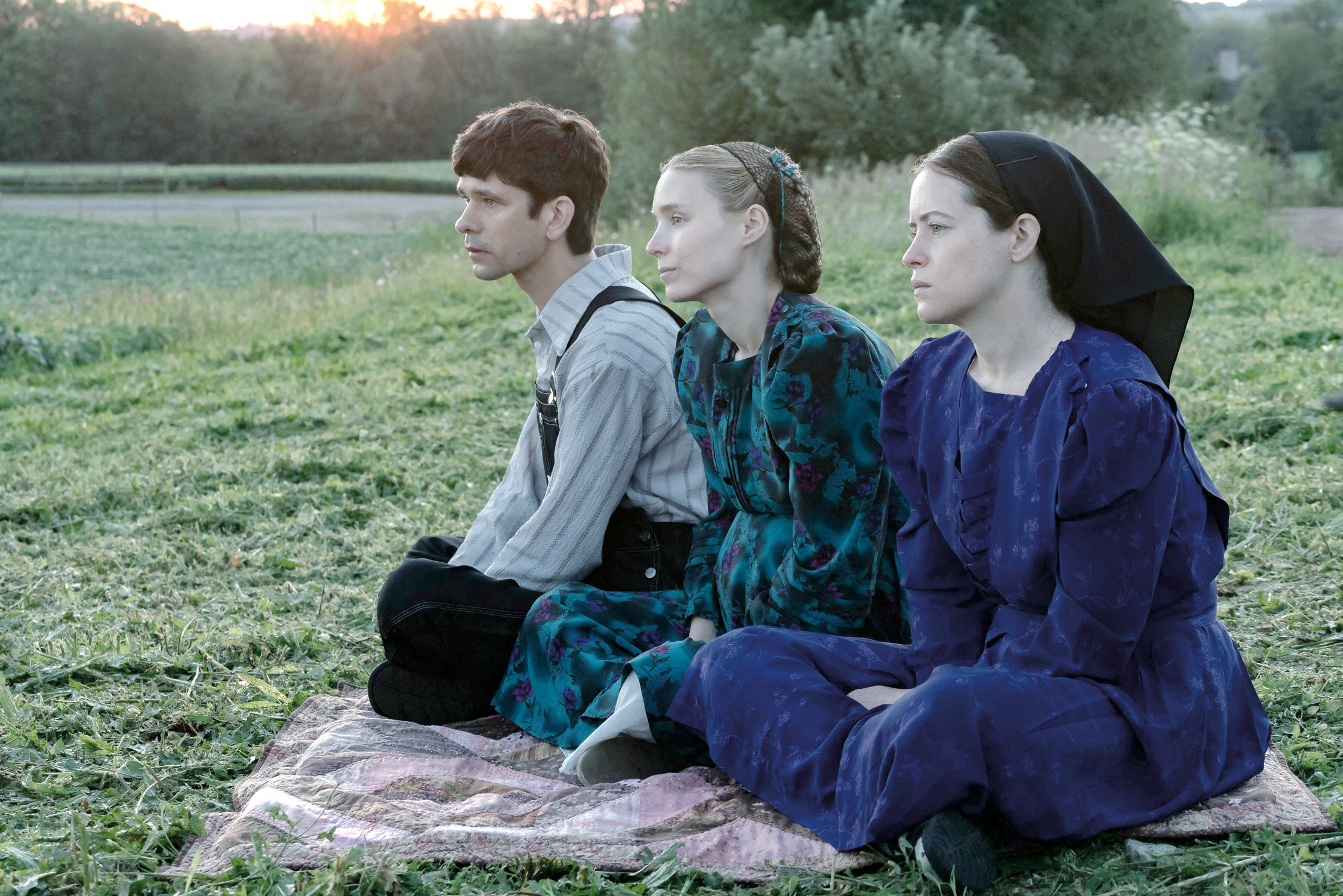
Foy read and connected with the novel while making Women Talking in 2021.
“The way they write is extraordinary and poetic and beautiful – it feels like someone talking where you’re the only person hearing it. But what’s interesting about the community of people who have read the book is that everybody has a strong personal response.
Claire Foy with Ben Whishaw and Rooney Mara in Women Talking. Image: Entertainment Pictures / Alamy
“I had the same experience. Like a lot of people involved in the film, I had a weird, the-universe-stepping-in-to-make-it-happen thing where I had a very personal connection to the book. It felt like something I had to do. You couldn’t make it up. Lots of people shared nuts examples of how they connected to the film.
“I would have been pretty stupid not to do it anyway, with this pedigree – I’d worked with [director] Philippa Lowthorpe before on The Crown and was working with producer Dede Gardner [Moonlight, 12 years A Slave, Selma] on Women Talking and she has the most impeccable taste of anyone I’ve ever worked with. But I didn’t feel like I had a choice. You’re doing it!”
There is a sly humour throughout the film, as in the book. Mabel the goshawk begins to take over Helen’s life. The respected Cambridge fellow, who teaches the philosophy of science, leans into her evolving identity as something of a local eccentric (the film is set in 2007, before Macdonald came out as non-binary).
Advertising helps fund Big Issue’s mission to end poverty
There she is, wandering through town with Mabel, blindfolded, perched on gauntlet. Oh, who’s that arriving at a faculty cheese and wine event with an unusual plus-one on her arm?
H is for Hawk invites big questions. Is Helen deferring grief by throwing all her emotion into training this goshawk? Or is she in denial? Is it an attempt to get closer to her father, a renowned photographer whose wonder at the world around him was passed down to his daughter?
Or is this what grief is – all these things and so much more, and Foy’s fictionalised version of Helen is merely living through grief in the only way that makes sense?
“That’s the beautiful thing,” says Foy. “The idea that you can grieve well and there is a process to it is something Helen mentions in the book. There’s a scene where they say they bought every single self-help book to become the most well-read grief-stricken person you could imagine. It was a way of academically going, I’m going to tick all these boxes of how to grieve and then I’ve done it. I’ve grieved.”
In preparation, Foy got to know Macdonald via video calls and emails, but they didn’t meet in person.
“They were very gracious and funny and generous,” she says. “And the family was incredibly supportive. We have a lot of their father’s photography and cameras in the film. A lot of the set dressing was stuff from Helen’s flat – yes, the sabretooth tiger was theirs. So there was an authenticity like nothing I’d ever done. But I didn’t want to infiltrate Helen’s psyche, the Helen of now, because I had the book.”
Advertising helps fund Big Issue’s mission to end poverty
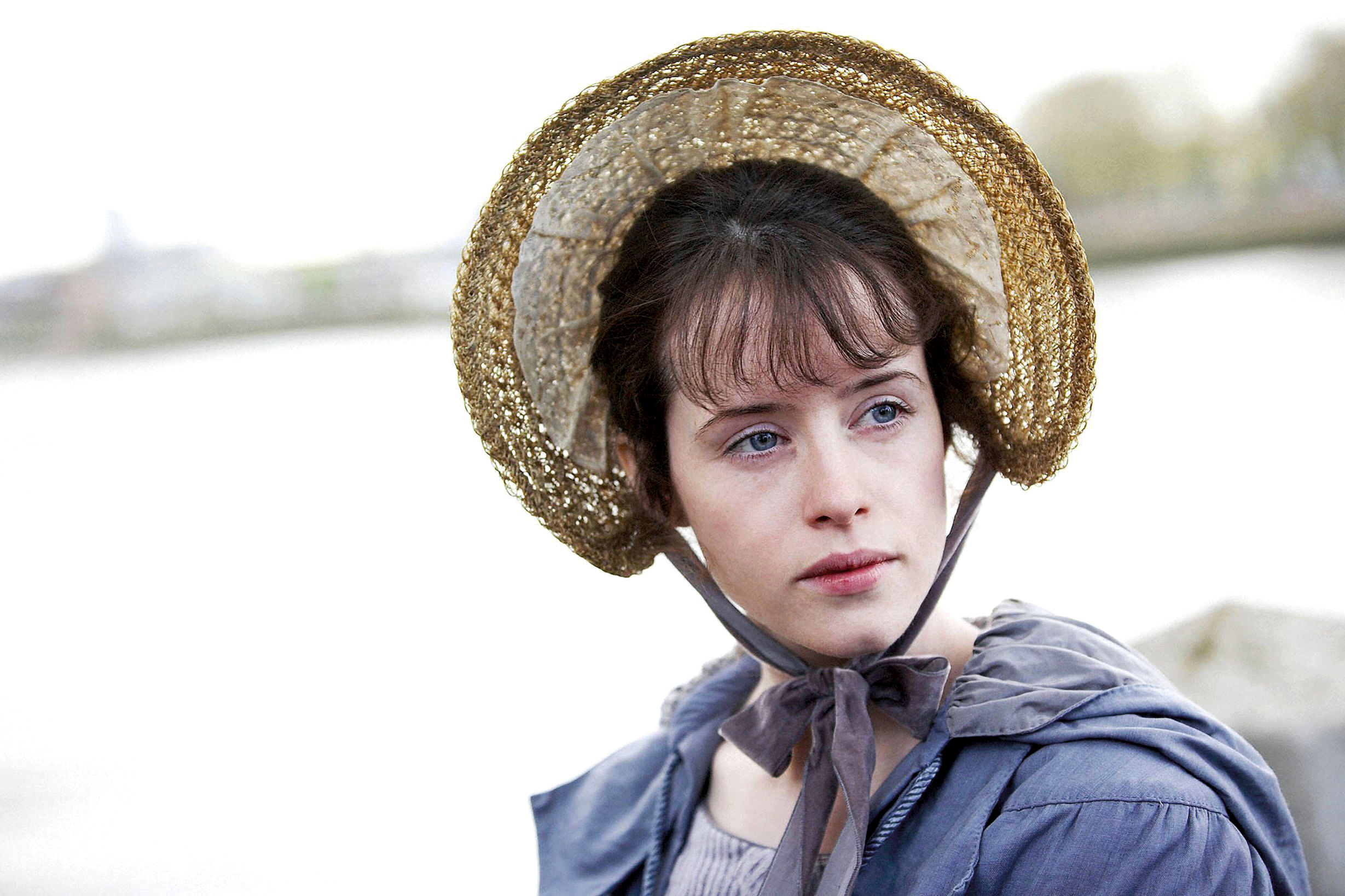
Claire Foy in her breakthrough role in Little Dorrit. Image: BBC / Album / Alamy
And having spent all this time playing Helen and connecting with their grief?
“I think the response to grief in the film is totally understandable,” she says. “The more we could allow for that in our lives, the better. In our culture, there’s such a thing of moving on, getting on with things, which is such bullshit.
“You have got to keep on carrying on, but repressing things is not good for anybody. It’s going to come out one way or another after a catastrophic loss.
“I think it’s a beautiful way of grieving. Helen now looks back and says, ‘Don’t do what I did, it wasn’t the wisest thing.’
“They ended up damaging themselves significantly, emotionally. But I don’t think it’s disproportionate.
“The more we lean into the fact that these things are fucking awful the better. I don’t know why we don’t talk about grief more. And it doesn’t have to be with someone dying. It can be any seismic moment where you were someone up until that point and then you’re someone else afterwards and you calcify around the pain, in a way, to keep going.”
Advertising helps fund Big Issue’s mission to end poverty
Helen’s mother, played by Lindsay Duncan, is quietly, supportively appalled by the state of her house – the kitchen becoming increasingly squalid as Mabel makes herself at home. Through it all, there is a strong friendship with best friend Christina, played by Denise Gough, who shows up when it’s difficult, finds words when there is nothing to say.
And to make the grief even more visible, more heartwrenching, the film paints a picture of the relationship between Helen and her father, Alisdair, played by Brendan Gleeson. We see how the renowned photographer made the natural world come alive to Helen through a sense of wonder and joy that age never diminished.
“He was an incredible father and role model and showed them how to navigate the world in ways you could only dream of,” Foy says.
“That was a beautiful thing to share. And Brendan Gleeson is a really easy person to grow attached to. I only did about three days filming with him, but I drank him in as much as humanly possible. He’s a pleasure to be around, warm and funny and kind, all the things you’d expect. You miss him when he’s not in the room.
“I have such admiration for the reason he wanted to make the film. He did it purely because he wants to portray good men – and that’s not often the case.”
But Foy spent a lot more time with her other co-stars. The film wouldn’t have been possible, or nearly so impactful, had the relationship between human and hawk not been captured so vividly.
Advertising helps fund Big Issue’s mission to end poverty
Once Helen acquires the hawk, from the tentative first attempts to handle Mabel to the first time we see the goshawk flying free, hunting in the wild, Foy is in every scene. We see Macdonald’s fear, and obsession, and love.
“I feel like I’m ‘before and after the bird’ as a person as well,” says Foy. “I thought I would be scared. But I was at a point in my life where I was able to surrender to it. I didn’t go in with preconceptions.
“Because [goshawks] don’t act. They’re not trained like horses or dogs can be. They will only do things when they feel safe. Standing on one leg, rousing – which is when they puff out their feathers – is them going, ‘I’m happy’. So when we captured that on screen, they felt safe, which was the biggest compliment.
“There were natural moments of feeling uncomfortable, because these are wild animals and I should feel bloody uncomfortable. It’s like having a tiger in the room.
“But I felt comfortable in the space of being patient, protective and respectful of these creatures, that they were the most important focus. I found that easy. Because you’re so humbled as a human being, like, ‘OK, I realise you are the superior being. I get it!’”
So how has she changed? “I now look upwards. I’m now looking at the sky. Knowing, even in my tiny way, how they navigate the world is like seeing into a different universe. Because we’re just visitors, we’re ruining everything for the natural world – it gives you that perspective, which is a huge shift.”
Advertising helps fund Big Issue’s mission to end poverty
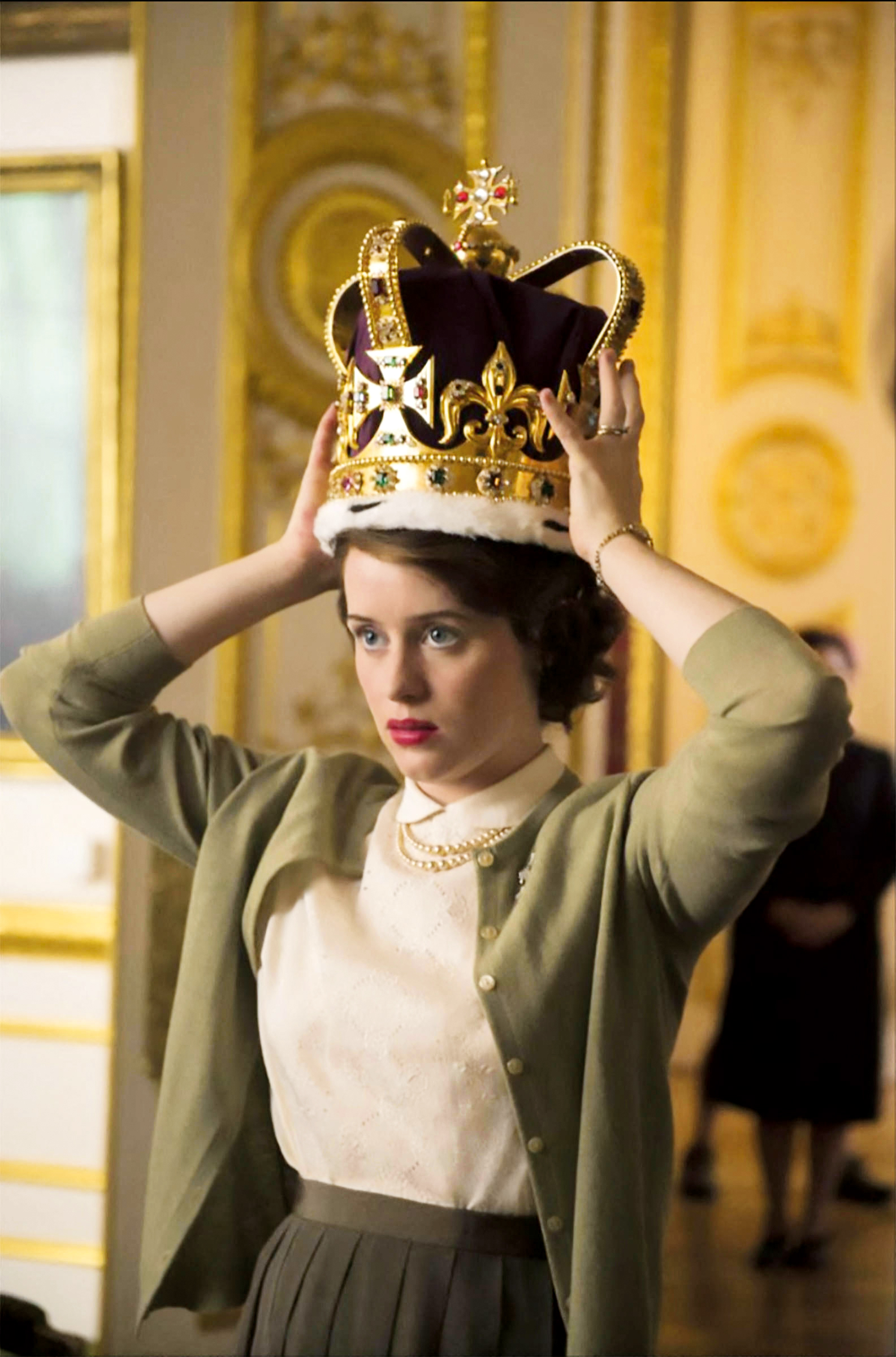
Foy as Queen Elizabeth II in The Crown. Image: Pictorial Press Ltd / Alamy
Foy has been at the upper end of the acting industry since her breakthrough starring role in Little Dorrit, alongside Matthew Macfadyen, Russell Tovey and Tom Courtenay.
Playing Ann Boleyn in Wolf Hall, then Queen Elizabeth II in the first two series of The Crown, took her to a wider, global audience. Foy won two Emmy Awards for the latter.
But she cites joining Jessie Buckley, Rooney Mara, Frances McDormand and Ben Whishaw in an adaptation of Women Talking by the novelist Miriam Toews, who also knows a thing or two about writing about grief, as the one that shifted the dial.
“Women Talking had a strong effect on me,” she says. “It changed what I thought that I could do as an actor.
“It was trying to start a conversation. And I was like, oh, hang on, I can be part of things that move the social dial in some way. Not like I’m affecting society. But people can come and see it, they can be moved, and it can change the trajectory of what they thought about themselves.
“Then I did All of Us Strangers and that was compounded even more.”
Advertising helps fund Big Issue’s mission to end poverty
That 2023 film, starring Andrew Scott and Paul Mescal, was another meditation on grief and connection, although as stylistically different from H is for Hawk as it’s possible to get. Looking ahead, Foy is keen to continue making films that offer real insight.
“I’ve definitely changed my concept of what a film that I’m in can do,” she says. “I always knew other people could do them.
“Films cost a lot of money and I don’t believe in making them for the sake of it. So they have to have meaning for me at this point in my career.”
She pauses and grins. “But maybe that’s a selfish way of me believing that what I do is in some way worthwhile and not just me prancing around in other people’s clothes… which was basically my lifelong ambition.”
Advertising helps fund Big Issue’s mission to end poverty
Change a vendor’s life this winter.
Buy from your local Big Issue vendor every week – and always take the magazine. It’s how vendors earn with dignity and how we fund our work to end poverty.