Read more:
The Tavistock Clinic has a special interest in children and trauma and was itself born out of the horrors of World War I, and the treatment of shellshock, but it felt particularly difficult to talk about this subject. What was it about the topic of Palestine and Israel that was hard to tolerate in a group that otherwise welcomed a diversity of topics?
It felt important to find ways to explore this, because it appeared to be a microcosm of the greater global macrocosm of silence and indifference. There were no preordained objectives or agenda, but rather a sense that we should come together as a work-discussion group, having in common that we are all child mental health professionals – who had either trained or worked at the Tavistock Clinic.
Colleagues joined for different reasons, which you can read more about through their contributions. Tavistock psychiatrist Colin Murray Parkes, who died in 2024, linked grief, love and attachment to the cycles of trauma and violence that drive conflicts, remarking that to resolve them we need to cross the divides. In a process to find resolution, real peace and restorative justice, in the words of ‘terrorist-turned-peacemaker’ Nelson Mandela, your enemy becomes your friend.
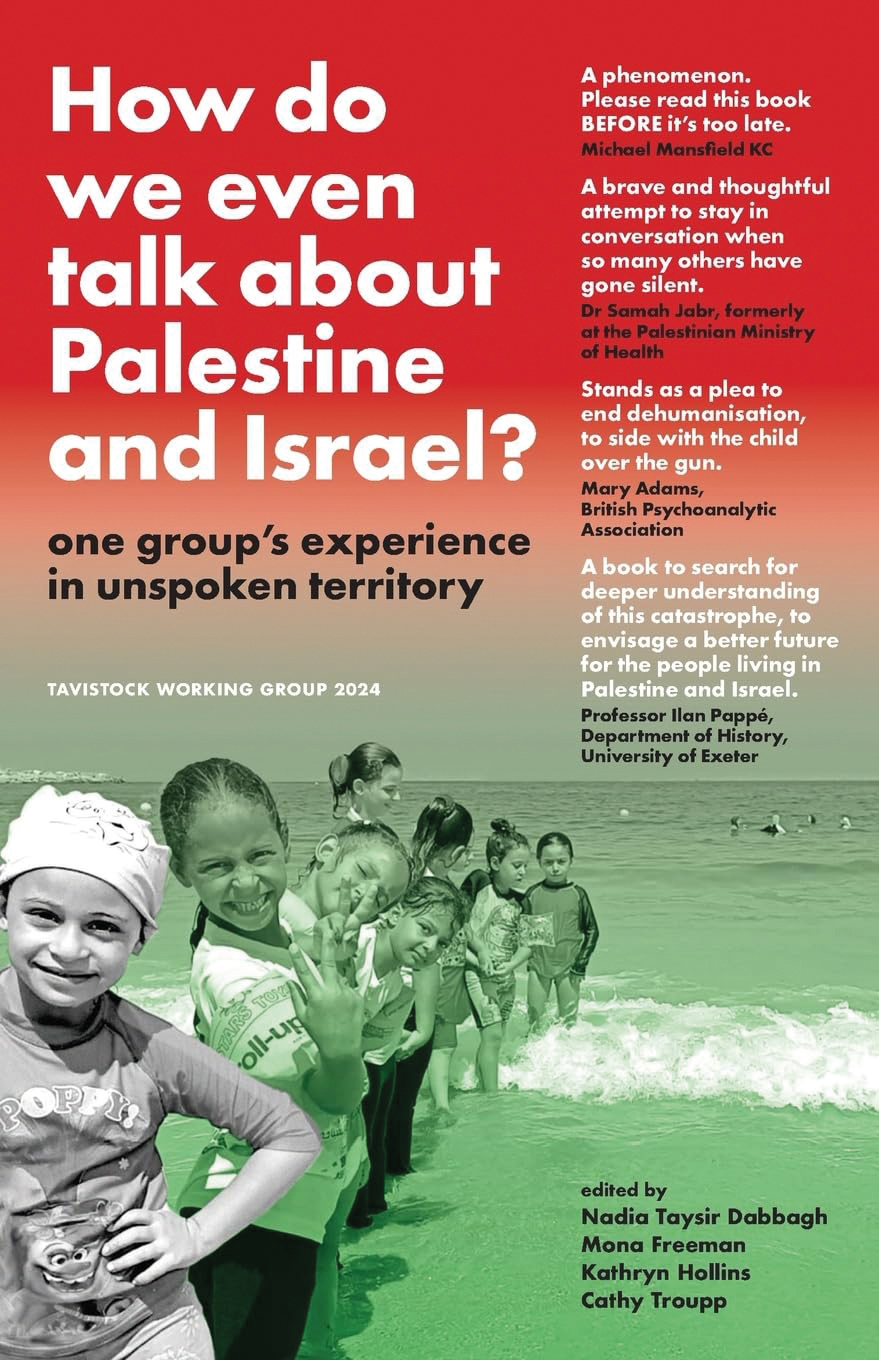
Of course we couldn’t produce answers, but we could pose questions and try to examine as honestly as possible how these events affect both the victims and aggressors, as evidenced in our book How Do We Even Talk About Palestine and Israel? – and what it told us about ourselves and about history. Is it useful to discuss such matters in a group? Can minds be changed? There was friction, there were deep disagreements and pain.
Some contributors came from Jewish or Palestinian heritage, others from different but divided and conflicted backgrounds. We have connections with history going back to the Balfour Declaration and to the Holocaust: a mother who lived through Kristallnacht and came to England on the Kindertransport; a father with shrapnel injuries from a grenade in Jaffa exiled in the Nakba.
Advertising helps fund Big Issue’s mission to end poverty
Individually and personally, we reflect on our participation in the group process. We express our complex feelings and evolving reactions through poems and essays, family memories, historical reminders and philosophical arguments.
The resultant anthology urges us all in the direction of sense and empathy, and a fuller understanding of the suffering before our very eyes. Mohammed el-Kurd’s poem This is Why We Dance is about the delicate tightrope act of speaking out. It was what first highlighted the silence and the need to talk.
Here is an excerpt:
This is why we dance
My father told me, “Anger is a luxury that we cannot afford”
Be composed, calm, still, laugh when they ask you
Advertising helps fund Big Issue’s mission to end poverty
Smile when they talk, answer them, educate them
This is why we dance
Because if I speak, I’m dangerous
You open your mouth, you raise your eyebrows, you point your fingers
This is why we dance
Wounded feet but the rhythm remains
Advertising helps fund Big Issue’s mission to end poverty
This is why we dance
Because no matter how many adjectives you stack upon my shoulders, I define me
Now, this is why we dance
Because even my poetry is not free
Now can you please just tell me
Why is anger, even anger, a luxury to me?
Advertising helps fund Big Issue’s mission to end poverty
How Do We Even Talk About Palestine and Israel?edited by Nadia Taysir Dabbagh, Mona Freeman, Kathryn Hollins and Cathy Troupp is out now (TWiG, £9.99).
Do you have a story to tell or opinions to share about this? Get in touch and tell us more.
Change a vendor’s life this winter.
Buy from your local Big Issue vendor every week – and always take the magazine. It’s how vendors earn with dignity and how we fund our work to end poverty.
You can also support online with a vendor support kit or a magazine subscription. Thank you for standing with Big Issue vendors.