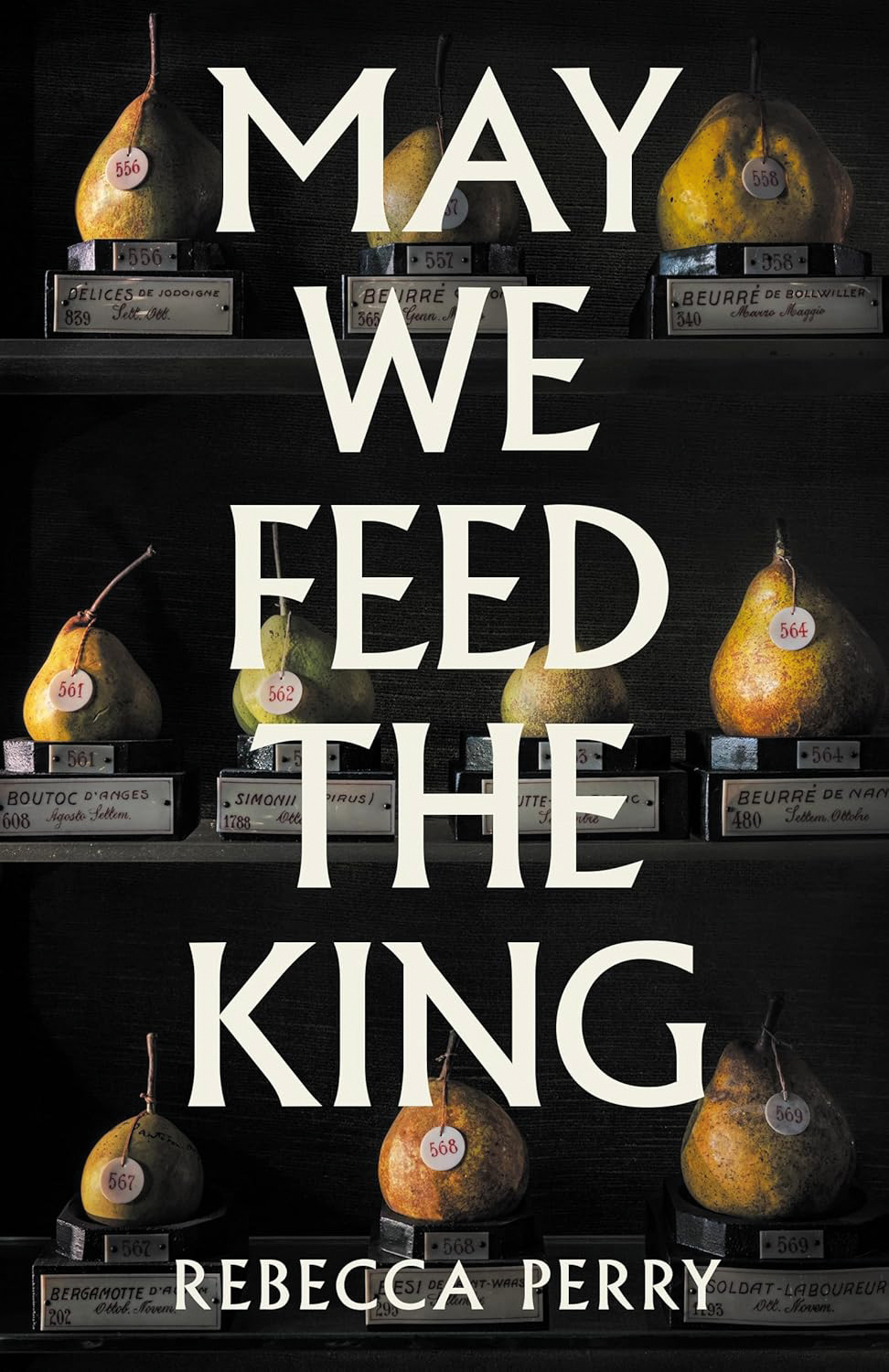
Rebecca Perry’s May We Feed The King is an exquisite debut novel that ghosts over the past and present with sympathetic longing. Reader, I savoured it.
Following an untold grief, the Curator is hired to dress the arid rooms of a palace with historical scenes. Her work is akin to a séance. Tyrannised by details, she carefully places crumbs on tables, rumples bedsheets, and selects the perfect plastic replicas to make a feast. These gestures are designed to summon the palace’s former reality – so visitors might breathe in bygone lifetimes.
But her work requires immersive research. Spilling over chronicles with the resident Archivist, the Curator is astonished by the record of a medieval ruler, slandered by time. Soon, visions unravel, as the King himself wanders into focus; spied through keyholes, casement windows and gossip.
Appointed unexpectedly, this ruler is afflicted by his terrible power, denying the authority his advisers demand of him. He wishes for freedom again – for a monarch cannot shit, eat or exist without being served – and observed. Only in sleep is he alone.
Read more:
- Biography of X review by Catherine Lacey: ‘A stroke of genius’
- Titanium Noir by Nick Harkaway review: A visionary piece of speculative fiction
- How church, state and monarchy are inextricably bound
The court shivers with rumours about his queer desires, eyeing the freedoms he permits his wife. His council is bewildered by his refusal to fund brutal conquests and furnish noble coffers. All lavish meals are eaten by servants; for his sorrow cannot be fed.