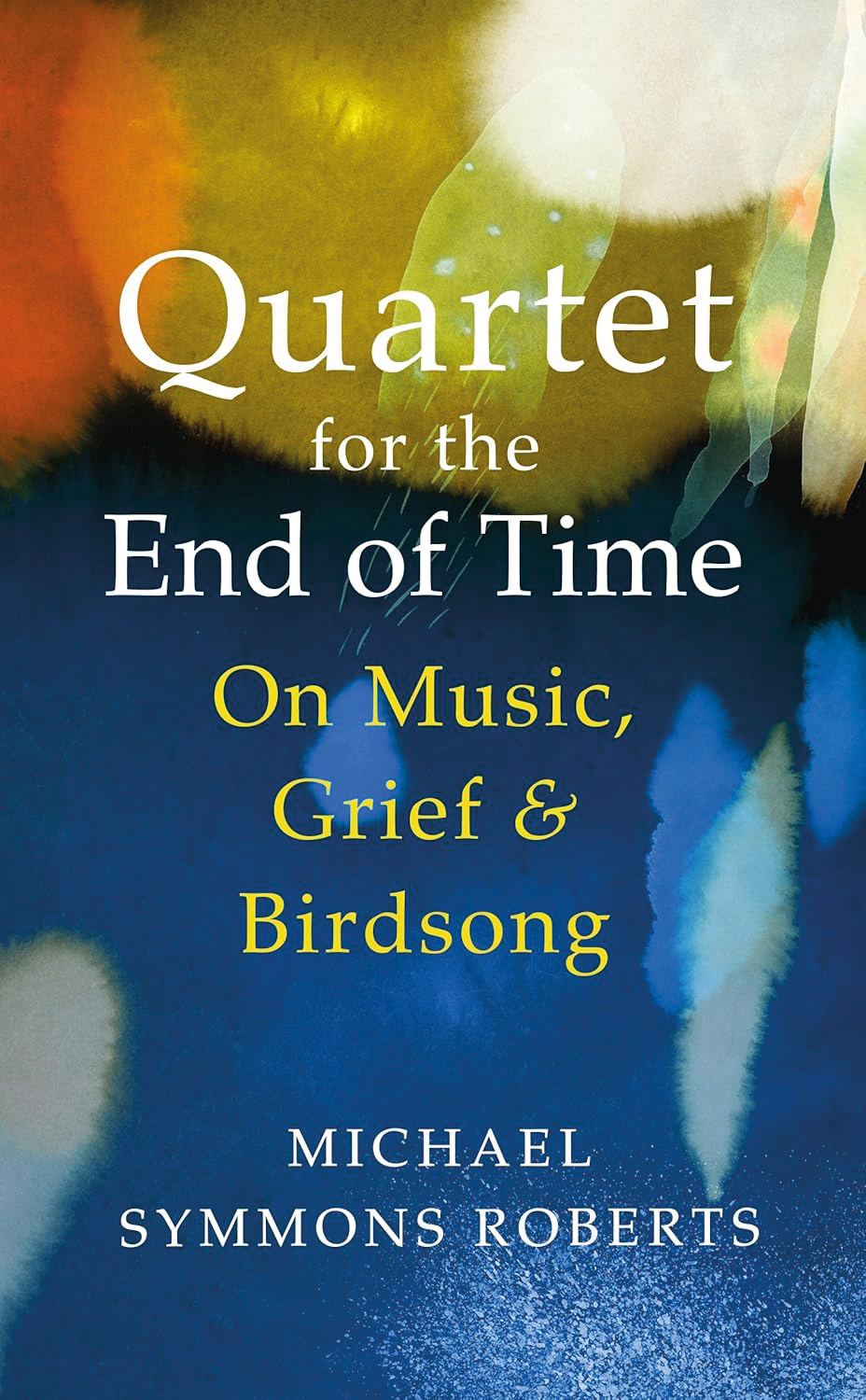
This is a book of gravitas, wrangling with some of the most profound existential issues regarding what it means to be human. Hardly an essential festive fireside read you might think, but Michael Symmons Roberts’ engaging sense of awe and lightness of touch make it just that, and so much more.
Ostensibly this is an examination of Messiaen’s Quartet for the End of Time and its composer, but Symmons Roberts also excavates his own personal grief, regrets he can’t shake, and his connection with music, and how that changes according to experience. It is quite a feat by the award-winning poet; moving, intelligent and thought-provoking,
Symmons Roberts has enjoyed a long relationship with the famous Messiaen piece, first coming across it as a teenager when he fell in love with the title in a record shop. He became obsessed with this wild, mercurial composition and determined to investigate its magic. As he dug deeper in his quest he found his own life unexpectedly thrown into relief by the power of the Quartet and soon he was writing about his own loss, faith and about the different ways music and sound – birdsong, spoken poetry, radio silence – come into, and impact upon our lives.
Read more:
- From rowdy forest animals to wig-loving goths: These are the best children’s books of 2025
- We’re Going on a Bear Hunt creators reunite to tell new, exclusive Christmas tale for Big Issue
- Our Evenings by Alan Hollinghurst named Big Issue’s book of the year for 2024
The book begins with Symmons Roberts dropping the ashes of his parents in Lake Coniston and saying a prayer. He awakes in a panic in the middle of the night, suddenly afraid of allowing his parents to drift and fade away. The book moves backward and forwards from these moments of horror and sorrow to the tale of the author’s relationship with Messiaen’s masterpiece, a composition he describes as “hypnotic, furious, at times ecstatic then achingly spare and still”. (Not a bad description of Symmons Roberts’ writing actually.)
Messiaen’s own notes resemble Symmons Roberts’ prose, the composer’s synaesthetic brain conjuring up “confetti, light gemstones, and colliding reflections”. Philosophical queries about how one should prepare for the end of time and contemplate the finite nature of life sit on the page next to appreciations of birdsong.