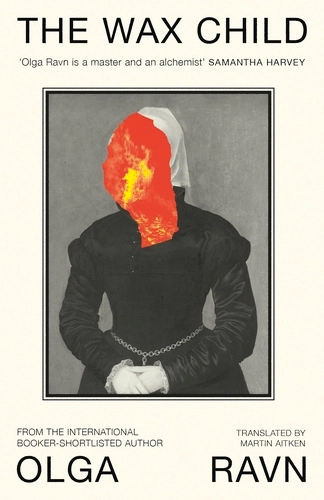
Are we really in the devil’s golden age as they say we are?” someone asks in the midst of Olga Ravn’s third novel The Wax Child. It is a question just as welcome today, with Donald Trump in the White House and alt-right rallies fuelled by fear, as it was at the time of the Aalborg witch trials.
The novel, adapted from Olga Ravn’s play based on the same period of Danish history, is narrated by a wax child, a small inanimate object created by Christenze Kruckow, the noblewoman who stands accused of witchcraft. Omniscient and yet helpless, the wax child has no choice but to watch as her mistress and fellow weird women are placed on trial for their differences.
Ravn never portrays these women as innocent, but what really is their crime? The witches of Aalborg stand accused of asking a wife if her husband is still beating her (a most unchristian thing to do), stealing to ensure their survival, being able to bear children when others cannot and, in the most ludicrous cases, being skilled weavers.
Among these so-called crimes, they have been known to fornicate and defecate with whomever and wherever they please. These women are certainly not pious damsels, but nor are they violent criminals, it is their flaunting of liberty that threatens the king’s authority.
The Wax Child shares much with AK Blakemore’s The Manningtree Witches, not only due to the historical foundations of the novels, but because both are clearly inspired by Silvia Federici’s writing. Alongside the poetic prose, which borrows from spells found in grimoires of the 17th Century, there is an understanding that these women on the outskirts, capable of healing and surviving without society’s acceptance, were feared and persecuted for their independence.
While Blakemore’s work keeps the novel’s traditional format, Ravn’s reads more like a collection of soliloquies and chants, containing juicy rumours and witness statements plucked from the page of history, recalibrated for the stage and now the page.