And yet, the series’ LGBTQ+ representation has, so far, been limited.
The real lives of regency queers
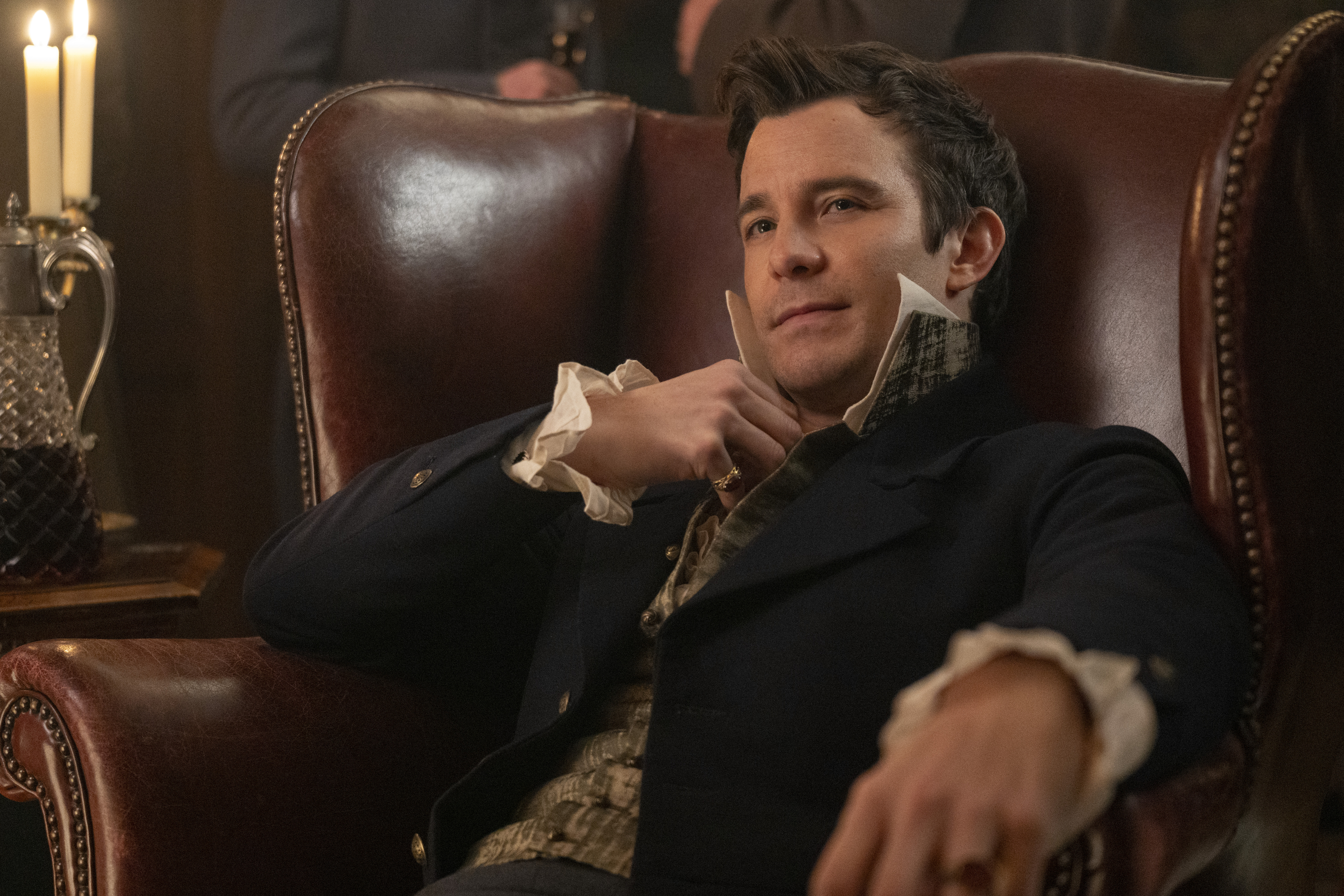
Benedict, the free-spirited second Bridgerton son, is portrayed as bisexual – his rakish charms extending to male and female lovers. In narrative terms, however, this has never really been developed. In season one we do briefly meet gay artist Sir Henry Granville, who tells Benedict: “It takes courage to live outside the traditional expectations of the society.”
Certainly, that was the case for the real-life LGBTQ+ people of the regency era. Homosexual acts between men were criminalised under the Buggery Act and could still be punishable by death – this wouldn’t change until the 1861 Offences Against the Person Act. Queer women were ignored under this legislation due to concern that acknowledging them might give ‘respectable women’ ideas.
Openly discussed or not, of course, queer people and relationships always existed. The much-loved recent TV drama, Gentleman Jack, told the story of landowner, industrialist and diarist Anne Lister, who has been described as ‘the first modern lesbian’. The first season of Bridgerton is set in 1813, when Lister would have been in her 20s and coming to the end of a relationship with first love, Eliza Raine. Also during this time, Eleanor Butler and Sarah Ponsonby, the ‘Ladies of Llangollen’, were living together in North Wales. The real-life Queen Charlotte herself encouraged King George III to grant them a royal pension. Meanwhile, in London, queer subculture could be found in Molly Houses – where LGBTQ+ people could meet, socialise and subvert the period’s rigid gender and sexuality norms.
Reading between the lines
What the show doesn’t yet offer on screen, however, can be found in fandom. Eloise Bridgerton, played by Claudia Jessie, is different to her sisters, and many other ladies of the ton. She reads feminist philosopher Mary Wollstonecraft, challenges conventions and aspires to ‘a different life’, showing little interest in marriage. This has led to speculation (and hope) that Eloise might be written as queer, with many fans ‘shipping’ (fandom speak for supporting a romantic relationship) her and best friend Penelope Featherington (‘Peneloise’), or season two’s Cressida Cowper (‘Creloise’). This is nothing new. In the long-standing absence of mainstream visibility, unconventional characters, outsiders and intimate relationships between women have often been read as queer coded, and fans have brought queer romances to life in fan fiction, art and videos.
Micheala Stirling: queer visibility or queer baiting?
Things may, however, be about to change. When Jess Brownlow took on the role of showrunner for seasons three and four, she stated: “This is a show about love in its many forms and I think that it’s only right for us to foreground queer love and to tell queer stories.”
Season three tells the story of Francesca Bridgerton and her marriage to John Stirling. When she meets John’s cousin Michaela at the end of the season, however, she appears taken aback. So too were audiences, as John’s cousin in the books is Michael, and, most significantly, Francesca goes on to marry him when John dies. The decision to gender-swap Micheala has left audiences variously intrigued and outraged. How this storyline will play out remains unclear though, as Michaela once more only appeared at the end of the last episode of part one. Sadly, this is starting to feel like queer baiting – a common marketing strategy where LGBTQ+ representation is hinted at but never truly delivered.
And yet, considering the source material, there is reason to expect a more significant representation. Whilst we are unlikely to see a wedding, we could see a relationship that takes inspiration, perhaps, from the unconventional lives of Anne Lister and the Ladies of Llangollen. Roll on part two of season four.
Kate McNicholas Smith is a lecturer in television theory at the University of Westminster in London.
Do you have a story to tell or opinions to share about this? Get in touch and tell us more.
Change a vendor’s life this winter.
Buy from your local Big Issue vendor every week – and always take the magazine. It’s how vendors earn with dignity and how we fund our work to end poverty.
You can also support online with a vendor support kit or a magazine subscription. Thank you for standing with Big Issue vendors.