Swooning over Heathcliff? Let’s not forget, he’s a really terrible landlord
Is Heathcliff the dashing, brooding hero we sometimes want him to be?
by:
13 Feb 2026
Heathcliff, played by Jacob Elordi. Image: Warner Bros
Share
Heathcliff is often swoon-worthy in adaptations of Wuthering Heights, especially when it casts a handsome, zeitgeisty actor like Jacob Elordi. Emerald Fennell’s take on the Emily Brontë classic, set to be released in time for Valentine’s Day, pitches it as “the greatest love story ever told”.
The press tour has practically begged us to fall at Elordi’s feet, with co-star Margot Robbie saying he filled her room with roses and he would probably make a “very good boyfriend”.
But is Heathcliff the dashing, brooding hero we sometimes want him to be? Beyond the obvious toxicity of his relationship with Cathy and his violence towards almost every person in his life, Brontë’s leading man is first and foremost introduced to us as… a pretty terrible landlord.
From the very first line, Brontë wants us to know that Heathcliff rents out property (and he’s not well-liked by his tenant, described as “the solitary neighbour I shall be troubled with”).
Most adaptations ignore the fact that Heathcliff becomes a landlord by focusing on his and Cathy’s story, ending at the novel’s midway point. They miss key messages Brontë sets out, including Heathcliff’s arc from orphan to vengeful landlord.
Advertising helps fund Big Issue’s mission to end poverty
Advertisement
As a child, Heathcliff is found living on the streets of Liverpool. He doesn’t even have a name. But in adulthood, he secures ownership of two estates: Wuthering Heights and Thrushcross Grange. He lives in the first and rents out the latter to Mr Lockwood, a gentleman from the south, who lives there for eight months.
Sam Hirst, a lecturer in English Literature at the University of Liverpool, explains that Heathcliff “takes this house, gets rid of the inhabitants and then uses it as an Airbnb, essentially”.
“He’s hiring it for seemingly short periods on temporary leases to southerners coming to Yorkshire,” she adds. “His whole campaign is to dispossess local families, take over their houses and rent them out to southern people. And he lives in one of the houses that he owns.”
According to Hirst, he “empties the local area of meaning” and “deliberately tries to disrupt the social structure of the area but not just in a positive way”.
Heathcliff is described as a “cruel, hard landlord to his tenants” by villagers in the novel. Lockwood is attacked by Heathcliff’s dogs and haunted by the ghost of his landlord’s lost love.
Advertising helps fund Big Issue’s mission to end poverty
Simon Marsden, an English Literature lecturer at the University of Liverpool, says Heathcliff’s role as a landlord “gives us the chance to see the adult Heathcliff as this figure who is basically completely inhospitable”.
“He’s almost willing to let Lockwood wander out into a snowy night where he may well not make it home alive. It gives us that sense of mystery about him, but it also allows us to see him as this very inhospitable figure. Maybe the fact that he is introduced as a landlord just makes that stand out more.”
In a lot of adaptations of Wuthering Heights, the first time we see Heathcliff he is a penniless orphan – a character we pity rather than fear. Ruth-Anne Walbank, a PhD Candidate at the University of Warwick, says that “part of what makes Heathcliff so terrifying in the book is that he returns all the violence and ill-treatment he receives tenfold”. She explains that he takes the source of his abuser’s power, their land and the wealth it brings, and turns it against them.
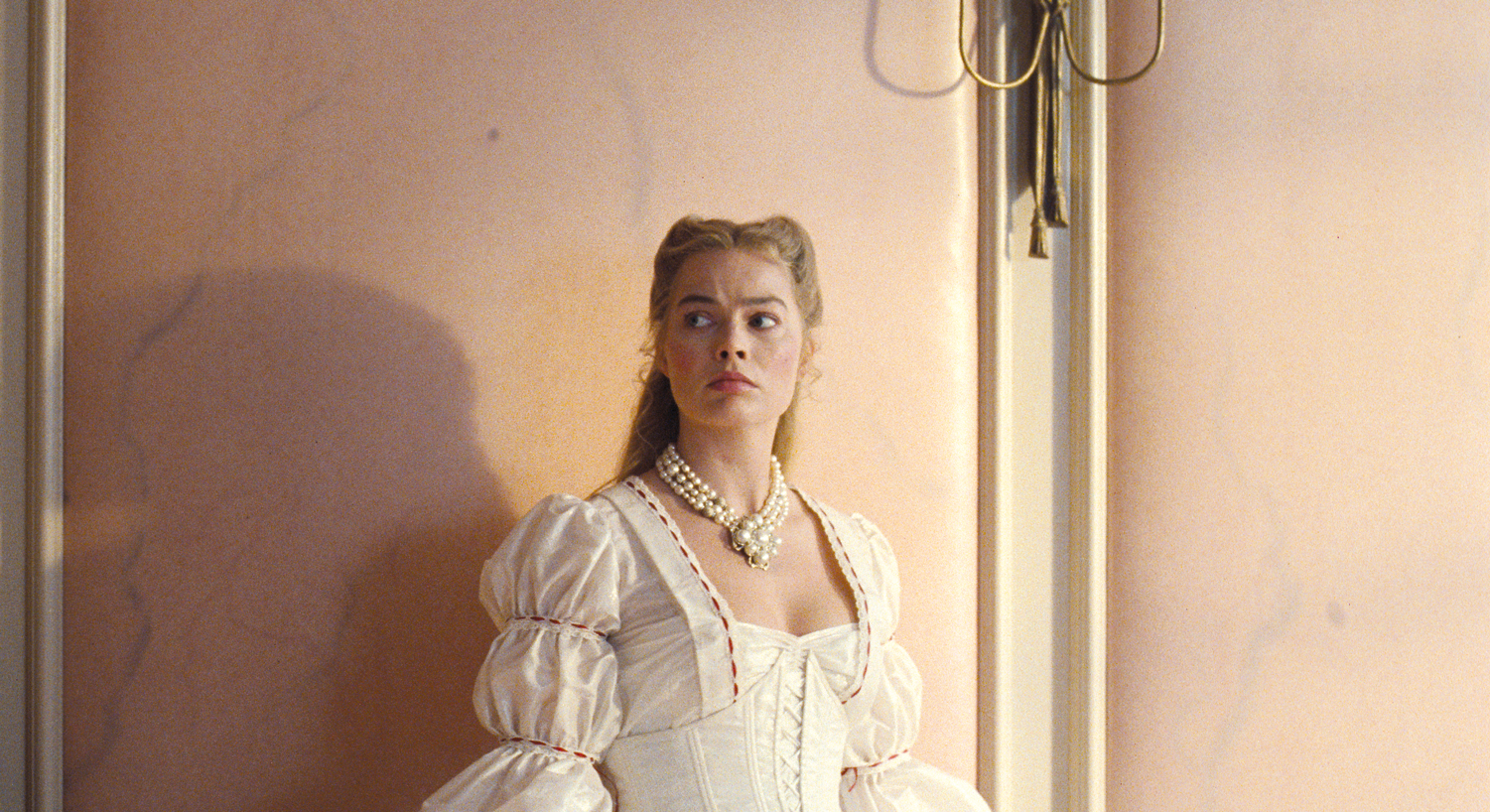
Margot Robbie’s Cathy. Image: Warner Bros
“If you’re looking to Wuthering Heights for guidance on how to be a landlord, look elsewhere,” says Walbank. “Heathcliff may not be a good landlord, but he doesn’t face many repercussions for his actions.
“He dies a wealthy man, owning more property and land than any of his predecessors. Then again, he also dies a miserable death, alone and unsatisfied with his decades-long revenge plot. It really makes you question whether his pursuit of landownership and wealth is worth it.”
Michael Stewart, director of the Brontë Writing Centre and author of Heathcliff-inspired novel Ill Will and Brontë memoir Walking the Invisible, says that Heathcliff’s property ownership comes from a desire for security.
Advertising helps fund Big Issue’s mission to end poverty
“There’s this need to be financially solvent – and not just solvent, but richer than anybody else,” says Stewart.
“He manages to go from nothing – from a homeless child without even a name – to owning two properties. He’s had revenge on all the people he hates. He’s kind of got what he wants, but it doesn’t bring any peace.”
Property ownership is something that Brontë was probably thinking about a lot when writing Wuthering Heights, Stewart says. The sisters lived with their father Patrick, a priest, in a parsonage and if he died, they would be homeless. Their brother Branwell was an addict and never managed to achieve his ambitions. So, the sisters became driven to find income for themselves.
Stewart expresses frustration that Fennell’s version of Wuthering Heights is another adaptation that stops with the death of Cathy.
“It completely misrepresents the book, doesn’t it? The whole point is that that’s the midpoint, and it’s about how we can escape the cycle of trauma and how man passes misery onto man, and how that spell can be broken. That’s only really evident if you tell the story with the second half of the book,” Stewart says.
Fennell has spoken about the difficulties with adapting the novel for screen, explaining it’s almost impossible to be faithful because the plot is so complex. It’s the reason she’s put the title in quotation marks, suggesting it’s not really Wuthering Heights. Fennell has said her version is based on her first reading of the novel aged 14. It doesn’t mean that “Wuthering Heights” won’t be a good film, but it’s sure to enrage a few Brontë fans.
Advertising helps fund Big Issue’s mission to end poverty
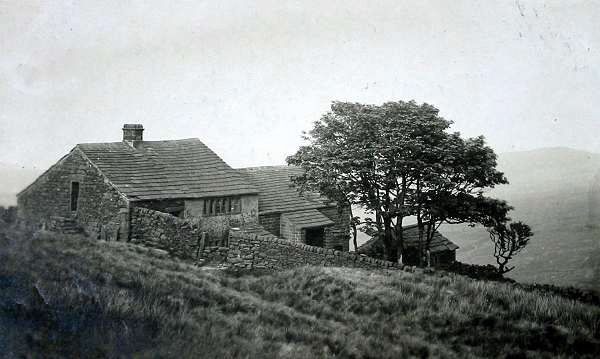
Wuthering Heights is one of two properties owned by Heathcliff. But ownership doesn’t bring him any peace
“I’m really wary and generally distressed by representations of Wuthering Heights as a love story. And I think the advertising of this film as ‘the greatest love story ever told’… I don’t really understand how you read the book and get there,” Hirst says.
“I don’t love presenting it as a romance, but I also think what happens when you present it as a romance is you diminish a lot of the other things going on in the story, including things about class and land ownership and race as well, in my reading.”
Wuthering Heights is set at a time when Liverpool, where Heathcliff is found, was still actively involved in the slave trade. Brontë implies that Heathcliff has dark skin (which is why Elordi’s casting has been so controversial). And all this is vital to understand Heathcliff as a character – and a landlord.
“You can look at Heathcliff and say, basically, he is a landlord who isn’t interested in his tenant and Lockwood is basically a source of income to him,” Marsden says. “There’s no sense that he’s looking for any kind of human relationship with his tenant, or that he’s even interested in kind of getting to know him at all. But at the same time, Heathcliff is a product of the social world he has grown up in. Very few people treat anyone differently to that.
“I’m sometimes asked to talk about the romance plots in the novel and ideas of toxic romance, but whatever relationship you look at in the novel, it’s very hard to find a good example of that. That’s key to how we think about him as landlord. In a lot of ways, he’s not the problem, he’s an expression of the problem.”
Landlords of today might claim they are the product of the cruel world they are living in too, but maybe they shouldn’t turn to Heathcliff as an example.
Advertising helps fund Big Issue’s mission to end poverty
When you watch “Wuthering Heights”, swoon over Elordi’s Heathcliff all you want, but remember that he grows up to be a pretty horrible landlord.
“And while that’s not entirely his fault, we don’t want to inspire a new batch of Heathcliffs taking over houses for revenge and turning them into Airbnbs.
So, to all the landlords out there, Hirst says, just ask yourself: “Are you Heathcliffing Cornwall?”