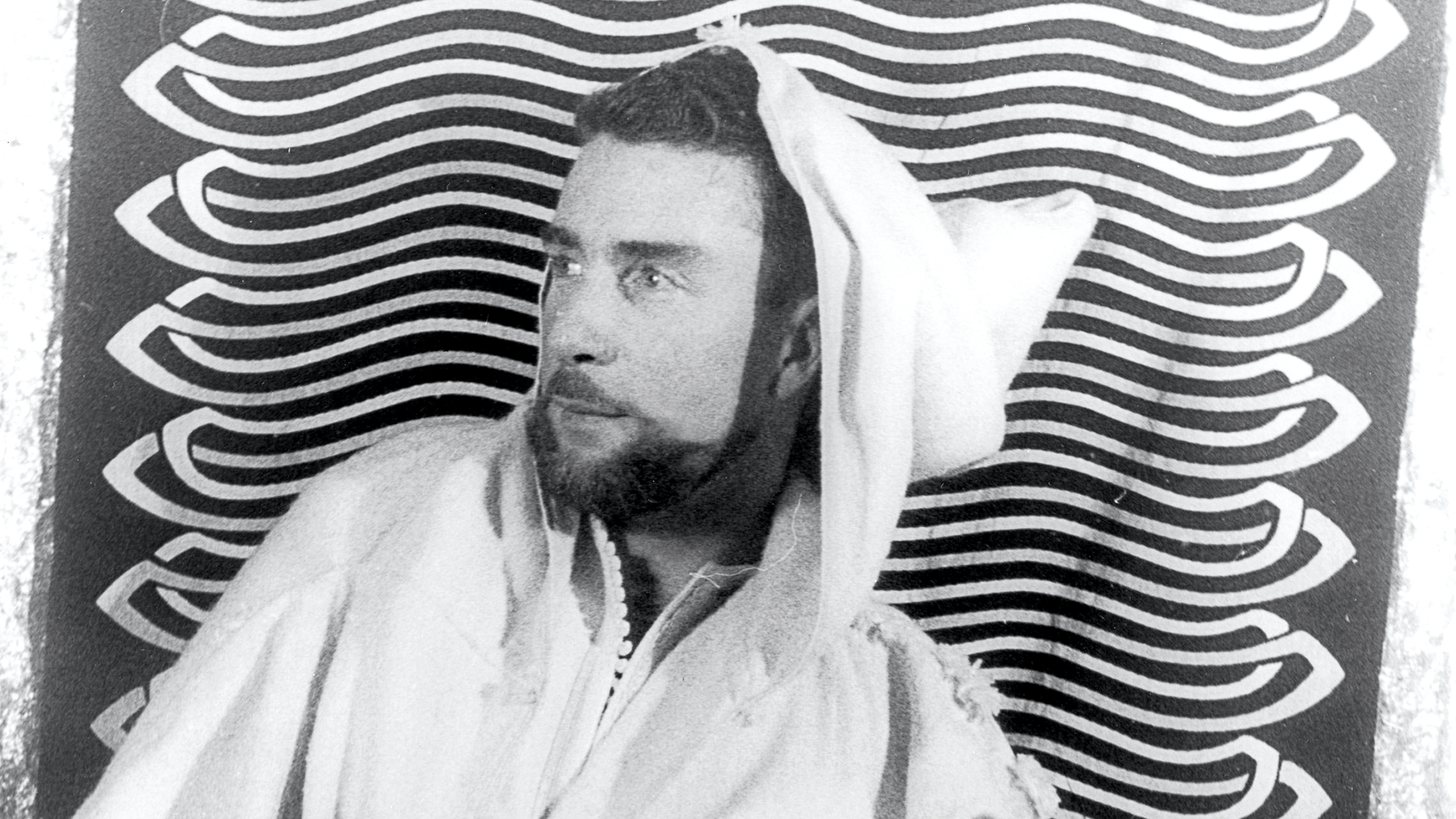
A vinyl reissue arriving this spring will bring renewed attention to a rare and unusual sound work by Brion Gysin, which I’m unsure how to categorise, in terms of genre, style or classification; perhaps that’s why I feel compelled to share the news with you here. Long treated as a peripheral Beat figure, Gysin was a restless experimenter whose work incorporated writing, painting, performance and invention.
His Dreamachine sound piece, recorded in the 1980s and pressed on vinyl for the first time by the brilliant Wewantsounds label to coincide with a new exhibition opening in Paris in April, will offer a distinct insight into how he thought art should function as a social tool for shifting perspectives.
Get the latest news and insight into how the Big Issue magazine is made by signing up for the Inside Big Issue newsletter
Born in England, Gysin lived for long periods in Tangier, Paris and New York, bouncing between literary and artistic scenes without fully committing to either. He wrote novels, painted, staged performances and immersed himself in North African music and spiritual traditions. He also collaborated with William Burroughs on his famous ‘cut up technique’, where texts are cut into pieces to create new narratives; this association somewhat eclipsed Gysin’s own brilliant contributions from the same era.
The Dreamachine recording is a sonic reinterpretation of the physical Dreamachine Gysin co-created in the late 1950s; a rotating cylinder placed over a light bulb, designed to be experienced with the eyes closed. The flickering light stimulated the brain, theoretically producing colours, patterns or dream-like states. The record follows the same logic, a listening experience built around voice, repetition and rhythm, although it is eminently listenable too purely as entertainment.
I absorbed it on first listen as a sort of mumbly, post-punk jazz piece, bearing in mind Gysin’s influence on David Bowie, Laurie Anderson and Genesis P Orridge. Further listens reveal something more bespoke and personal. It was co-created with Ramuntcho Matta, an artist and musician who worked closely with Gysin during the final years of his life. Matta was introduced to Gysin at 15 by his poetry teacher. “We worked together when we had nothing better to do,” Matta tells me.