‘We are locking up too many women’: Why the RSC’s Julius Caesar is back behind bars
The groundbreaking staging of Julius Caesar will tour schools, adding a vital new dimension to the project
by:
26 Oct 2026
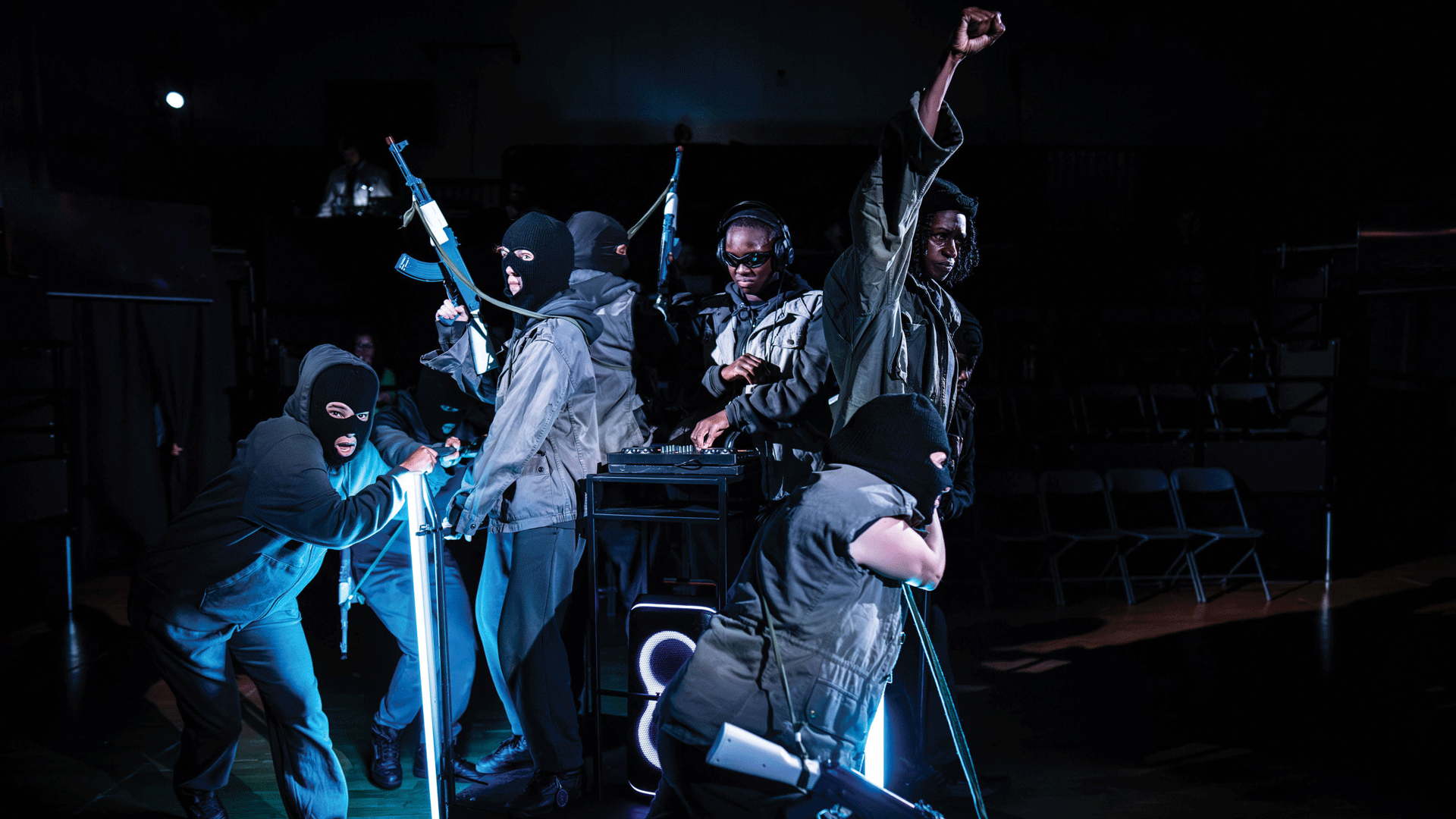
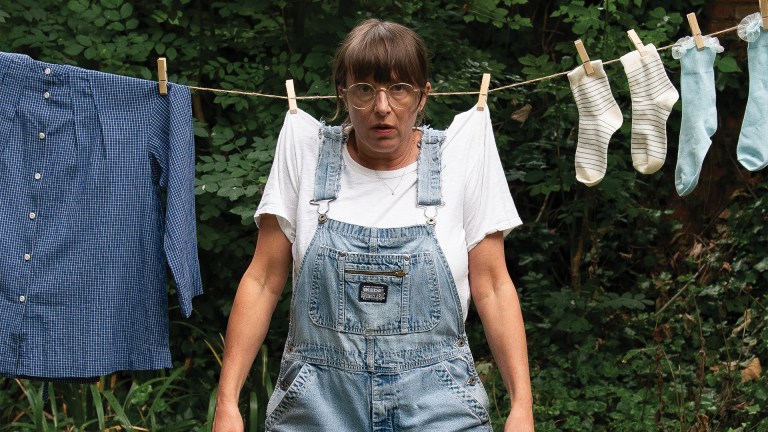
The cast of the new Julius Caesar. Image: Helen Maybanks
Share
Everything about the 2012 production of Julius Caesar, directed by Phyllida Lloyd at the Donmar Warehouse, was groundbreaking.
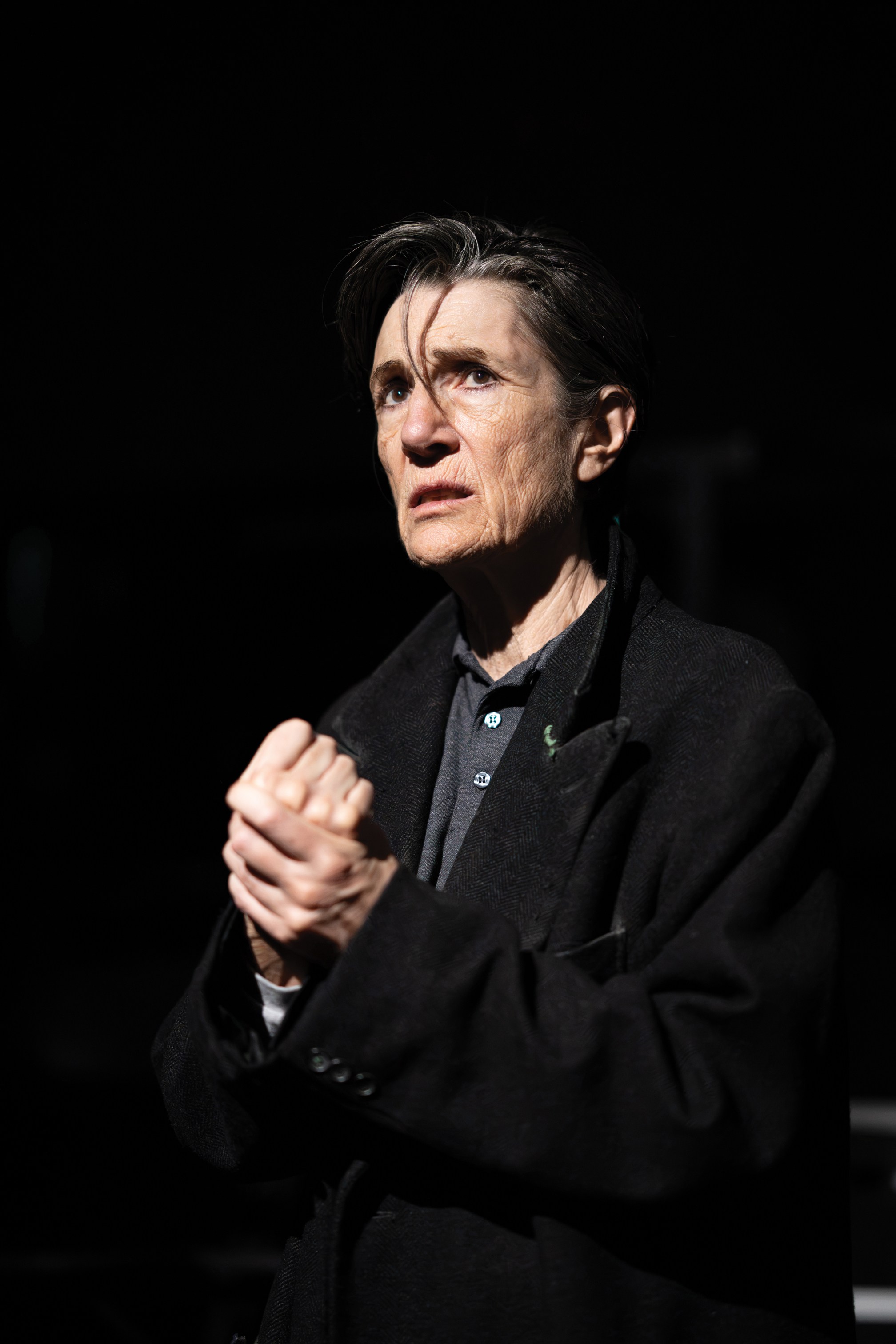
There was the all-female cast, led by the indomitable Dame Harriet Walter as Brutus, in one of Shakespeare’s most male-dominated plays. The entire production was staged as though put on by a group of women in a high security prison, with the audience going through security checks and actors observed by guards throughout.
Actors attended workshops in UK prisons, led back then by Clean Break, which works in prisons and in the community to change lives through theatre – dissecting the play and exploring new depths of meaning.
The production was electrifying. It ended up transferring to St Ann’s Warehouse in Brooklyn, New York. There were awards. And it grew into a trilogy – Julius Caesar, Henry IV and The Tempest – made by the same company of creatives.
Clean Break members with lived experience of the criminal justice system then joined a cast that included, at various times, Cush Jumbo, Cynthia Erivo, Frances Barber and Jade Anouka alongside Walter.
This was Shakespeare refracted through lived experience of the UK criminal justice system. And it was extraordinary. Lives and careers were changed. None of us who attended the trilogy days, when all three plays were performed back-to-back, will forget the new way in which old words hit home.
Advertising helps fund Big Issue’s mission to end poverty
Advertisement
Now Harriet Walter, director Phyllida Lloyd, and a company including many reprising their original roles, are back with a new version of Julius Caesar, edited into a tight 90-minutes. And it is, once again, doing something groundbreaking.
“It’s a whole new world since 2012,” says director Phyllida Lloyd, when Big Issue visits the RSC rehearsal rooms in Clapham, South London.
“The play eternally renews itself and is always so resonant. But when we first did it, the threats that Julius Caesar shows us – the abuses of power and institutions – felt quite far away. We had Obama in the White House. There was the Arab Spring. There were promises of new democracies.
Keep reading the journalism that powers our mission
Register free to continue and learn more about the stories, campaigns and the support we provide, helping people facing poverty across the UK.
“Now we really are looking at institutions under siege in the western world and the rise of populist leaders. So it will speak about the world around us, but it’s also about the next generation.”
This time, Lloyd and co are adding education to innovation and inspiration. Criminal justice associate artist Rachel Frank is working alongside the RSC and women from HMP New Hall to root the new production in authenticity, before the cast tour schools across England.
For lead actor Walter, the school tour adds a vital new dimension to the project.
“What started out as redressing the balance of casting in Shakespeare became something quite different once Phyllida set it in a prison and we started collaborating with prisoners,” she recalls.
“It became about giving a voice to all women, not just allowing some actresses to have better parts. When I was approached by the RSC about doing something with Phyllida again, I knew they did astonishing work in schools. So I was curious – we may have changed the heads of theatre-going people and practitioners, but are we changing the heads of the general public? And where do you start with that? In schools. So there is a great logic to the whole project.”
“A school tour is usually in and out,” adds Lloyd. “But we’re going to be embedded in the culture of the schools for a week. There will be careers fairs, talks, pupils will shadow all of us. The idea is to open up conversations, not just about their voices and agency in their worlds, but the arts as a career.”
Jennifer Jules, who plays Cassius, spent her early acting career touring schools and youth centres – setting up the stage before performing then moving on. She knows the impact the work can have.
“I always imagine there’s a young person who’s never seen a play, or who is from a community they don’t see represented on TV,” she says.
“Then they see our show and they are represented. There’s somebody who looks or sounds like them. And your life is changed, everything is shattered, and you can do anything.
“In posh schools, you’re taught that you are going to run the country. In state schools, you are taught to buckle down, know your fucking place, stay in your lane. But creativity sparks things in every child.”
For Leah Harvey, who plays Mark Antony, the original production was her first job after drama school: “This job set a precedent. Every play I’ve done since has had some kind of impact. It’s a vehicle for social change and social commentary. Not every play is, and it shouldn’t be, because you’d be exhausted. But this one actually doeschange lives. It’s done that again and again.”
Harvey had her own epiphany during a school trip to the Globe Theatre during year five. “My mum was there,” she grins. “We went into the space where the stage was and I turned to my mum and said: ‘I’m going to be up there one day’.”
As the cast talk about the power of theatre, their enthusiasm is infectious. They lean in, this band of sisters, this merry few, affirming each other’s words, backing each other up constantly.
“Like Jenny, I started touring political theatre,” Walter adds. “It’s the best way to get to know your country. All those barriers break down. So we’re on a learning curve too. Boy, aren’t we on a learning curve…?” The whole room nods.
“The intention is to bring people in the criminal justice system, the education system, and the arts together so we leave with a triangular connection, knitting everybody together in a common purpose.”
As producer Kate Packenham puts it: “It’s rare to do theatre where it’s not about commercial success. But the objective has always been about changing the world.”
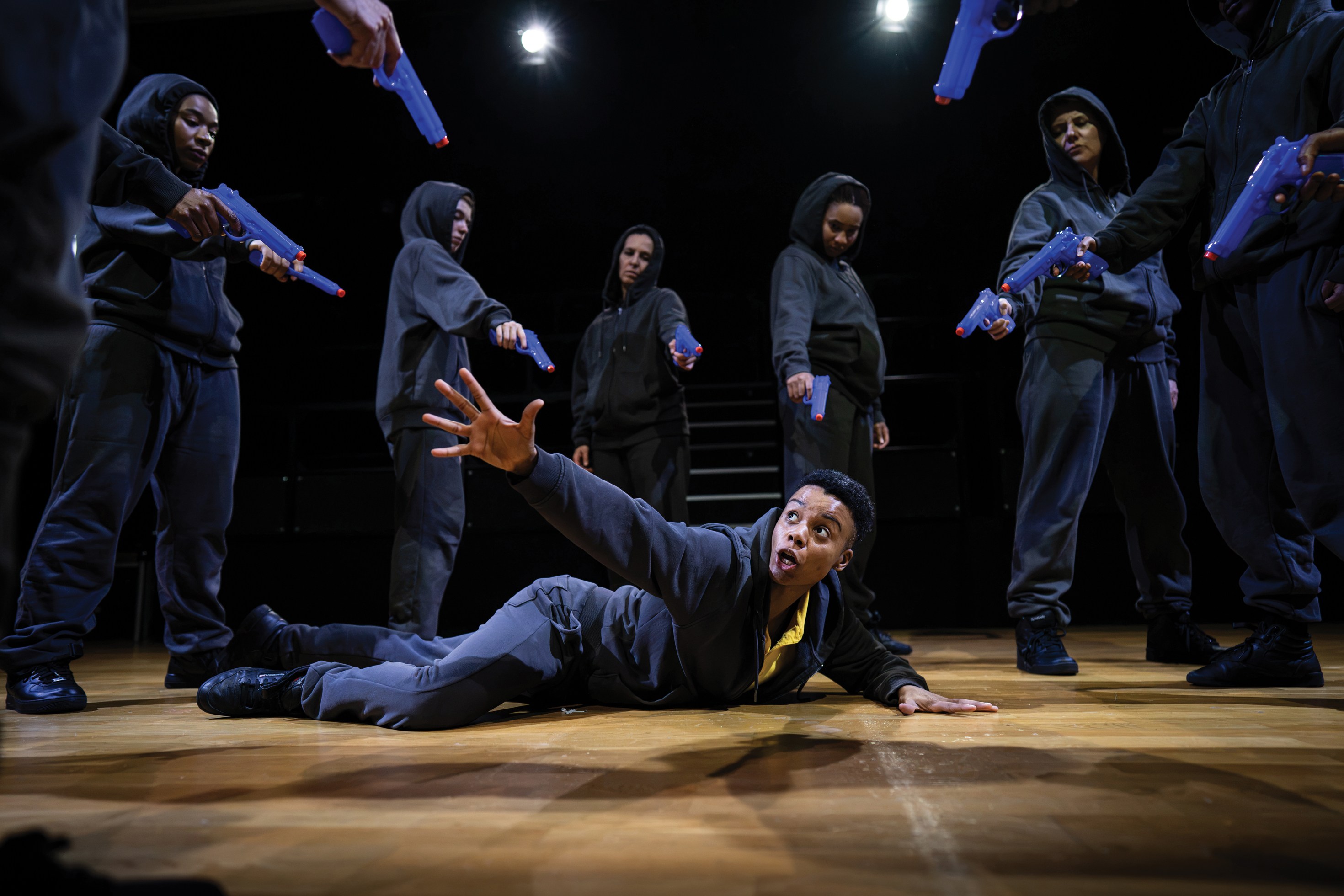
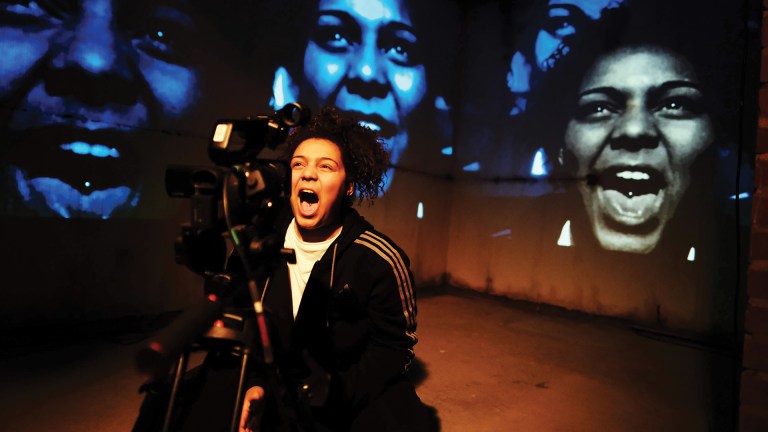
Leah Harvey as Mark Antony in Julius Caesar, set in a women’s prison. Image: Helen Maybanks
Every Tuesday, cast members travel to Wakefield to spend the day with Rachel Frank and a group of women in HMP New Hall. They read the text, do acting exercises, perform key scenes. But most of all, they tell me, they listen. And what they hear directly informs the way the play evolves.
“You can’t dish this out to people then shut the door,” she says.
“A word that keeps coming into my head with regard to schools and prisons is participation. Once you participate, you’re not just a passive audience or student being fed. Once you own those words or that character, you can’t not see yourself differently the next day. It has an effect that I can’t quantify. But I know it is massive.”
“I was up in New Hall two weeks ago to workshop the play,” adds cast member Shona Babayemi.
“They’d been left with this text to digest. I met some brilliant women and my mind was blown by their ideas – I hadn’t thought about the gender politics in the play that way before.”
Lloyd agrees. “Their understanding of the Shakespearean themes of loss, betrayal, abuses of power, danger, means their instincts are so penetrating and revelatory.”
For Jennifer Joseph, who takes the role of Trebonius, visiting HMP New Hall is not without its complications.
“It’s not a new thing to go into a prison for me. I’m totally lived experience of prison, I am an ex-offender, so it’s a personal journey for me to go back in and work with these women,” she says.
“I discovered Clean Break at the end of a very vulnerable time. I needed something uplifting that made me feel like who I was originally. Then, because Harriet is a patron of Clean Break, when they did Julius Caesar in 2012, some of us were asked to join the cast.
“We were beside ourselves. And nobody judged us. They looked at us as part of the company. We were all on the same level – there was a lot of care, a lot of protection.”
Lloyd describes Joseph’s importance to the company as “enormous, in terms of keeping us honest” as they aim to represent the experiences of women in the criminal justice system.
Babayemi was a member of Cardboard Citizens, a theatre company and charity that creates work for with and for people who have experienced homelessness before teaming up with Clean Break then joining the 2026 cast of Julius Caesar – as a conspirator, while also understudying Walter as Brutus.
“I’m new to this production, but I’ve known JenJo for years. Working with the behemoth that is Phyllida Lloyd – I’m just trying to move out of awe into collaboration,” she says.
“I experienced homelessness all through my teens. I lived in shelters, I lived in hostels and, as you know, with the criminal justice system and homelessness, it’s all cyclical. They feed into each other. Instability and needs not being met leads to bad decisions. So that’s the lived experience I’m bringing to it.”
Before they settle in for a longer stay at The Other Place in Stratford, the cast will go on school trips to Peterborough, Newquay, Bradford, Nottingham and Blackpool. Babayemi outlines some key learning objectives.
“We place a lot of reverence on Shakespeare and that’s great,” she says. “But how do we tear that apart? How do we interrogate Shakespeare? Also, I want this production to humanise women in in the criminal justice system who are completely marginalised, and give them the full-bodied humanity they deserve.”
Walter, like the rest of the cast has spent the morning rehearsing intense fight scenes. Her takeaway from the long, ongoing creative partnership is simple: we are locking up too many women in this country.
“I’ve learned that there is a lot of wasted talent locked away in prison,” she says.
“Only a tiny proportion of women are in there for violent offences. And sentences that may seem short are incredibly disruptive to family life.
“Something is off-kilter in the calculation of locking somebody away when weighed against the disruption to family and community and their possibility of going back into work and the impact on children. People may lose their home, their work and their chance of future work. There is this waste of people.”
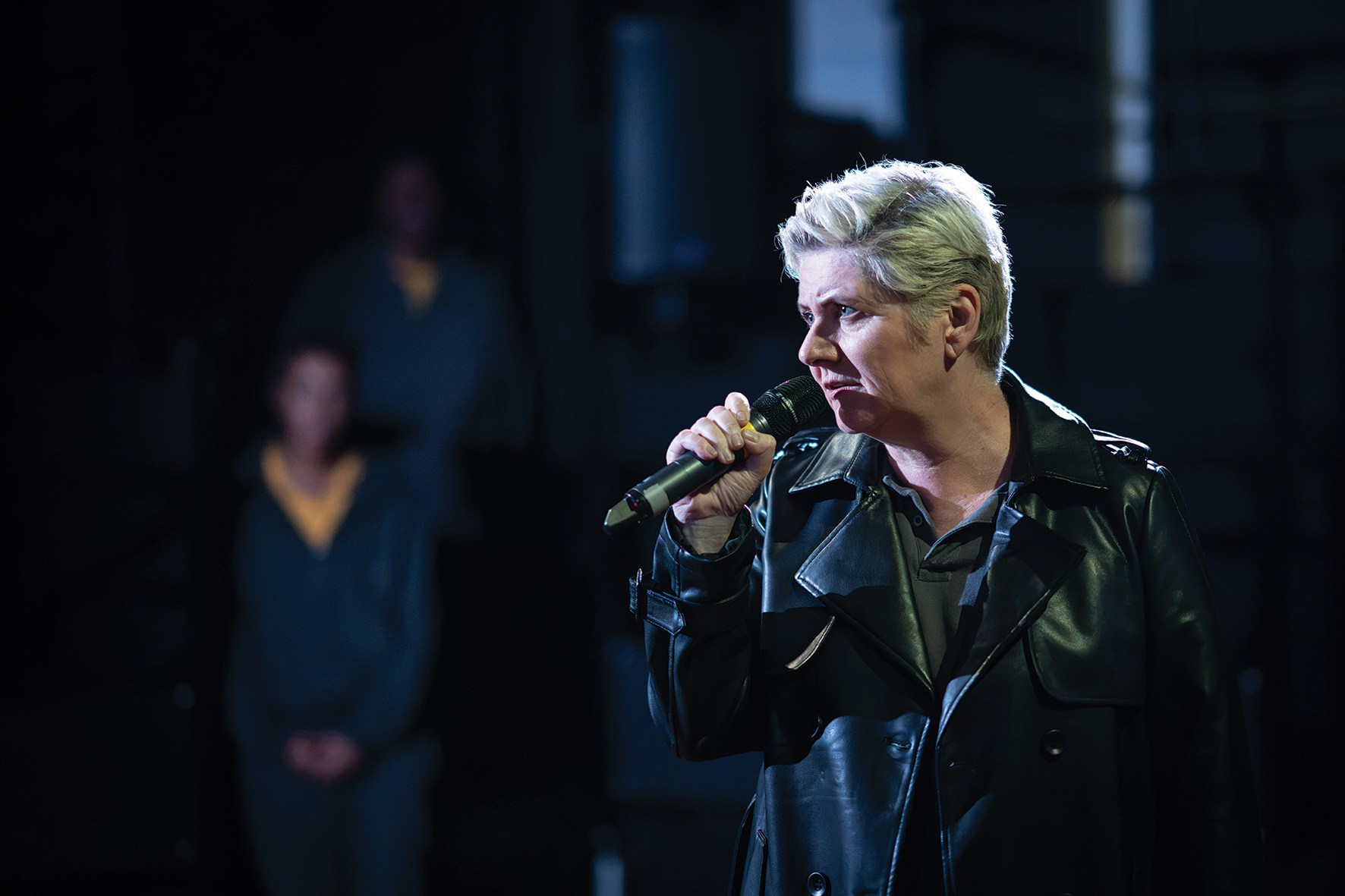
Jackie Clune is the latest to take the role of Julius Caesar. Image: Helen Maybanks
Creativity comes alive
Rachel Frank is the Criminal Justice Associate Artist working on the production of Julius Caesar in collaboration with the RSC, through her ongoing position at HMP New Hall.
“I’ve been working for 30-odd years looking at how we can bring the arts into the criminal justice system but also at trauma-informed art making. So it’s important this wasn’t a parachute in, parachute out model. I was interested in a durational practice, and how we help women with fractured identities, chaotic lives, reimagine themselves and rebuild themselves. That can’t be done in a two-day project. It has to have longevity.
“For some women, it’s getting out of their cell for three hours of creativity with people from outside prison that don’t call them by their prison number. But for others, and this is particularly prevalent in this project, it’s women who are trying to rebuild their lives and re-engaging in education or creativity. We often hear, ‘I used to love creative writing or drama but I stopped when things went wrong for me’. So how can we unlock that creativity and passion and potential? You really see that come alive in the space. When you see Harriet perform in the prison and see the women absolutely silent, soaking up everything – well, you are very privileged to be watching this kind of relationship happening.
“When you’re stuck behind your cell door, coming into a creative space and moving your body, singing or speaking, is hugely liberating. With Shakespeare, they initially don’t really want to do it. But suddenly they understand those global themes or emotions of hurt and passion and wrongdoing and anger and guilt and shame and violence. So they can pivot into the narrative of Julius Caesar and give an insight that is really pertinent.
“We are locking up too many women. We are locking up women on short term sentences for non-violent offences – and a lot of it is rooted in survival crime – whether that be poverty, addiction, exploitation. We should be working in the community to support these women.
“There is a huge impact on children and families and housing. And we’ve got women on remand for far too long – sometimes they are released because the case has fallen through but they have already endured nine months in prison. We have to overhaul the system.”
First Encounters: Julius Caesar is touring schools through October and runs at The Other Place, Stratford, from 5-28 November.