Adolescence writer Jack Thorne: ‘Lord of the Flies looks populism in the eye’
Lord Of The Flies lands on BBC One at a crucial time for the corporation. Storytelling is key for its survival, says Jack Thorne
by:
6 Feb 2026
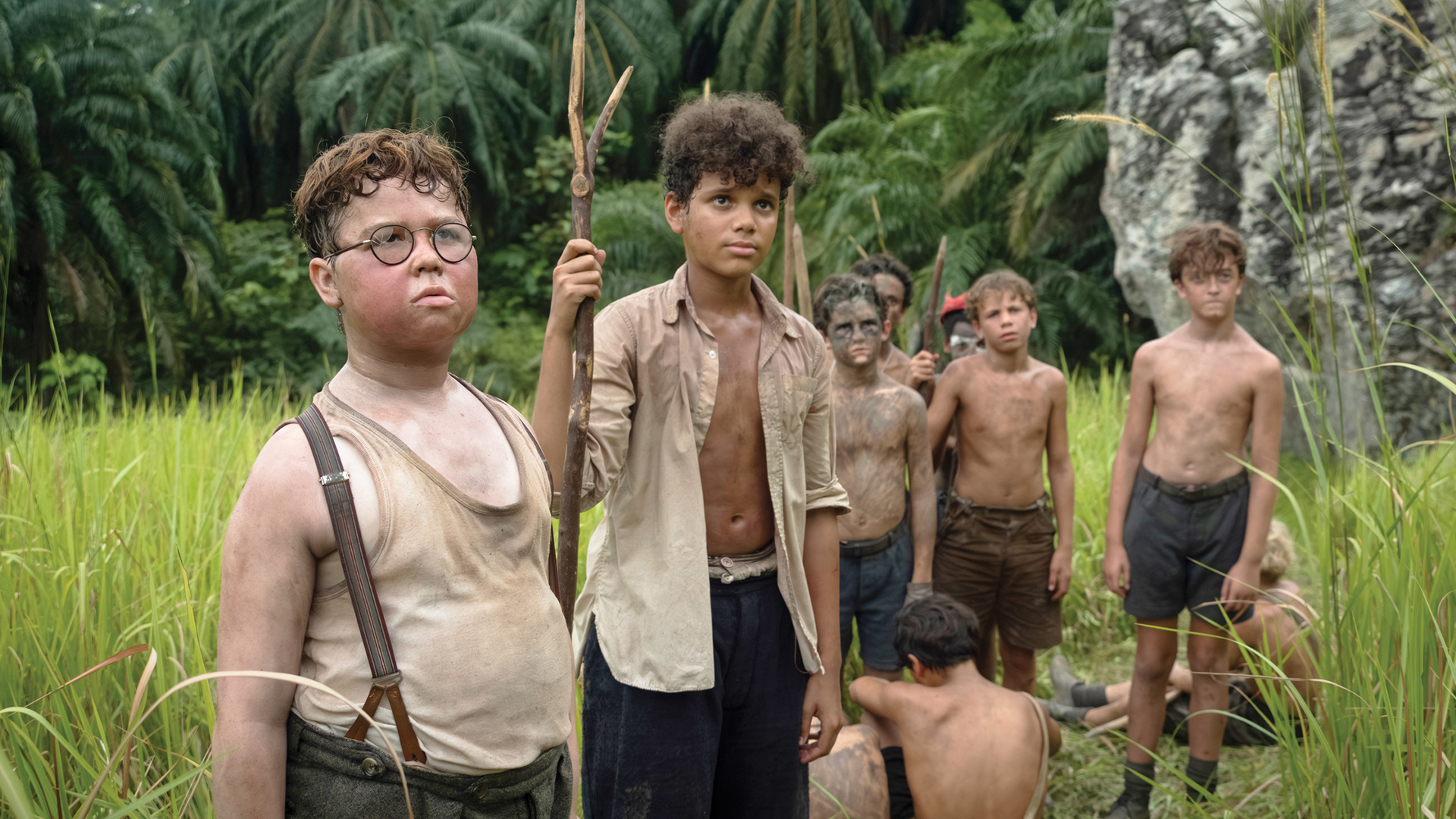
Piggy (David McKenna), Ralph (Winston Sawyers) and the cast of the new adaptation of Lord of the Flies. Image: BBC / Eleven / J Redza
Share
At 5pm on 26 January 1926, John Logie Baird showcased the first ever working television set in London. A room full of scientists from the Royal Institution and one reporter from The Times newspaper assembled at Bar Italia in Soho for Logie Baird’s world exclusive.
Exactly one hundred years later, to the minute, Big Issue is sitting with Jack Thorne just across the Thames at the BFI Southbank.
We are here to celebrate this big centennial milestone, to discuss the state of television at this hinge moment for society, technology and culture. Oh, and to launch Thorne’s latest small-screen offering: an adaptation of William Golding’s Lord of the Flies for BBC One.
Thorne’s new version shows, once again, what television at its best can do. Here’s a story written and set in the 1950s, brought directly into 21st century living rooms, shining a new light on the times we live in. The most advanced technology the stranded kids have access to might be Piggy’s glasses and a conch shell, rather than AI, but it still speaks to the cultural, social and political moment in a big way.
Only television does this on this scale. And Jack Thorne has been a fan of television since birth.
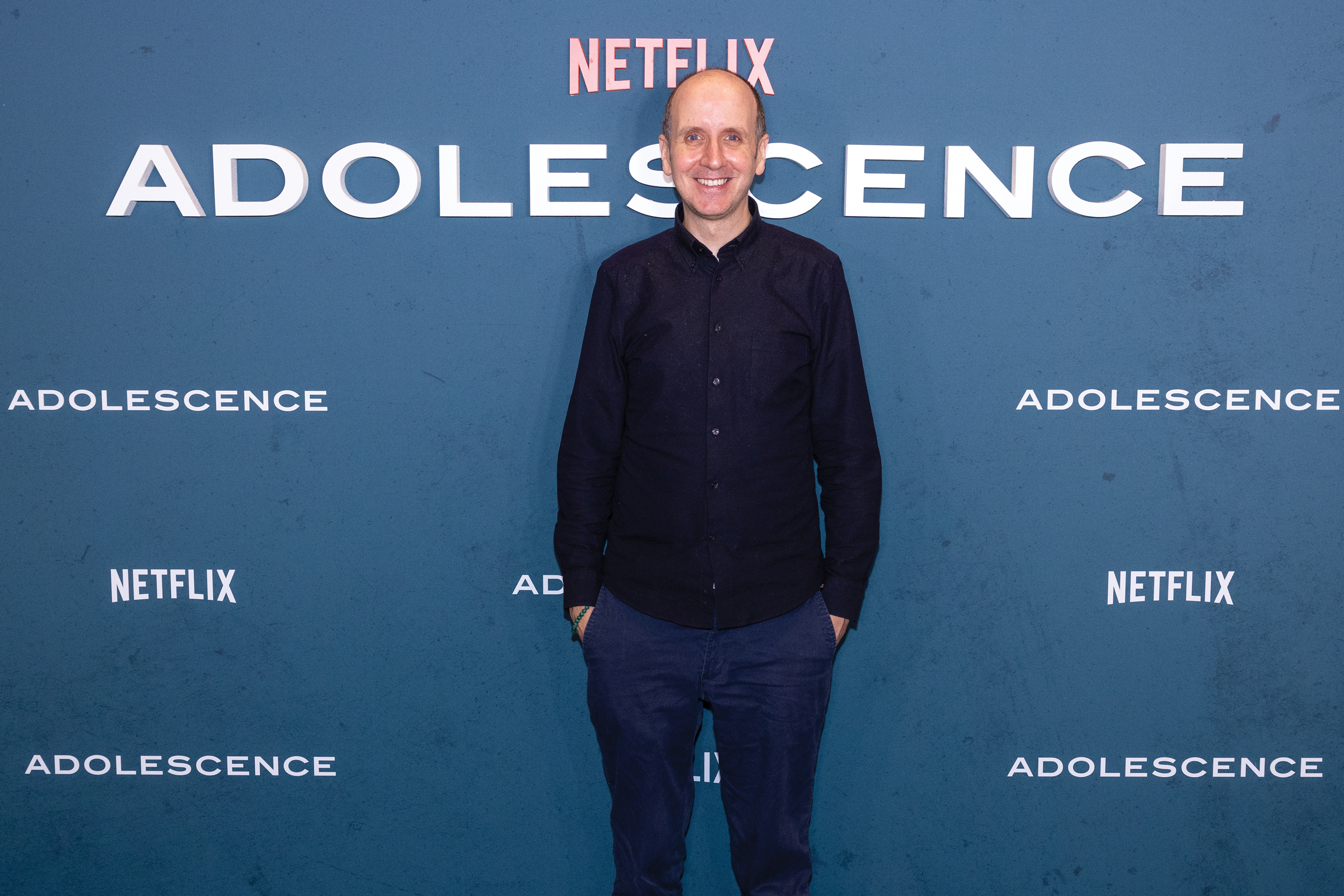
Jack Thorne. Image: StillMoving.Net for Netflix
“I watched telly non-stop,” he says. “It was the most important thing for me. My dad didn’t like us watching Home and Away and Neighbours, so my sister and I would take it in turns watching, while the other would sit in the window looking out for my dad coming home.
Advertising helps fund Big Issue’s mission to end poverty
Advertisement
“I learned how to shower in the advert breaks of The Bill. The secret was to put shampoo on your hair when it’s still dry. Not good for the quality of your hair, but I didn’t miss a minute. And I persuaded my parents that I really wanted to watch the news, which meant I could watch the big 9pm dramas like Prime Suspect or maybe even Cracker before it came on.
“I don’t think people at school wanted to talk with me that much, so TV was my private pride and joy, rather than something I shared with others.
“But watching EastEnders with my mum is one of the key formative experiences in my life. That ability to be able to talk about someone else while finding a way to talk about yourself is the reason why it’s the greatest empathy box there is and why I love it.
“I managed to express a whole lot about myself by talking about Mark Fowler in EastEnders – he was my cipher for understanding the world. Sitting on the sofa with my mum, talking with her about what he was doing, then hearing her advice. She’s 85 years old now – and she’s coming here tonight to watch Lord of the Flies.”
Thorne’s TV career began writing for Channel 4’s Skins. Collaborations with Shane Meadows on This Is England ’86, ’88 and ’90, and The Virtues, his own trilogy of C4 drama series National Treasure, Kiri and The Accident, and Help – Thorne’s furious response to the government’s failure to protect people in care homes during the pandemic starring Jodie Comer and Stephen Graham – all showcased his sharp storytelling and keen interest in society’s big issues. Then last year, Adolescence for Netflix became a global hit for its groundbreaking storytelling.
Advertising helps fund Big Issue’s mission to end poverty
With the television industry in a state of flux as technology enables new ways of telling stories, algorithms dictate our viewing and the BBC at a crossroads over its funding, Thorne is well placed to talk about television and its place in popular culture.
“We’re still working out the longevity of the form. I love Elis and John on Radio 5 Live but the other day, John said – and it broke my heart – that he can’t watch a film any more because it’s too long. He gets fidgety and bored because of the way his brain now is.
“TV is in a similar situation. What we’ve done to our brains with social media has meant the consuming of culture in chunks has become more difficult. That’s why micro-drama is what it is. Perhaps it’s easier to watch three minutes than half an hour.
“Our brains are going through such a powerful realignment and what that means for our medium is confusing and confounding. But there’s also a new generation for whom cinema is really important. And maybe cinema’s renaissance will be echoed on TV.
“We still need stories. But those stories could be computer games or things AI allows us to generate. There might not be a role for the traditional format of telling a story with film in half-hour or one-hour chunks. But the hope is that it’s rediscovered and treasured by whoever comes next. Certainly my son loves it. He’s nine years old and sits watching films or TV very happily. So who knows?”
Thorne was part of Adolescence, the biggest English-language, small-screen success story of recent times. “Being part of something that had that reach was new. It is what I’ve always wanted. But then it happens, you’re suddenly like, I wish I could rewrite that bit. And that level of scrutiny was fascinating and frustrating and frightening at times. To be part of a conversation is quite something, and then you’re like, is this a good conversation any more?”
Advertising helps fund Big Issue’s mission to end poverty
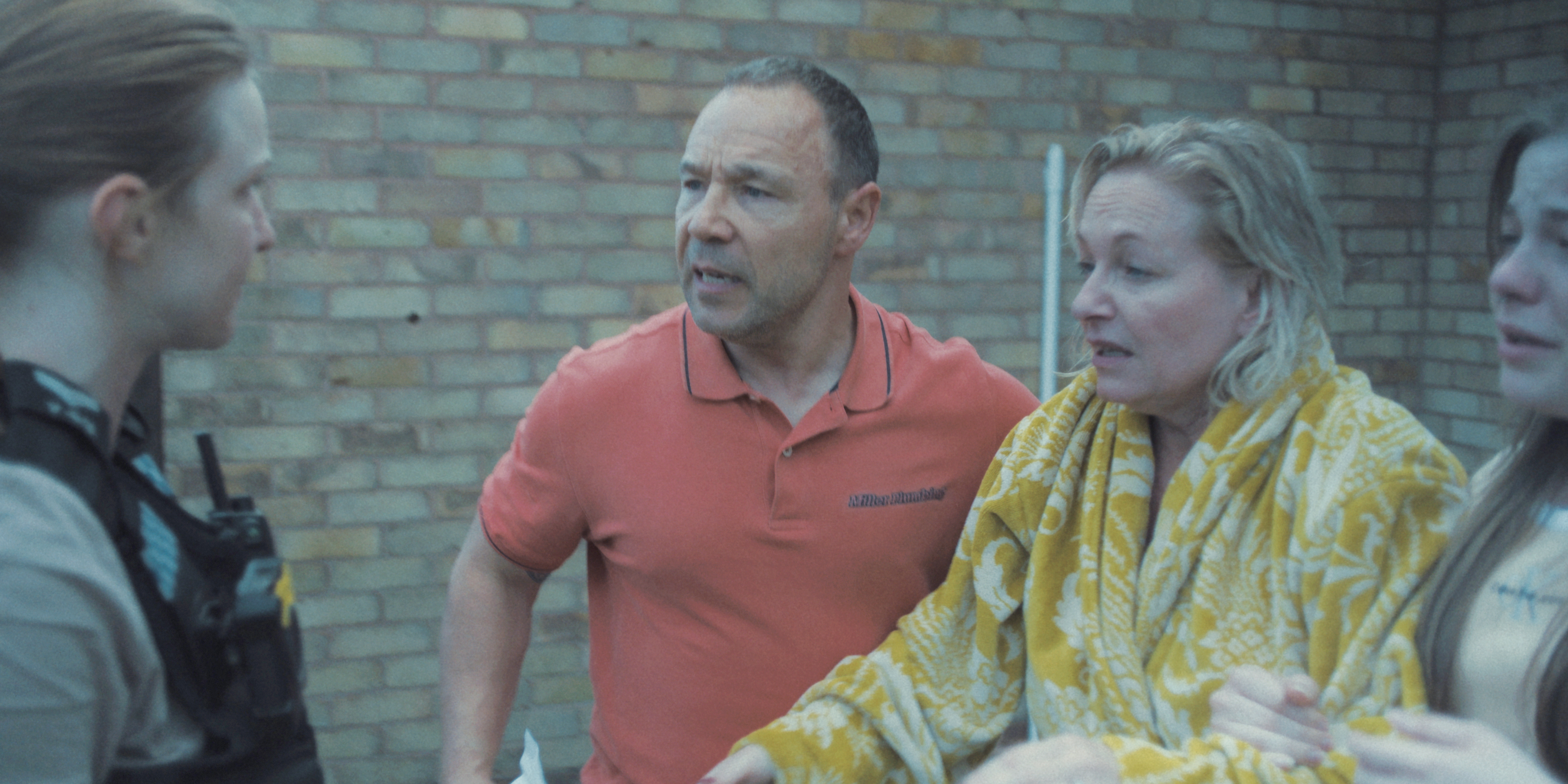
Stephen Graham and Christine Tremarco in Adolescence. Image: Netflix
Lord of The Flies is Thorne’s first big show since Adolescence. It was written and filmed at the same time and explores some similar territory. But there are also power struggles, the breakdown of societal rules, an inexorable slide towards dictatorship, displays of herd mentality and mob violence and a slow evolution into brutality.
“Some of Golding’s story slipped into Adolescence, and I’m sure a bit of Adolescence slipped into Lord of the Flies. Although it’s not adolescence we are studying here, it’s the time before that. I find that moment fascinating. My son is about to reach that age, 10, 11, 12 – and no one has quite captured it like Golding.
“When people go back to the book, as I hope they do, they’ll find it’s a rich and wonderful and devastating read. There’s a reason why he’s a Noble Laureate. And it’s not because he wrote a parable. What he wrote was a beautiful, dense song with lots of different notes within it.
“Lord of the Flies looks populism in the eye. He was feeling the horror of history on his shoulder as he wrote it. He was trying to examine that moment of horror and the savagery of the populism he saw – and there is no doubt we are under the shadow of populism again. And we need to understand it. We need to understand how we behave. We need to understand how others around us will behave. This has a lot of parallels with where we find ourselves now.
“And it’s got more stark since I started working on this story. I don’t just mean in the United States. We’re seeing it everywhere. Everyone feels safe dividing themselves. And Golding wrote about that rather beautifully.”
‘I hope there are people in government who treasure the BBC’
Lord Of The Flies lands on BBC One at a crucial time for the corporation. A lacklustre Christmas added to the impression that the broadcaster, after years of underfunding and attacks from the right-wing press, is struggling to maintain its importance.
Advertising helps fund Big Issue’s mission to end poverty
“I think it’s still totally central. The charter renewal is a crucial moment and I hope people within government treasure the BBC and realise how important it is. The destruction of the World Service was an act of thuggery by the last government. It was nothing to do with money and everything to do with smashing down on a broadcaster they thought didn’t like them. But everyone thinks the BBC doesn’t like them. Every side goes, ‘Jesus, give us a break, Nick Robinson!’ And that’s how it should be.
(L-r) Dev Patel, Mitch Hewer, Mike Bailey and Nicholas Hoult in Skins, where Thorne’s TV writing career began. Image: Roger Sargent / Shutterstock
“Lisa Nandy’s comments on Glastonbury were really wrong. She went beyond the remit of what a culture secretary should do by demanding resignations. I think she realises she made a mistake and has been defending the BBC very well since.
“And the government has just invested a whole lot in theatre, with great thought towards the regions, which is a really good sign. Because we’re a very important industry. We’re worth 5% of the UK’s GDP. We’re worth more than steel and all these traditional industries. So we do need protecting.
“So hopefully the BBC will get a decent settlement. I don’t think the licence fee is perfect. But it’s the best means of allowing the survival of a peculiar institution that’s done an awful lot of good. If you change it, you change the whole remit and it becomes about serving a customer base rather than serving a country. And what the BBC does is serve a country, which is really important.”
Thorne is keen to see whether lessons will be learnt from the surprise global success of Adolescence. He is also keeping a keen eye on current British drama, even as he looks to the future.
“When I was trying to sell Help abroad, we were told the accents are too strong, the story is too British. But you could say the same about Squid Game. You could say the same about Adolescence. Netflix’s idea of local for global, of being really specific with place, but then saying there’s going to be an international audience that finds this and gets this, is really important.
Advertising helps fund Big Issue’s mission to end poverty
“What Netflix realise is that if you tell a story well enough, it doesn’t matter where it’s from, how strong the accents are or if it’s in a foreign language, audiences are hungry and they will appreciate it. The importance of that can’t be underestimated. I hope British commissioners are seeing this as well. I know a series like Waiting for the Out was the BBC taking a risk and I really hope it pays off and is a huge success. Those are the sorts of shows we don’t have enough of.”
Buy from your local Big Issue vendor every week – and always take the magazine. It’s how vendors earn with dignity and how we fund our work to end poverty.