‘Television is dead’: Inside the rise and rise of vertical dramas
The question isn’t whether people will keep watching drama. The question is what comes next. The answer has already started appearing on TikTok feeds
by:
3 Feb 2026
Share
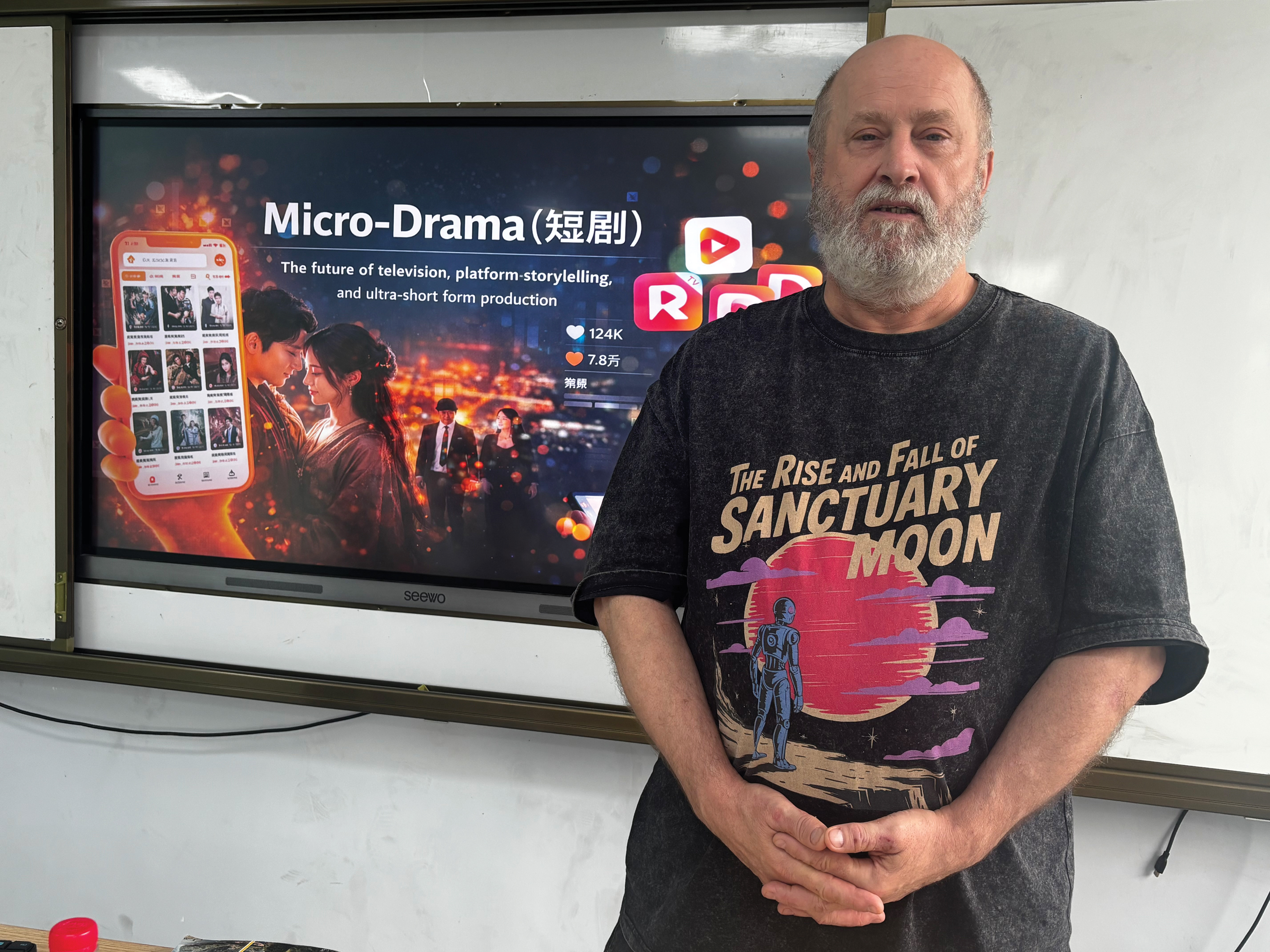
“Television is over. Television is dead.” That’s how Dr Roy Hanney responds when I tell him I’m writing about the future of television.
Hanney is about to start his new role as an Associate Professor of Creative Technology at the University of Nottingham Ningbo China, and is in the country early to learn Mandarin. While “television is dead” sounds like an exaggeration, Hanney’s point is specific. He’s not saying scripted storytelling is finished, or that we’ll all stop watching screens.
“Television is a way of talking about a distribution technology,” Hanney explains. “The television industry built around delivering content to your set is over. It’s done.”
If he’s right, the question isn’t whether people will keep watching drama. The question is what comes next. The answer has already started appearing on TikTok feeds.
Dr Roy Hanney reckons “the television industry built around delivering content to your set is over. It’s done”
TV, but filmed for your phone
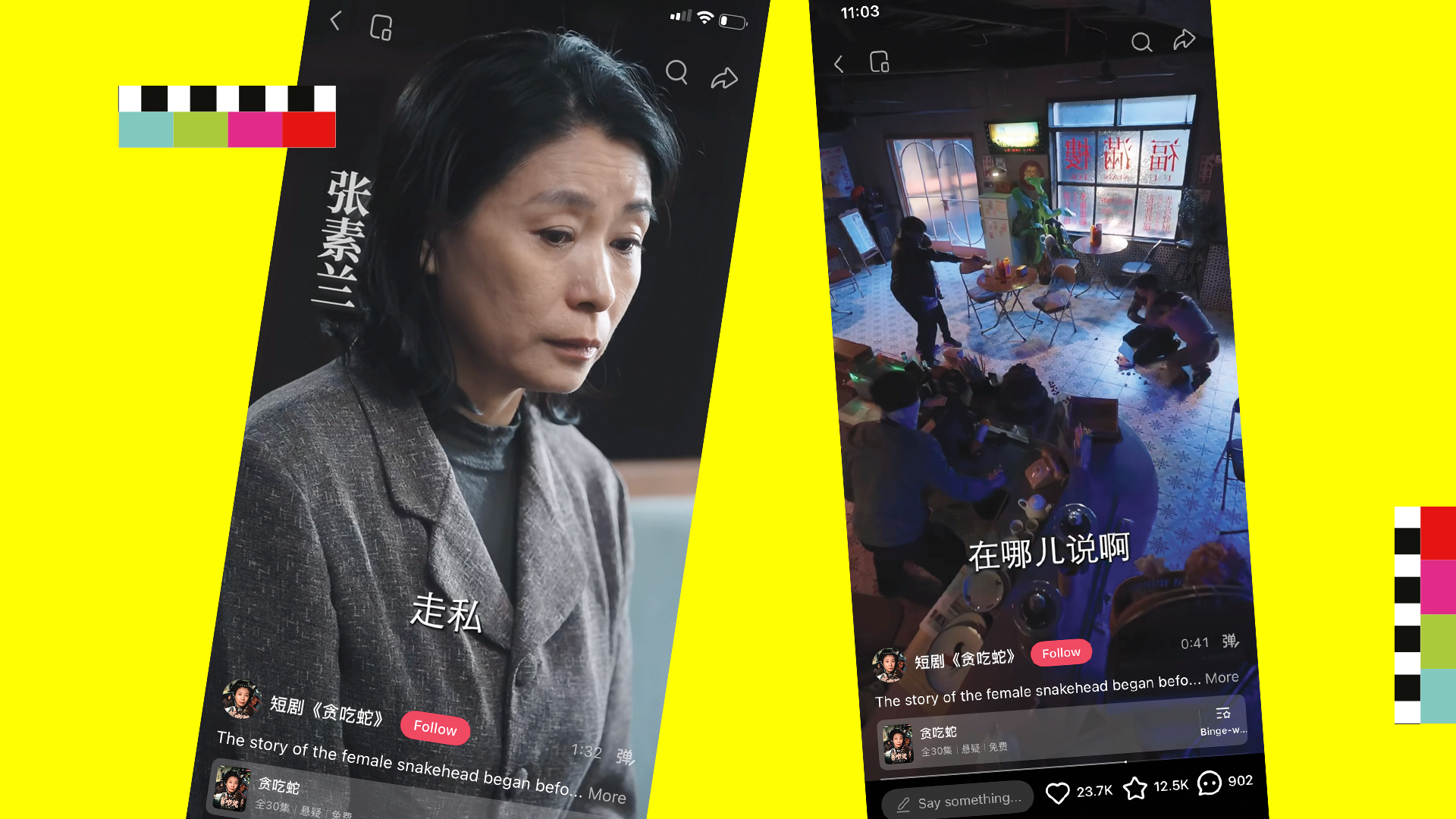
Vertical dramas, or micro dramas – also known as ‘duanju’ in China, where they originated – are mobile-first stories designed to be binge-watched in one- to two-minute episodes. Their entry point is easily accessible, devoid of tediously long set-ups, and they end on a cliffhanger at the exact moment you’d least like them to.
Advertising helps fund Big Issue’s mission to end poverty
Advertisement
They have grown so quickly in China that the industry – worth ¥50 billion (£5.35bn) – overtook the country’s annual film box office (¥42.5bn, or £4.55bn) in 2024. The scale of growth is eye-catching, but even more exciting for those watching the industry is its speed.
As Jen Cooper, a vertical drama expert based in the UK, put it: “These shows can be made with just one month of development, a week of filming, week of post, and it’s on an app. So it’s a total workaround to the traditional process and costs much less to produce.”
Vertical dramas are made for smartphone screens, filmed in the ‘9:16’ format. Stories can run for more than 100 episodes, so while each part is small, the total runtime often adds up to something closer to a feature film.
If you’ve never watched one, they still may have found their way onto your phone. They tend to appear as ads on TikTok, Facebook or Instagram, cut together without the breaks that come every one to two minutes, for maximum drama. Cooper’s first encounter with vertical dramas was one of these adverts.
“I was on TikTok and then an advert for a vertical drama came up. Because I’d already been watching Chinese and Korean dramas, I thought, ‘oh I kind of recognise that story… but they’re doing it with a Western cast filmed in America.’
Advertising helps fund Big Issue’s mission to end poverty
“I followed it through to the app and watched it on that and realised, ‘Wow, there’s quite a lot of other things on here that I’d like to watch. Romantic drama, romantic comedy, the lot. Then of course, once your phone knows you’re interested, it shows you every other app available. Now I find it weird when I have to turn my phone to watch something horizontal, I’m so used to vertical dramas.”
Looking at demographics, the biggest audience is women aged 25-60, making me (28) and Jen (45) the target audience for these sorts of ads.
Most of the adverts I’ve seen revolve around ‘romantasy’, a genre combining sweeping love stories and high-stakes adventure, often in a very affluent or fantasy world. One of the reasons Hanney says they’ve become popular so fast, is because this niche audience was already there, waiting.
“In China there are popular platforms where you could go and read romantasy-type stories and these would be serialised, so these websites would drop one chapter at a time, and you’d pay to unlock that next part of the story,” says Hanney.
“One of these companies began making little video clips to advertise their serial novels, and that got real traction on social media. So that company began to commission a production company to turn their chapters into vertical dramas, and others began to follow. This all started off as social media advertising that got a bit out of hand.”
Hanney says that, while the medium is saturated with romantasy, in China they are trying to explore other ways of telling stories in this format, including horror, gangster, animation and sci-fi. But unlike romantasy, those audiences need to be built from scratch.
Advertising helps fund Big Issue’s mission to end poverty
The mobile model
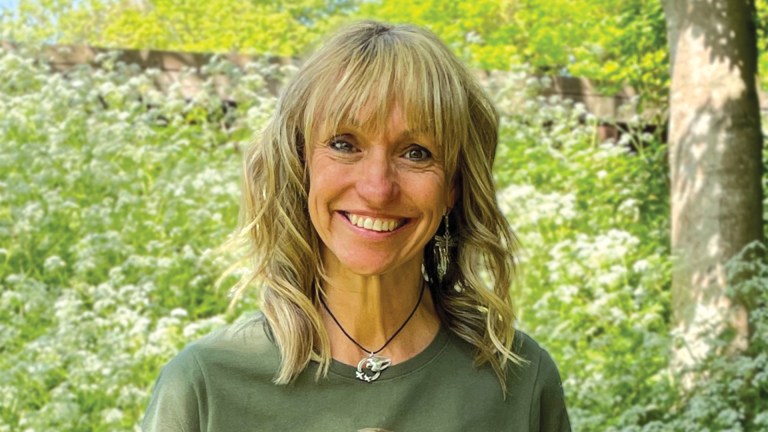
Vertical drama expert Jen Cooper. Image: Jade Tinkler Photography
Like the origins of the duanju, vertical dramas continue to use this pay-per-view model, with each one- to two-minute episode only unlocking after the user pays using inbuilt tokens (coins). It’s a familiar freemium structure often found in mobile gaming.
Cooper explains that most platforms give you seven to 10 episodes free, to bring in a viewer and make them start to care about the characters. The paywall appears once you’re already invested. Some of the notable players, such as ReelShort or DramaBox, charge anywhere between £15 and £19.99 for a week-long subscription.
By contrast, a premium Disney+ or Netflix subscription (UHD) would cost around the same for a month. So why are people paying so much to access this new art form? And can a model like this really compete?
Cooper argues viewers don’t see it as a replacement for TV. They think of it as entertainment spending that sits closer to going out.
“If you compare it to a cinema ticket, it’s about the same,” she says. “I could see one movie at the cinema, or I can unlock 100+ series on one platform.”
In January 2026, TikTok announced a new app called PineDrama. Unlike many other platforms, it seems to be running without subscriptions, instead using adverts to fund the app. With a predicted global market of £15bn+ by 2030, Cooper believes the UK has the potential to become a major hub for vertical drama production.
Advertising helps fund Big Issue’s mission to end poverty
“A lot of vertical dramas are set in this kind of aspirational lifestyle,” she explains. “Obviously we have stately homes and nice hotels and things.”
With film and TV jobs in the UK at risk, the vertical drama boom could be exactly what the sector needs.
Choose your own adventure
Hanney’s view of where this could go next points to something bigger: serial storytelling, personalised at scale. Major platforms are already either developing vertical dramas, or looking at what they could do.
“Take The Sopranos,” he suggests. “This will never happen because the licences copyright… but imagine you could just put in all of the seasons of The Sopranos, get all the writers’ bibles, all the reviews and train an AI. Then say, ‘Can we have a sixth season, please?’
“Maybe you’re sitting at home and you find a character annoying and think, ‘I want him killed off.’ I can just go ‘prompt, prompt, prompt’ and in the next episode I receive, the character will be killed off.
While these AI tools already exist, many are still in their early days. AI is however, already being used in vertical dramas to create effects smaller-budget projects were once locked out from using. Some animation vertical shorts in China are already being created primarily with AI. With a speedier creation process, Hanney says some companies will release multiple versions of a first episode of a drama, see which one does best, and then build the story from that.
Advertising helps fund Big Issue’s mission to end poverty
So what happens to television now?
Whether vertical drama becomes the dominant way people consume scripted content in the UK is still unclear, but Cooper is clear that it’s not just a fad.
“This is here to stay,” she says. “It’s meeting people where they are, which is on their phone.”
It’s been an open secret that streaming drama is now being designed for distracted viewers. Studies show the majority of viewers will be on their phones while watching TV. Instead of trying to force them to change these habits, vertical dramas have found a way to utilise them. If TV really is “dead”, vertical drama is what could replace it: multimedia made to be watched wherever you are, whenever you have a spare minute, and where you may be able to control what happens next.
The toothpaste is out of the (You)Tube
Vertical dramas aren’t the first type of content to capture us on our mobile phones. YouTube is used significantly more on mobile devices than on desktop, with roughly 63-70% of views occurring on our phones. That’s part of why the BBC and YouTube’s new partnership, announced in mid-January 2026, matters. The deal will see the broadcaster make content specifically for the platform.
The partnership is aimed at younger, digital-native audiences, and will kick off with the 2026 Winter Olympics. Planned content includes documentaries, news, sport and entertainment. Children’s programming is one of the biggest categories on YouTube, and the BBC is planning seven channels for that audience alone. The timing is hard to ignore. In December 2025, the number of people watching YouTube in the UK (52 million) overtook the BBC’s combined offering (51 million) on certain metrics for the first time, according to data reported by ratings agency Barb.
YouTube has also become a major home for podcasts. While they began as audio-first, more and more creators have pivoted to video. The format works well for interviews, where viewers can see how guests react in real time, not just hear them.
Advertising helps fund Big Issue’s mission to end poverty
Critics argue the shift risks leaving listeners behind – those who fit podcasts around daily life: cooking or commuting. On the other hand, video podcasting can pull in a new audience who prefer to watch, not just listen.
In 2025, the second most-watched video podcast on YouTube in the UK was Steven Bartlett’s Diary of a CEO, with many episodes running for up to two hours. The top spot went to The Joe Rogan Experience, where episodes regularly stretch past two hours. Does that mean we’re returning to long-form viewing again? Is YouTube not the short-form hub we’re so often told it is? Not exactly.
YouTube is now both: a place for quick hits and deep dives, built around the same habit vertical dramas are capitalising on. Watching whatever you want, whenever you want, on the device already in your hand.
Buy from your local Big Issue vendor every week – and always take the magazine. It’s how vendors earn with dignity and how we fund our work to end poverty.
Advertising helps fund Big Issue’s mission to end poverty