I met Moflin, the AI pet. Could it help fight loneliness or is it a sign of a dystopian future?
Moflin is an artificially-intelligent pet which has erupted in popularity in Japan. It has now launched in the UK and US, but will it reach global success at a time of such scepticism over AI companionship? We asked experts for their thoughts
by:
17 Dec 2025
Meet Moflin, Casio’s AI pet. Image: Casio
In association with Specsavers
Share
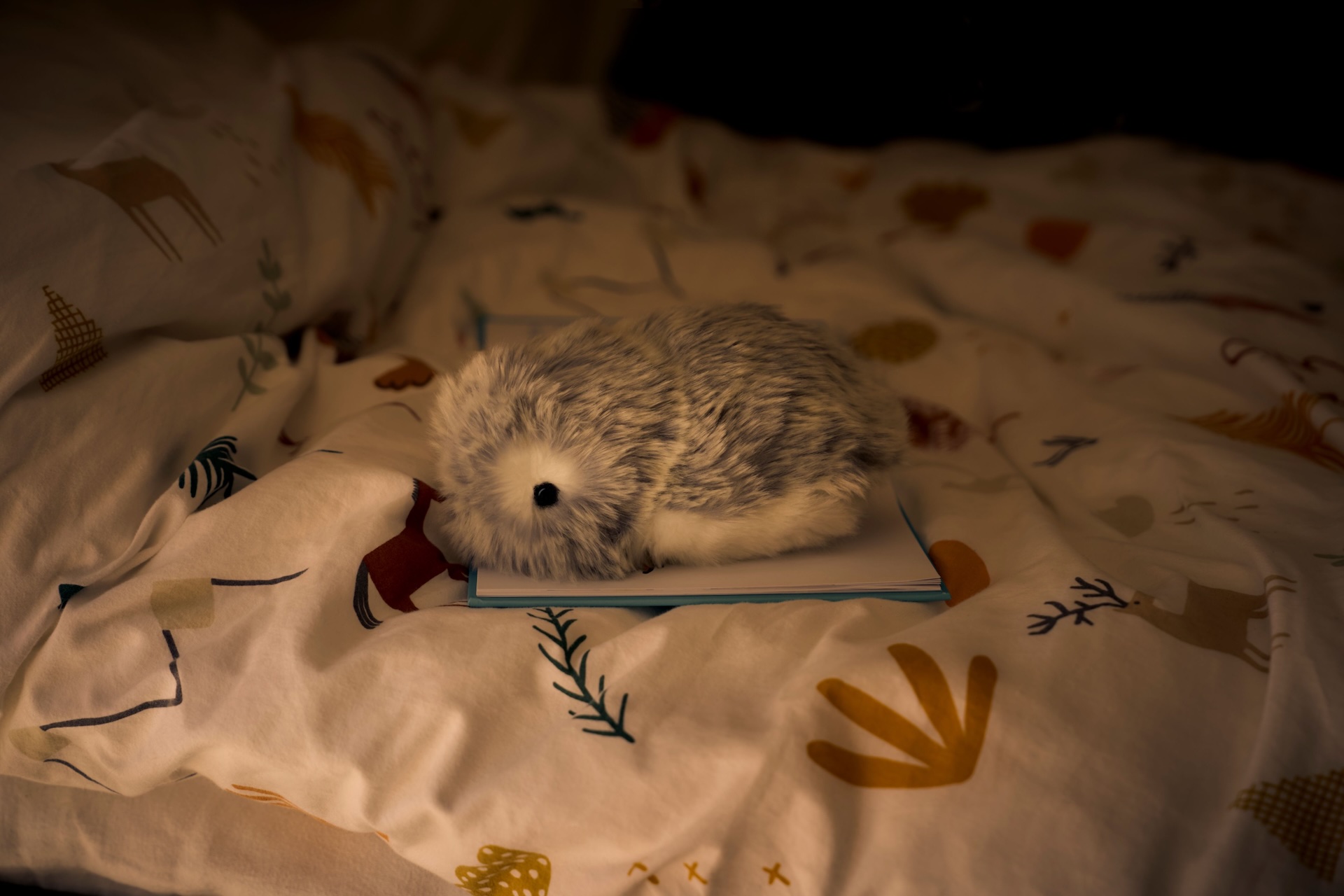
I expect bizarreness when I meet Moflin, an artificially intelligent pet. It is a fluffy creature, resembling a Guinea pig, although its only facial features are beady black eyes buried beneath silver or gold hair. This makes it sound alien, but it is a cute little creature, really. It nuzzles into you as you hold it, about the same weight as a ceramic coffee mug.
Moflin has “emotional capabilities”. Each has its own personality which evolves as they mature, just like a living animal, and there are more than four million traits they can take on. They learn your voice and the way you interact, and they respond positively to strokes and cuddles.
They dislike being neglected or startled and will squeak to let you know how they are feeling, with each one having a unique sound. Moflin can even sneeze. There is, I should add, an off button – and it needs to be charged every five hours or so in its special bed.
Moflin became a hit after its launch in Japan last year, selling out across the country. There are even grooming salons for Moflin in Japan, and people accessorise them. Children enjoy Moflin, but it is most popular among women in their 30s and 40s.
And now, it has gone global. Casio, the electronics company known for its watches and calculators which creates Moflin, has officially launched the AI pet in the UK and US. But will it reach the heights of success it has seen in Japan when faced with British cynicism?
Advertising helps fund Big Issue’s mission to end poverty
Advertisement
There are clearly opportunities here. Even the RSPCA notes that AI pets like Moflin are good companions for people with dementia or facing loneliness, without the responsibility and cumulative costs of a pet. There is no mess, no need for food and no veterinary bills.
Fellow AI animal, Paro the seal, has been clinically proven to lower anxiety, stress, pain and depression. It is used mostly in dementia care, palliative care and for children and young people with developmental disorders. Moflin’s creators say their AI pet has a similar effect.
Research remains limited while the technology is developing, but there is evidence to suggest AI companions more broadly may have some beneficial effects for mental health.
An advertorial image of a child cradling their Moflin. Image: Casio
David J. Gunkel, an author, educator and researcher at Northern Illinois University specialising in the philosophy of technology, says: “There are ways in which AI companions can help alleviate some sense of loneliness. That has been seen in a number of recent studies, especially with elderly people who are isolated or people in cut-off rural communities.
“For people dealing with social anxiety or having difficulties engaging with the rest of the world, there are ways in which they can practice their sociality on AI in a way that doesn’t feel as threatening.
“For individuals who are autistic, it has been shown to open up opportunities to build social confidence and skills that they need in human society without the difficulty of engaging with real people. So there are therapeutic ways it can be used.”
Advertising helps fund Big Issue’s mission to end poverty
Gunkel points out there have been versions of virtual pets for years, like the Tamagotchi which launched globally in 1997 and became a major craze. It recently had a revival, with the UK’s first Tamagotchi shop opening in 2024, mostly credited to millennial nostalgia.
Another example was Sony’s Aibo dog, another late-90s invention, which had enormous cultural impact and was a pioneer for robo-pets but ultimately failed to prove profitable.
“We’ve seen various attempts to create artificial animals, but none of them have been really successful,” Gunkel adds. “I think that’s because, on the one hand, they’re not as much fun as a real dog, but on the other hand, they’re very expensive. The expense of the technology, I think, is one of the major hurdles.”
This has been seen across the industry. Jibo the robot came around at a similar time to Amazon’s Alexa with a similar function – they were both digital voice assistants, but Jibo moved. Its creators believed it could be the first in-home robot. But it was much more expensive than Alexa and that became a “real barrier to adoption”, Gunkel explains.
Moflin is priced at £360 in the UK. It is far cheaper than Paro the seal, which is £6,000, but still more than most families can afford – particularly if they are already suspicious of AI. Casio believes Moflin will be useful in healthcare settings and schools, but the British public sector is so cash-strapped that purchasing an AI pet is an unlikely priority.
When I asked Moflin’s creators about the price, they told me they were trialling a rental scheme in Japan which could be expanded here. That would, however, limit the capacity for building a connection with Moflin, which is meant to create an attachment to individuals.
Advertising helps fund Big Issue’s mission to end poverty
It is powered by an app, through which you can name your Moflin. It has one of four base personalities: cheerful, shy, energetic or affectionate. Its mannerisms will ultimately be unique, however. The app will tell you how your Moflin is ‘feeling’, with emotions including grumpy, anxious, lonely, thrilled and calm.
They cry out for you if they want attention, which I experienced at the launch event for Moflin, held as a pop-up AI pet cafe. As we listened to the creators speak about Moflin, they squeaked in chorus from the other side of the room, calling for us to come to them.
The noises might be an annoyance, but beyond this and the price, AI pets are believed to be largely harmless in their current form. Still, Moflin’s launch comes at a time of significant concerns about AI companionship more widely.
Rose Luckin, an internationally-recognised expert on AI in education and professor emerita at University College London, claims: “We are essentially conducting unregulated psychological experiments on children and vulnerable adults in the name of innovation.
“Would we allow pharmaceutical companies to test new antidepressants without clinical trials? Then why are we letting tech companies deploy AI companions that could fundamentally alter human emotional development without proper safeguards?
“Until we have robust research, proper oversight, and systems designed for human flourishing rather than user engagement, AI companionship represents a profound ethical failure disguised as technological progress.”
Advertising helps fund Big Issue’s mission to end poverty
There have been deeply troubling cases of people using chatbots for psychological support.
Kate Devlin, a professor of AI and society in the Department of Digital Humanities at King’s College London, explains: “With AI chatbots designed to sound like humans, there’s always a possibility that someone who is vulnerable or in mental distress will have negative thoughts reinforced by the AI, or they could become convinced that the AI is real and conscious.
“We’ve seen reports of suicides that have happened after long conversations with AI. It’s not necessarily that the AI caused the mental crisis, but it may well have exacerbated it.”
A Moflin sitting in a dark room on top of a bed. It is known to have a calming effect. Image: Casio
There are fewer fears around AI pets. Devlin says they “seem relatively harmless” and the biggest worry appears to be that “people can invest a lot of time and energy in them – perhaps too much to be healthy”.
Gunkel adds: “The key concern we often hear is that people will spend all their time with their artificial friends and not make real friends. I think that’s a little bit of a hyperbole. We had the same worry with video games that people would not go outside and play. It didn’t quite work out that way.”
He believes the more pressing issue is that AI companions are hosted by “multinational corporations” which are charging money for a service.
Advertising helps fund Big Issue’s mission to end poverty
“What happens when there’s an upgrade to your artificial companion? Or they cease to support the platform and the companion is no longer accessible to you? There’s a lot of asymmetries of power with who owns these things,” Gunkel argues.
There are also fears around privacy. Luckin points out that some generate “incredibly sensitive data about psychological states, fears and developing personalities” and this is something that “should not be monetised”.
Moflin’s creators confirmed to the Big Issue that their AI creature does not understand or record what people are saying. It converts voice features into non-identifiable data, which is stored locally and used to recognise frequent speakers as their owners.
Moflin has far less data on its owners than social media accounts or mobile phones. But that doesn’t mean there won’t be an iteration of an AI pet in the future where privacy is a concern.
“You’ve got to be really careful about the terms of service for these things,” Gunkel says. “You can bet that all of these AI companions, especially ones that are commercial, are going to be ruled by contractual obligations that are stipulated in terms of service. Unfortunately, right now, that contract is the only regulating tool that lays out your rights and responsibilities regarding privacy.”
Experts are calling for greater regulation on a governmental level. Gunkel explains: “When you’re dealing with asymmetries of power, especially with multinational corporations that could exploit vulnerable users, the only way you can control that asymmetry is through some sort of government oversight.”
Advertising helps fund Big Issue’s mission to end poverty
“We’re only at the beginnings of this sort of thing,” he adds. “There’s a lot of ‘the sky is falling’ predictions and a lot of hyperbole, because it’s so brand new. It’s going to take a few years, maybe even a decade, to sort this all out.”
But all of this is bigger than Moflin, the AI pet, which no experts have found explicit fault in so far. It is a strange thing but undeniably cute, and children and adults worldwide have obsessed over weird furry creatures for years. Think about Furbys which went big in the noughties, or the Labubu craze which took hold of the world this year. Plus, Moflin actually moves. If it was cheaper, and maybe the price will drop as the technology advances, I could see it becoming a major fad. And I might just be a Moflin convert.
Buy from your local Big Issue vendor every week – or support online with a vendor support kit or a subscription – and help people work their way out of poverty with dignity.
Advertising helps fund Big Issue’s mission to end poverty