Advertisement
Life

The long, hot summer of 1976 changed Britain. What can we learn from it 50 years later?

The summer of 1976 has gone down in the popular memory as an idealised season in an idealised nation. But what can it teach us?

Summertime in Britain. There’s a wave of street riots; the Labour government’s led by a grey man who nobody seems to like; the Tories’ new female leader is trying on the far right’s clothes; the chancellor says we’ve run out of money; the trade unions aren’t happy; the right-wing media’s in a lather about gay rights; the Israelis are biting back after a Palestinian terrorist attack; America’s gearing up for an election; soul boys are gathering down in Margate; there’s an ultra-right British politician getting far too much coverage for ranting on about immigration; the England cricket team’s in turmoil; and down the pub, someone’s having a party and they’re playing Abba’s Dancing Queen

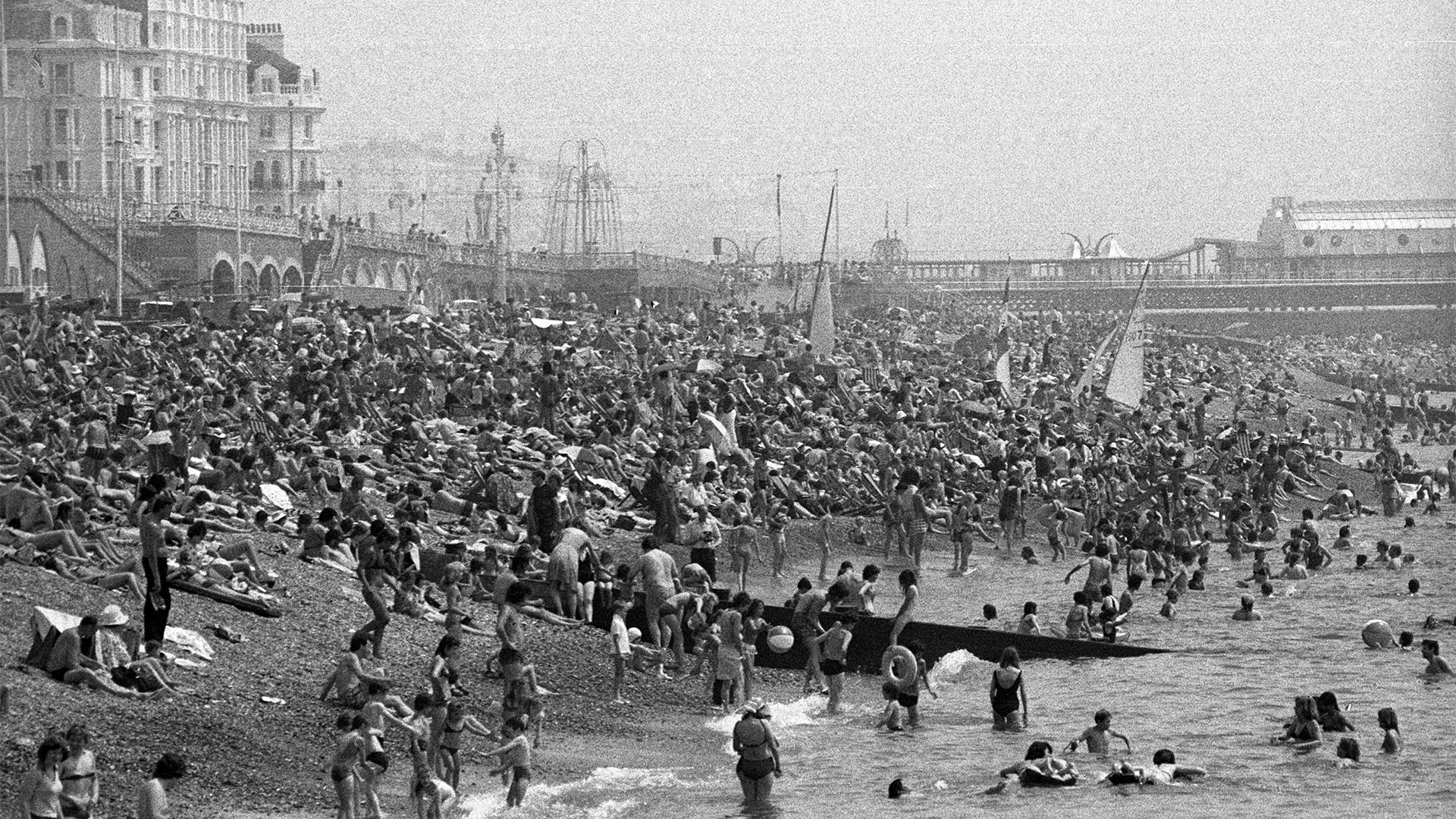
Sounds like 2026, right? Yes, but it’s also what was happening during the long, hot summer of 1976. That summer has gone down in the popular memory as an idealised season in an idealised nation. Months of unbroken sunshine, the hottest one ever: all Fab ice lollies by the seaside, or swimming in the lido, or lying on towels in the back garden; kids drawing their names in the melting tarmac and trying not to step on the crazy plague of ladybirds; jolly families queuing up to get their water from a standpipe. And no killjoys banging on about climate change.

Well, that’s all true, as far as it goes. But sustained hot weather has a way of turning high spirits into anger. Violence starts to spike – whether it be the domestic sort behind closed doors, or the public sort in street riots. As my book points out, that perfect summer was studded with violence. And that’s because Britain, then as now, was a country desperately in need of change but with little idea as to which direction it was going to come from. 


Britain in the summer of 1976 was dry kindling waiting for a match. There were any number of people with reason to rebel: black people, Asian people, gay people, women. All of them were used to being discriminated against in ways great and small. That summer they would all reach breaking point – be they gay men sick of being harassed by police; Asian youths unwilling to stand by while another of their number was murdered; women refusing to accept being paid less than their male counterparts; or black youths exhausted by being continually stopped and searched.

So in Southall, after Sikh teenager Gurdip Singh Chaggar was stabbed to death by a gang of white youths in a racist attack, the supposedly meek and mild local Asian youth rioted for the first time. So on a hot summer night outside a pub in Earl’s Court, gay men decided to defend their turf against police harassment. So in Brentford, the women who worked at the Trico factory stayed out on strike all summer long till they finally won equal pay with the men. So at the Notting Hill Carnival, on the last weekend of this unforgettable summer, black youths fought a pitched battle with the riot police. So in a basement in Soho, London, a band called the Sex Pistols rehearsed, preparing to revolutionise the British music scene.  

At the time such incidents seemed to be isolated events – but seen from half a century later, the summer of 1976 emerges as a pivot point in modern British history. It was during those months of drought and 30°C heat that the old Britain of the postwar era – the all-white country with its monolithic class system and its imperial history – began the transformation to a genuinely multicultural Britain, if also an uncertain and divided one. And this change was not one that took place in parliament, but rather on the cricket pitch and in the record shops, in the sun-baked parks and on the overheated streets. That’s why this summer, which began with hippies playing frisbee in the park, would end four months later in blazing riots.
Advertising helps fund Big Issue’s mission to end poverty
Advertisement

The difference today is that the anger people feel is only partly rooted in any kind of objective reality. Yes, then and now there’s economic hardship as inflation goes up while wages are stagnant, and that fuels the anger. But the grievances that provoked most of the rioting were rooted in real injustices. There were racist demagogues back then, of course, who sought to blame everything on immigration: Enoch Powell was the superficially cultured, respectable face of that, but in his shadow were the appalling likes of John Kingsley Read, the former chairman of the National Front, who left the party to form the National Party in 1976 and commented, following the murder of Gurdip Chaggar, “One down, a million to go” at an NP meeting.

But they didn’t have social media then to broadcast their paranoid fantasies as if they were literal truth. This was still a country with three TV channels, and you got most of your news from the BBC or ITV.

We live in a very different world 50 years on, but that doesn’t mean there aren’t lessons to be learned and even inspiration to be gained from looking back at 1976. One thing that becomes very clear looking back is that there’s a lot more to political change than just the question of which party is in government.

Read more:

The summer of ’76 was the point at which everyone could see that power was slipping away from Labour, with its uninspiring prime minister Jim Callaghan, and towards a resurgent Tory Party, with its new leader Margaret Thatcher demonstrating that she was no novelty appointment, but a force to be reckoned with. At the next election she would sweep into power with a mission to destroy the power of the unions and privatise everything in sight. So, did the summer of ’76 simply presage a swing to the right?

Well, not exactly. All the people who had stood up for themselves that summer – Asian people, black people, women, gay people – were emboldened to become potent forces in the political landscape. Radical movements came out of that summer, like the Southall Youth Movement and Rock Against Racism (inspired by a racist rant unleashed by Eric Clapton). Magazines such as the feminist Spare Rib or Darcus Howe’s Race Today started to flourish. 

Advertising helps fund Big Issue’s mission to end poverty

Up to that point Britain had still been in the shadow of the war. All our leaders up until then had served in the war. There was a sense that we were all in it together, but also that we were all white and straight and knew our place. After that summer we may have lost that collective sense, but we were also a far more tolerant and progressive society, if a more individualistic one.

What will happen this summer, with all its echoes of that turbulent season? Well, it’s another challenging time, for sure. But the message from the past is loud and clear: If you believe in freedom and equality then you need to stand up for it.

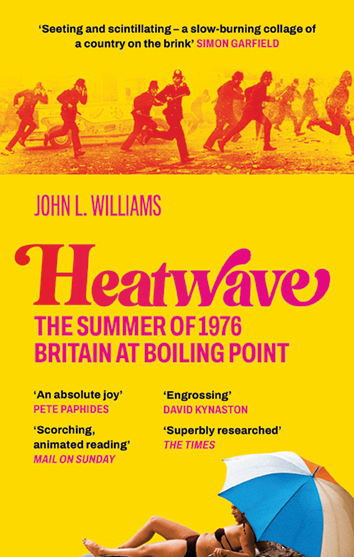
Heatwaveby John L Williams is out now (Monoray, £10.99). You can buy it from the Big Issue shop on bookshop.org, which helps to support Big Issue and independent bookshops.

Do you have a story to tell or opinions to share about this? Get in touch and tell us more

Change a vendor’s life.

Buy from your local Big Issue vendor every week – and always take the magazine. It’s how vendors earn with dignity and move forward.

Advertising helps fund Big Issue’s mission to end poverty

You can also support online:
Subscribe to the magazine or support our work with a monthly gift. Your support helps vendors earn, learn and thrive while strengthening our frontline services.

Thank you for standing with Big Issue vendors.

Advertising helps fund Big Issue’s mission to end poverty

Do you know how Big Issue 'really' works?

Watch this simple explanation.

Recommended for you

Read All
Why community art is prevention, not decoration
Advertorial

Why community art is prevention, not decoration

The cost of bringing up a baby is rising. Parents need help
Finance

The cost of bringing up a baby is rising. Parents need help

'The EU stands for corruption, nepotism, illegality and waste. Why would we reverse Brexit?'
A Union Jack and a European Union flag to illustrate Brexit
Letters

'The EU stands for corruption, nepotism, illegality and waste. Why would we reverse Brexit?'

Alex never thought he would need benefits – then he lost his job and needed universal credit to survive
A man and a child play with an orange football on a beach, with houses in the background.
Advertorial

Alex never thought he would need benefits – then he lost his job and needed universal credit to survive

Most Popular

Read All
Renters pay their landlords' buy-to-let mortgages, so they should get a share of the profits
Renters: A mortgage lender's window advertising buy-to-let products
1.

Renters pay their landlords' buy-to-let mortgages, so they should get a share of the profits

Exclusive: Disabled people are 'set up to fail' by the DWP in target-driven disability benefits system, whistleblowers reveal
Pound coins on a piece of paper with disability living allowancve
2.

Exclusive: Disabled people are 'set up to fail' by the DWP in target-driven disability benefits system, whistleblowers reveal

Cost of living payments: Where to get help in 2025 now the scheme is over
next dwp cost of living payment 2023
3.

Cost of living payments: Where to get help in 2025 now the scheme is over

Citroën Ami: the tiny electric vehicle driving change with The Big Issue
4.

Citroën Ami: the tiny electric vehicle driving change with The Big Issue