On a scale of zero to seven – where zero meant that nothing was remembered correctly and seven meant that every aspect of the report was correct – 11 of the 44 subjects scored zero; five of those zeros nevertheless expressed high confidence in the accuracy of their memories. These results have been replicated in so many further studies that it is difficult to doubt them. Memories, in certain respects at least, are endemically inaccurate.
Read more:
We now know why this is: it is a consequence of the way in which memories are retrieved. The creation of a memory is known as encoding. When an event is first experienced, it enters short-term memory. Short-term memories are notably labile – vulnerable to distortion by external factors. Encoding is a biological construction operation in which – through a series of gene activations and resulting protein synthesis – new connections are built between neurons. The result is what’s known as the consolidation of a memory in a more stable, long-term form.
Continue reading for free
Registration is free and takes less than 30 seconds.
Our supporters make Big Issue’s work possible. Join us to see the impact we’re having together and discover more ways to help people facing poverty access income, opportunity and support.
The biggest discovery in memory science in recent decades is that the process of memory retrieval is very like the original process of encoding. When a memory is recalled, it returns to the unstable, labile state characteristic of short-term memory. It must then undergo a process of reconsolidation – biological reconstruction of the sort that occurred during consolidation. Inaccuracy is a consequence of this. Every time a memory is retrieved, and re-assumes a labile state, there is a danger it will be distorted.
Plato compared memory to a tablet of wax. Impressions (experiences) are initially formed in the soft wax, which is susceptible to smudging. The wax then hardens, forming more robust long-term memories. Put in these terms, whenever we retrieve a memory, the wax must soften again. It is not inevitable that the newly labile memory will be ‘smudged’, but there is always a chance.
Memories are supposed to make us who we are by connecting us to a past that has formed us. However, not only is almost all this past unaccounted for by memory, even when we do remember, our memories are likely to be inaccurate, sometimes wildly so, and the more we try to remember the more inaccurate they become. Ironically, every time we retrieve a memory, there is a danger it will take us further from the past it is supposed to capture.
Advertising helps fund Big Issue’s mission to end poverty
How, then, can our memories make us who we are? They can, I am still convinced of this. But that is only because we are not what we have taken ourselves to be. Created by a past we may be, but we also create ourselves – sometimes bearing an uncanny resemblance to fictional characters. Moreover, some of our memories are not straightforwardly our own – they are as much the memories of others as they are ours.
Rather than being isolated individuals, we overlap with other people. Far from being rigid and impermeable, the boundaries between us are sometimes gossamer thin.
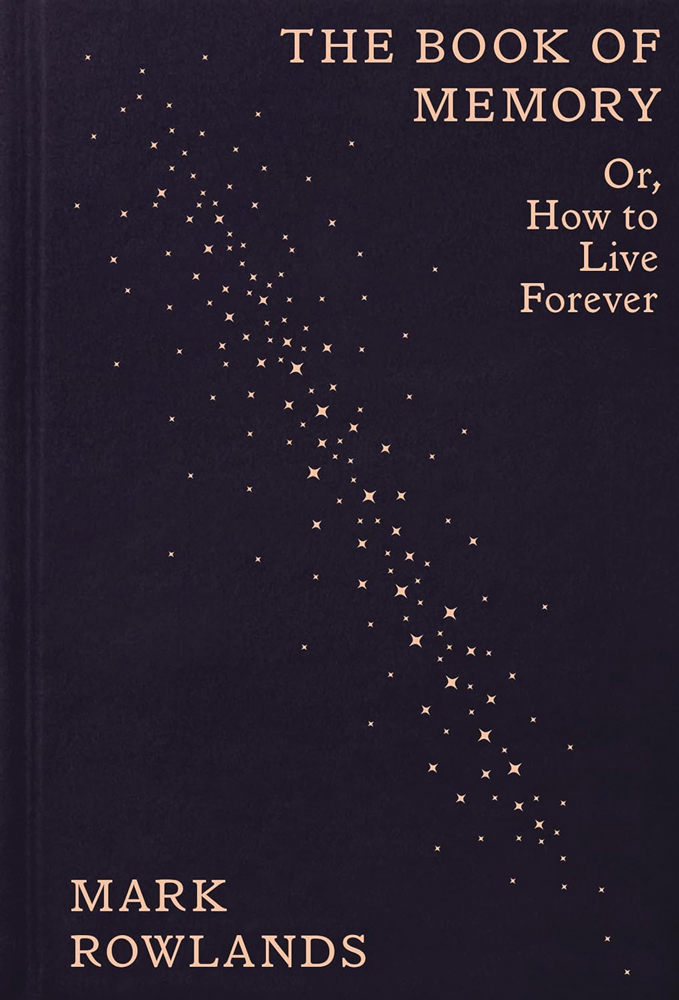
The Book of Memory by Mark Rowlands is out now (Granta, £14.99).
You can buy it from the Big Issue shop on bookshop.org, which helps to support Big Issue and independent bookshops.
Do you have a story to tell or opinions to share about this? Get in touch and tell us more.
Change a vendor’s life this Christmas.
Advertising helps fund Big Issue’s mission to end poverty
Buy from your local Big Issue vendor every week – or support online with a vendor support kit or a subscription – and help people work their way out of poverty with dignity.