In the Paddington area, these people find themselves turning to the North Paddington Foodbank [NPFB]. Although food bank doesn’t seem to be quite the right term. “We’re the only cash-first food bank in the UK,” Delap explains.
There are more than 2,500 food banks run by organisations like Trussell or independently in the UK. Trussell alone distributed 2.9 million food parcels last year. They all operate in largely the same way, redirecting donated food to people experiencing poverty.
The NPFB is different. Clients are referred by partners such as GPs, social workers and housing associations and case by case, every individual’s needs are assessed so support is bespoke and tailored. It might be that money runs out the week before somebody’s payday, so they’re given some cash to tide them over, or that their wage is never quite enough to cover rent in the area.
The NPFB doesn’t just look at what people need but also helps them boost the money they do have and checks whether they are getting all they’re entitled to using an “income maximisation tool”.
Delap explains: “Are they receiving what they should be receiving? Is their rent too high? Are their bills too high? Should they be paying council tax? There’s lots of low hanging fruit you can find through doing that assessment.
Read more:
Advertising helps fund Big Issue’s mission to end poverty
“The needs for everyone are not just food. Food is just one indicator of a much bigger problem. Cash is the issue and then you can do wraparound holistic support.”
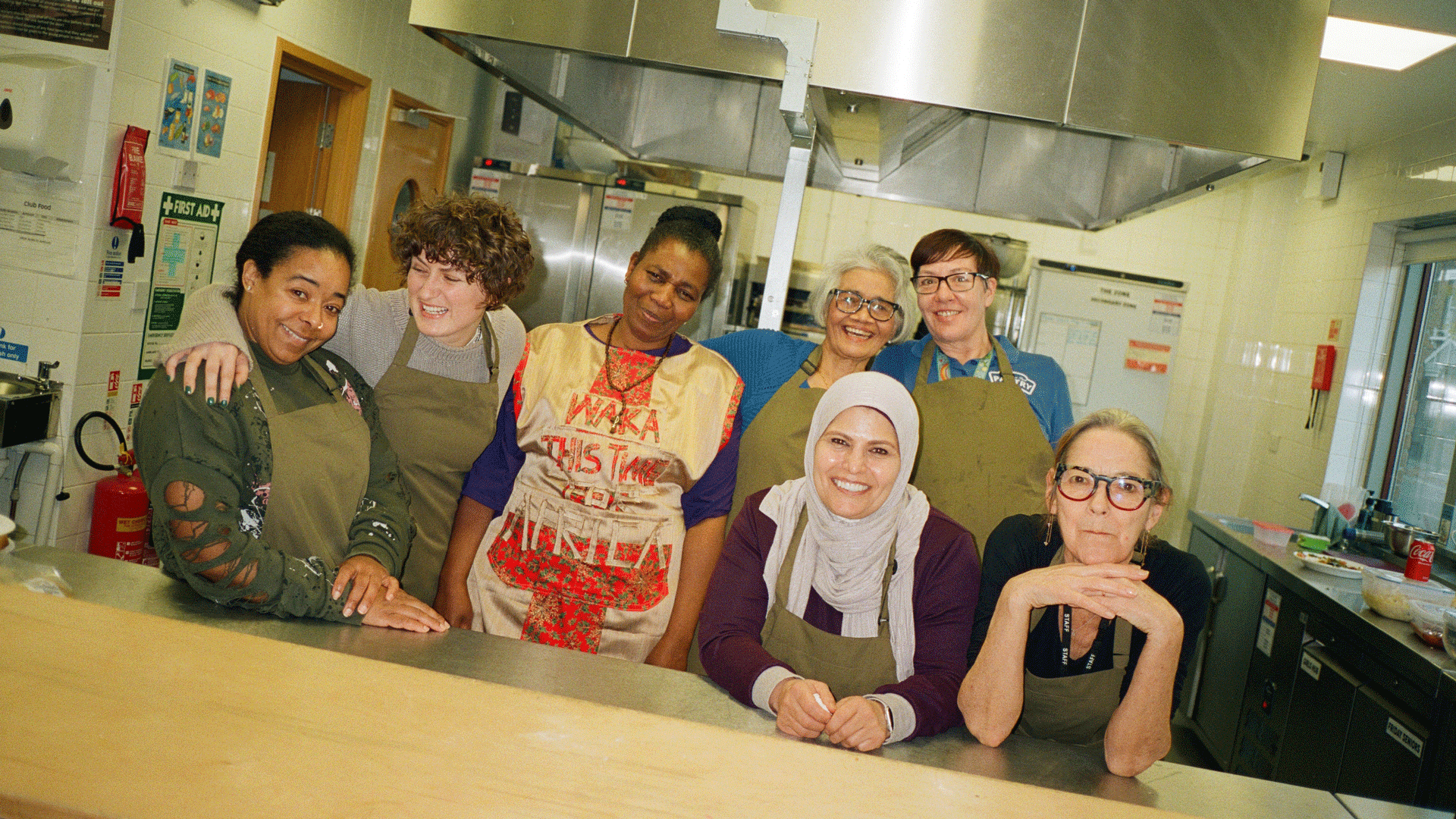
So instead of shelves and tables of food in this food bank, there is a community hub, open 12 hours a day, six days a week, and a mental health crisis hub available every day of the year. There is advice around housing welfare available and English lessons but embedded into a rich programme that includes film and spoken-word nights.
The journey to begin the first cash-first food bank began during the pandemic. Delap was head of libraries for Haringey and when they closed their doors, he moved to help with food parcel distribution.
“It was this huge operation to source and buy and distribute food, like 50,000 meal parcels a week. People were getting ill, I thought this is basically a load of nonsense. Why are we not just sending people vouchers to go and buy food themselves?”
When he took the role at the NPFB, he kept that thinking in mind. Starting with limited resources – despite being the biggest food aid charity in Westminster – there was no option except to go cash-first. Three years on, they are about to publish a report that outlines their process, successes and could serve as a blueprint for others to replicate.
Giving people in poverty money is widely accepted by experts to be the best way to help them and break the cycle of future generations becoming trapped. Thirty-five years ago, Big Issue began with a similarly simple but revolutionary idea – allow sellers to earn their own income to do with as they wish. All this time later, the same myths around who can be responsible with money persist.
Advertising helps fund Big Issue’s mission to end poverty
“Yeah, you can’t just give poor people money, can you?” says Delap, echoing common criticisms. “Sadly, they are still the questions you get from all different types of stakeholders. ‘Oh, do you get receipts from people?’ No. If I give a single parent some money to go and buy the things they need, I’m pretty sure they’re going to do it.
“That’s one of the main myths we’ve tackled through this report, because we’ve seen some amazing, incredible, long-term outcomes where people have been in complete financial crisis and dependent on food banks and within six months have sorted out their debts or mental health.”
Delap talks about someone who first walked into the NPFB as a homeless refugee. He would sleep rough in the area around Paddington Station. Delap used to call him there late at night when he found out whether or not there had been any accommodation found for him.
“We did work around housing support, teaching him English, getting him volunteering. Now he’s working as an Uber driver. He’s got his own flat. He’s fully integrated into the community, and he still
volunteers with us. And that’s within the last six months.”
You can find help, or support the work of North Paddington Foodbank here.
Do you have a story to tell or opinions to share about this? Get in touch and tell us more.
Advertising helps fund Big Issue’s mission to end poverty
Change a vendor’s life this winter.
Buy from your local Big Issue vendor every week – and always take the magazine. It’s how vendors earn with dignity and how we fund our work to end poverty.
You can also support online with a vendor support kit or a magazine subscription. Thank you for standing with Big Issue vendors.