Fifty years ago, the United States celebrated the 200th anniversary of its declaration of independence from the United Kingdom. It did so at a time of deep political divide and increasing cultural tensions, as the spectre of a divisive president and an unpopular foreign war loomed large.
Now, as America prepares to celebrate the 250th anniversary of its independence, much has changed: The Cold War has ended; China is fully engaged on the world stage; US global dominance is now far more relative and technology has revolutionised global travel, communication, finance, and commerce.
Buy the USA 250 Big Issue magazine now from the Big Issue Shop
For all that has changed, however, serious challenges remain to confound those chosen to lead the land of the free and the home of the brave. Despite the end of the Cold War, suspicions abound between Washington and the Kremlin; the Korean Peninsula and the Middle East remain sources of international tension and the rise of China has failed to ease relations between the White House and Beijing.
The deep-seated divisions that polarise the US along political, social and cultural lines ensure that this year’s celebrations, like those in 1976, will occur in the shadow of an unpopular foreign war, haunted by a divisive and impeached president, rising inflation and a soaring cost of living crisis. As I note in my book, US Grand Strategy and the Madman Theory, much of what Donald Trump has sought to enact during his two non-consecutive terms in office appears to many to defy expectations of the presidency.
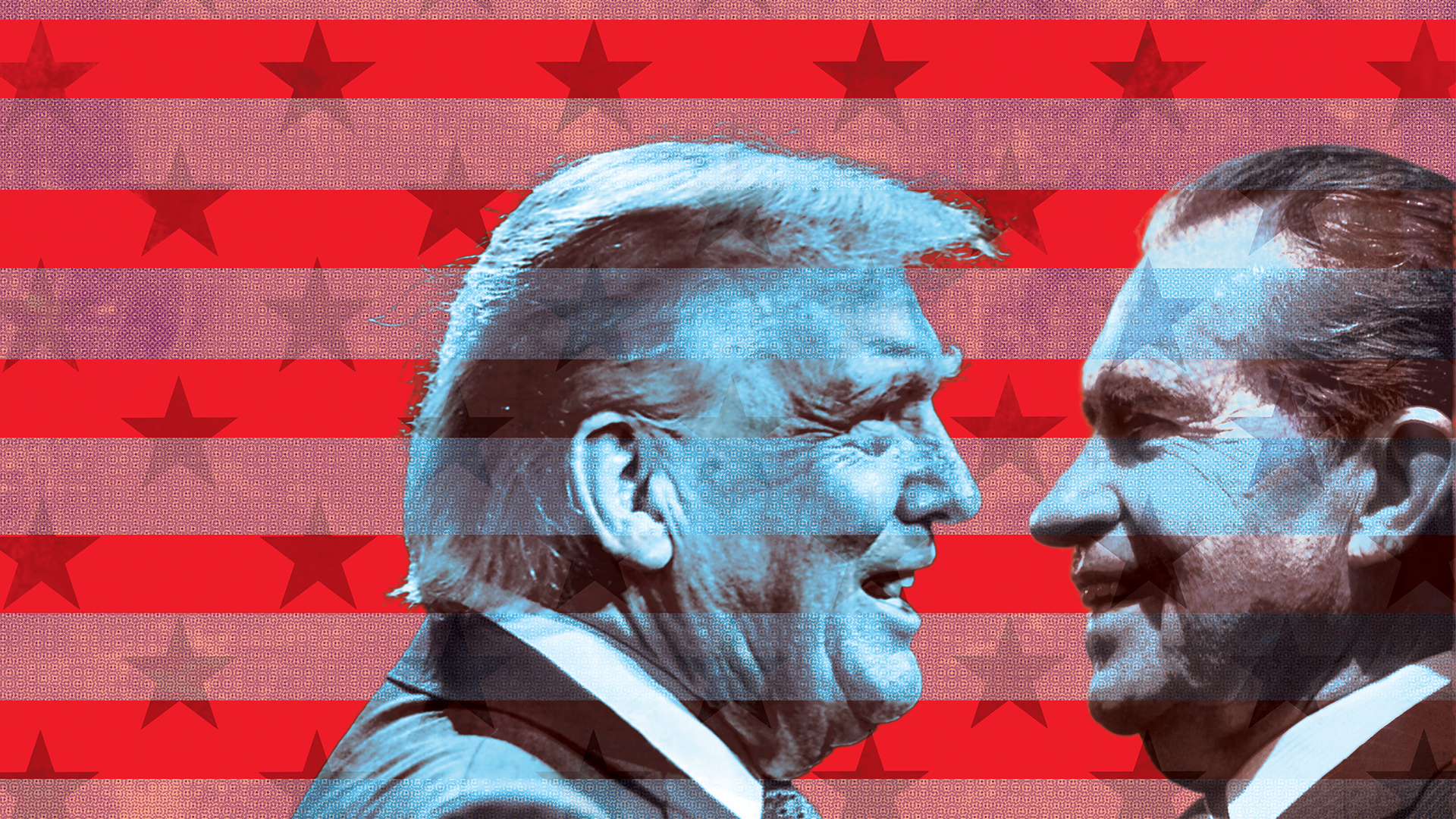
Despite his apparent status as a ‘unique’ president, Trump’s approach to politics bears striking parallels with that of Richard Nixon, whose legacy overshadowed the 1976 bicentennial. The domestic similarities are apparent in their hostile relationship with the media, their efforts to use judicial nominations to reconfigure the American way of life and their shared experience of impeachment. Both embraced a foreign policy that used the threat of extreme military force against adversaries, a tactic known as the ‘Madman Theory’. The rationale for this reveals much about the two men, the policies they sought to initiate and the times through which they governed.
As has become evident in North Korea, Venezuela and Iran, the Trump administration’s embrace of the Madman Theory, with its use of incendiary language and threats to deploy overwhelming military force in defence of US national interests, reveals the extent to which the world beyond US shores has become beholden to the whims of an American chief executive.