Meet the dads who started a podcast about their experiences raising autistic children
As part of Big Issue’s series on the special education (SEND) system, we spoke to the hosts of Autism Dadcast about their journey to helping other dads
by:
22 Feb 2026
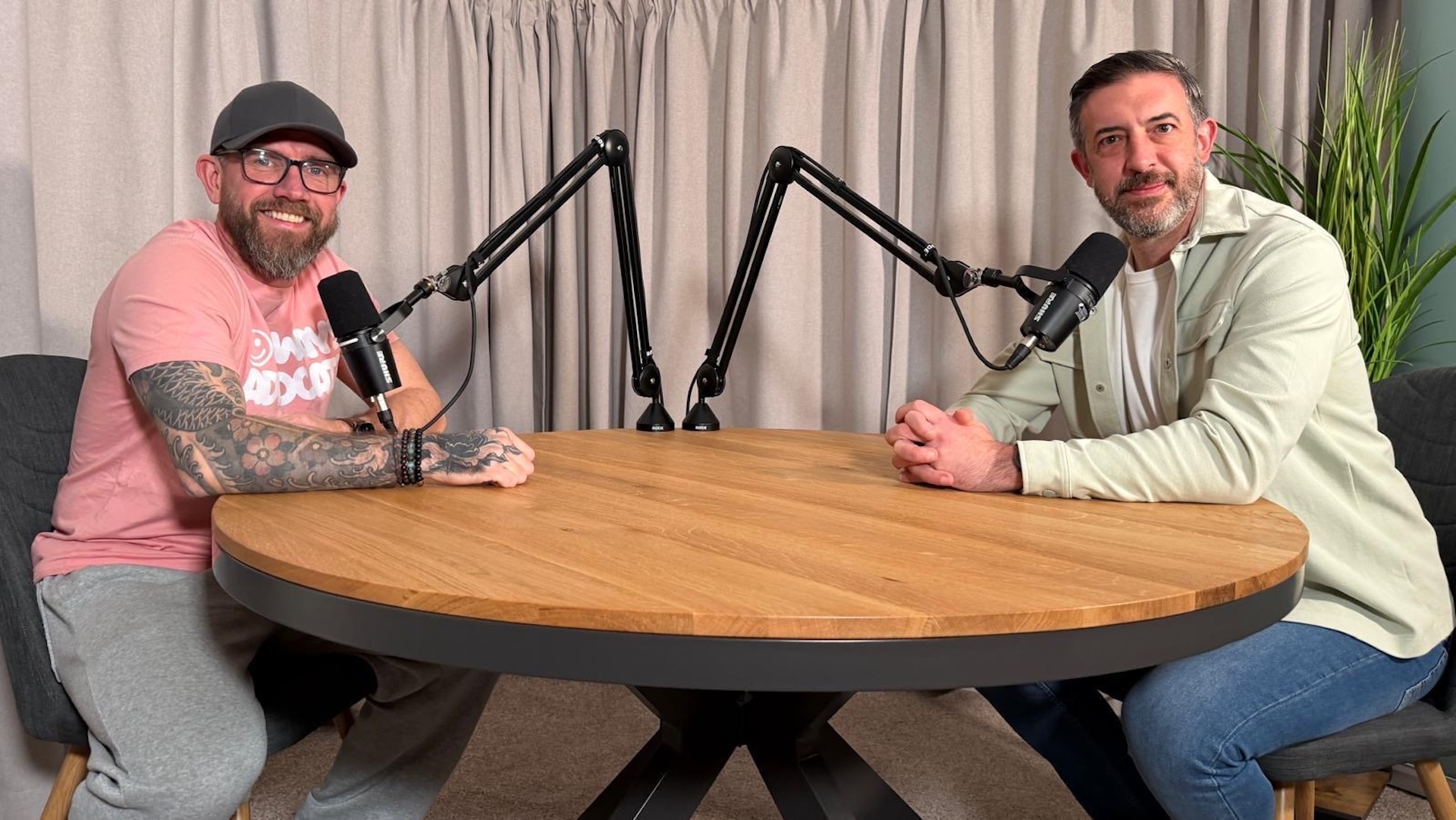
The hosts of Autism Dadcast, Gaz Hitchin (left) and Andy Williams (right). Image: Autism Dadcast
Share
Gaz Hitchin and Andy Williams met for the first time in Birmingham Airport at half past midnight, at the only place still open for a coffee. They sat there and spoke for hours, offloading details about their lives that no one had ever seemed to understand before. If this was a film, this scene would be their meet cute.
Hitchin and Williams have a lot in common. They live in Shropshire. They like to run. Most importantly, they are both dads to profoundly autistic children. Williams has Lydia, who is five, and Hitchin has Thomas, who is six.
“Mums often carry a lot of the weight when it comes to SEND children,” Williams admits.
“They’re good at signposting dads to reels or articles. From a dad’s point of view, sometimes you can’t relate to people because they’re clinicians or psychologists, and you’re so exhausted and can’t take in all this information, or they are mums you don’t necessarily connect with. But Gaz had been proactive on social media in sharing his experiences and Lydia’s mum sent me one of his reels.”
They exchanged a few messages. Then Williams saw an advert for running the Paris Half Marathon for Ambitious About Autism (it seemed more exciting than running round Manchester). “I sent Gaz a message and said: ‘Do you fancy this?’ Lo and behold, he said: ‘Why not?’”
Advertising helps fund Big Issue’s mission to end poverty
Advertisement
That takes us to half past midnight at Birmingham Airport. “We sat there for literally hours drinking coffee and talking about our experiences and going: ‘Oh my god, you finally get it.’ It became like a therapy session for us,” Williams recalls. “Then we did the half marathon, and we said to each other: ‘Where are the dads in this?’”
The next step came to them quickly: they would set up a podcast to speak about their experiences and help other dads. They thought no one would listen to it, but Autism Dadcast resonated with people and grew quickly. They now have more than 83,000 followers on Instagram.
“The vast majority of stuff we were being sign-posted to is very much mum-led, which is fantastic, but it would be better if you had both parents on the same page, doing the best they can for their child, rather than one leading the way and one going: ‘Let me know when you want something,’” Williams says.
“We have spoken to many dads who are bottling it up, avoiding going home. They might ask if there’s anything their partner wants from the supermarket just to delay things. They might turn to the bottle a little bit more until they get their head round it. But ultimately what we want is the best for the child, which means both parents doing as much as they possibly can to ensure that the child reaches their potential, whatever that may look like.”
The dads speak openly about their experiences of the SEND system and the emotional toll it takes on them. It is a system which can be painful to navigate for the entire family.
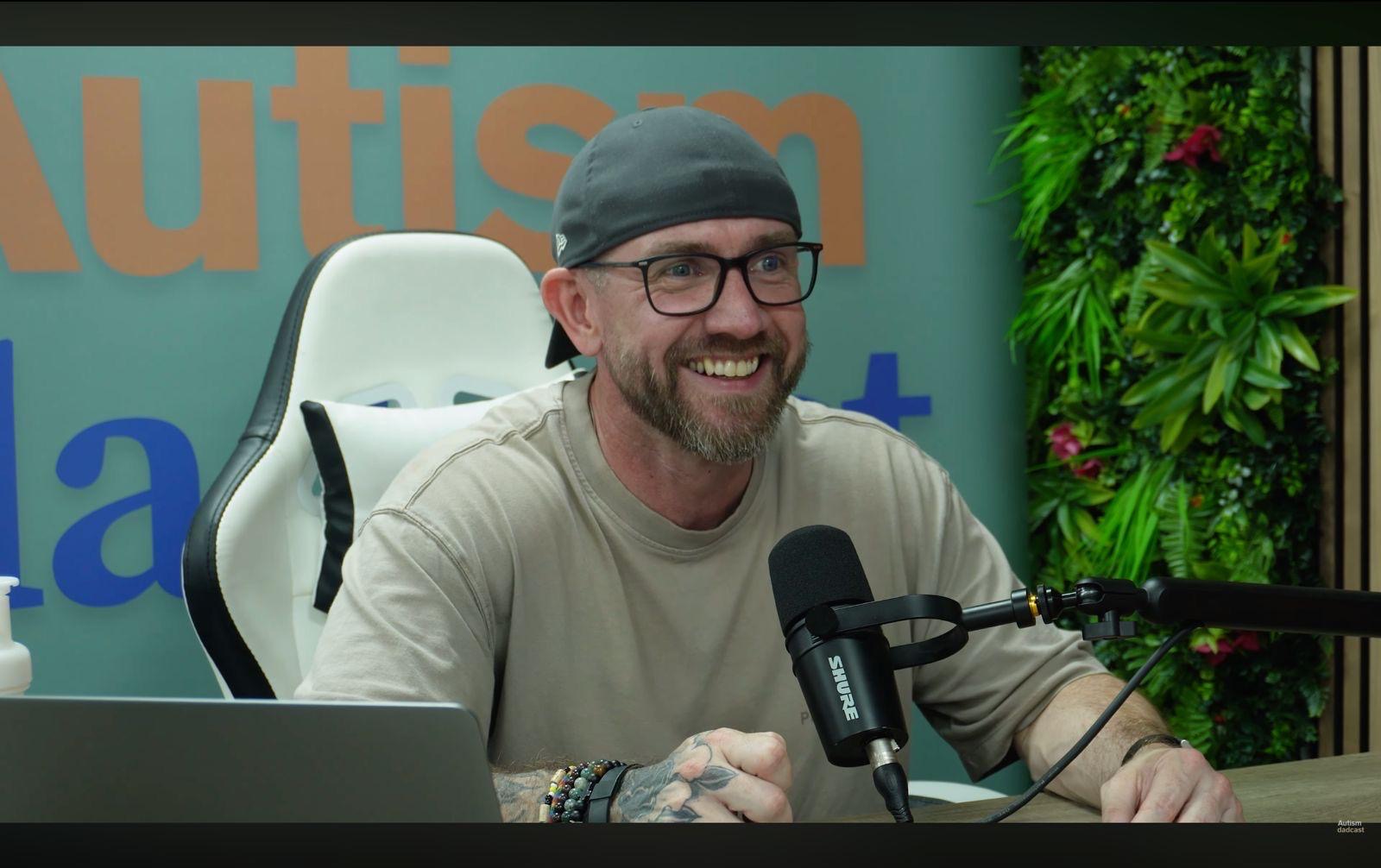
Gaz Hitchin speaks openly about his son’s struggles with early years education. Image: Autism Dadcast
“The early years were a particular struggle,” says Hitchin. “You almost have to put your child up to fail to prove that something is going on. We put Thomas into a mainstream nursery knowing it wasn’t going to work. We did it step by step. We took him in before it opened just to get him used to it. The next week we brought him back when there were a few kids there, and it was horrendous. Thomas suffered more than anyone.
Advertising helps fund Big Issue’s mission to end poverty
“You want to get the best support you can for your child, but the only way he’s going to get it is by putting him through a situation that he’s going to find extremely challenging. You’re putting him through hell and he can’t understand why.”
Hitchin recalls the first day he took Thomas to nursery. “When I say it was horrendous, he was literally there for an hour. It was just an hour. We sat in the car crying because we knew what we had left him with. The staff at the school were fantastic.
“There’s no EHCP [educational, health and care plan] at this point, so there’s no one-to-one, but off their own backs, they pulled a member of staff away from another class to spend time with him. We walked in and she had him on her lap and was rocking him. We said: ‘How was that?’ And she said: ‘It was OK.’ And I just thought: ‘That was horrendous for both of you.’”
Williams says that he faced similar experiences with his daughter.
“We knew something was different with Lydia from a young age. She wasn’t making eye contact or clapping her hands in the way neurotypical children are supposed to. After a year or two, it became obvious she is profoundly autistic,” he says.
“She has non-verbal delay. We were probably more fortunate because it was undeniable. Both Lydia and Thomas are now in specialist settings. If you have that SEND-betweener, when kids are autistic but they can go into mainstream, there are real issues.”
Advertising helps fund Big Issue’s mission to end poverty
Both their children are in specialist settings now and are doing “amazingly”. “It’s a testament to how great specialist schools are. If only the government had more money to create larger schools and train more teachers or specialists,” Hitchin says.
The dads have spoken to the Big Issue as part of our series around the SEND system, as the government sets out plans to reform it, with a white paper expected imminently.
“The assumption with the reforms is that everything is going to get worse. Everybody is so scared in the community,” Hitchins says.
There are particular concerns about the government’s plans for EHCPs, which are legally-binding plans for local authorities to ensure that children with SEND have their needs met. Hitchin says these plans are “fantastic when you have them and they are adhered to”, but the “problem” is that councils sometimes fail to adhere to them.
“EHCPs are supposed to be a legal backstop, but there’s no retribution when deadlines aren’t met. What’s the point in having a legal backstop if there’s no accountability? Everybody’s very concerned that if the thing that comes in as part of the reform isn’t as sturdy as the EHCP, things are going to end up getting worse,” Hitchin says.
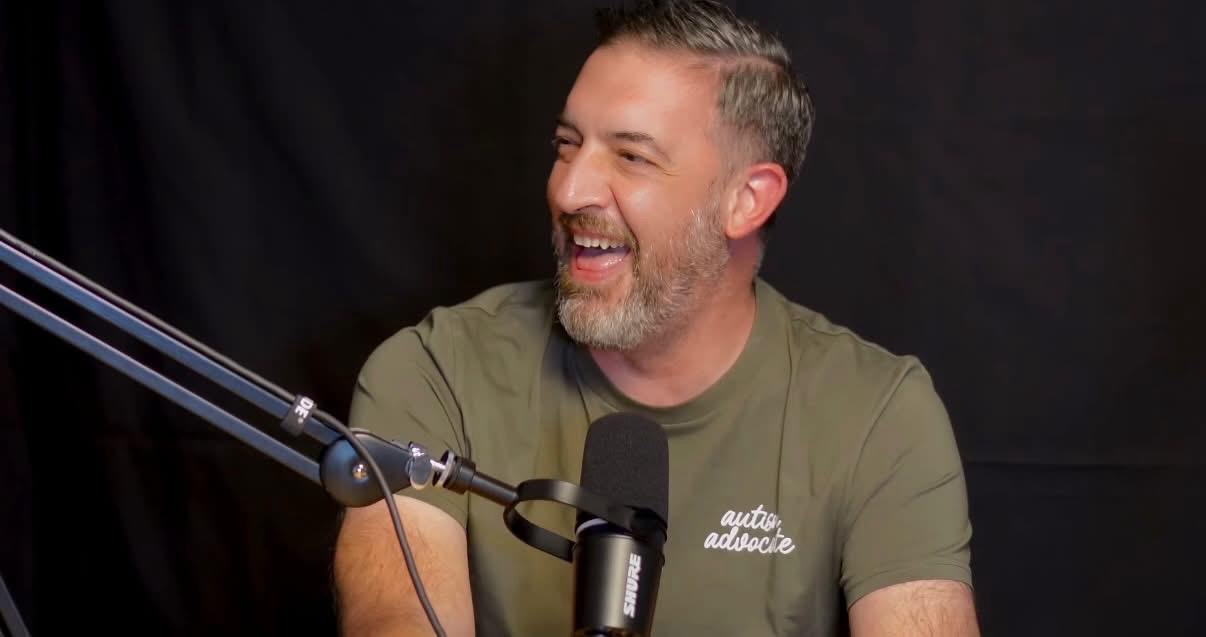
Andy Williams says there is a “grief” experienced when you have a child with SEND. Image: Autism Dadcast
Williams adds: “Although it’s not the best system at the moment, at least it’s something we can use as a family. The fear is they’ll remove that and then we have no legal framework.”
Advertising helps fund Big Issue’s mission to end poverty
Big Issue has heard that some children are missing out on months – even years – of education because schools do not have the capacity to support their needs. Williams and Hitchin are among seven parents who have shared their experiences as part of our series on the SEND system.
“It is horrendous. And it’s not just horrendous for the children. It is horrendous for the parents. They can’t work. They can’t pay bills. Ultimately, every child has a right to education. That education is going to be different for everybody,” Hitchin says.
“There’s an argument that even in a typical setting, education should be more finely tuned to the pupil because there’s going to be a lot of undiagnosed children in mainstream schools that are neurodivergent in some aspects. It’s just a standard human right, as far as I’m concerned, that children should receive education. And when they’re not receiving it, because local authorities and governments aren’t doing their jobs, it’s a travesty.”
Responding to the Big Issue’s series around the SEND system, a Department for Education spokesperson said: ”These heartbreaking cases show why it’s so crucial we strengthen support for children with SEND and ensure families get help earlier and closer to home.
”We know too many parents are forced to fight for support, with rising demand meaning children’s needs can escalate to crisis point before help arrives. That is not good enough – and our reforms will mean more support for children, not less.”
The spokesperson says reforms will be designed to “strengthen support for children and ensure help is delivered earlier and more consistently”, adding that the government has committed to “unprecedented long-term investment”.
Advertising helps fund Big Issue’s mission to end poverty
This includes £200 million to train teachers in SEND and at least £3 billion to create 50,000 new specialist places. “There will always be a legal right to additional support for children with SEND,” the spokesperson adds.
Despite these reassurances, there remain fears that SEND support will be reduced rather than enhanced.
Hitchin argues that “money is being wasted and communication between local authorities and government just isn’t enough”. “This isn’t about bringing in money. It’s about managing the money that’s there, talking to each other, meeting deadlines,” he says.
“Each local authority is different,” Williams adds. “Standardise the process so that it doesn’t matter where you live and that there isn’t this postcode lottery – so you can be assured that your child will get the correct and right support that they need.”
In his daughter’s specialist school, there were only six places for her age group. “Although I was absolutely elated that Lydia got the place that she actually needed, when the dust settled, I thought to myself: ‘Goodness me, there could be another 20 families out there who got those different phone calls saying your child hasn’t got a place.”
That often means a parent having to give up work to support their child while they wait to see if they will be assigned another place, and there is never a guarantee that will happen.
Advertising helps fund Big Issue’s mission to end poverty
Hitchin and Williams are clear they are not experts – they only know what they do through experience, but they try to share advice and signpost parents to support when they can.
As for words of wisdom to share with parents at the start of their journeys, Hitchin says: “Find a community, whether that’s us or anyone. Those first few months and years of accepting it are hard enough as it is. Find people who are a little bit ahead of you and can say: ‘It’s all going to be alright.’”
“I’d say work through that grief that you are going to have,” Williams adds. “As soon as you come to accept that your child is going to require extra help, you can become pragmatic. You need to arm yourself with information and support your child as best as you can and develop a really thick skin.
“Be prepared to roll your sleeves up and get into a fight sometimes with local authorities or anybody else to get your child what they need.”
Listen to Autism Dadcast on Spotify, Apple, YouTube, or wherever you get your podcasts.
Advertising helps fund Big Issue’s mission to end poverty
Change a vendor’s life this winter.
Buy from your local Big Issue vendor every week – and always take the magazine. It’s how vendors earn with dignity and how we fund our work to end poverty.