“Homeless people, they have a right to exist without this government mandated document. They don’t need a ‘BritCard‘. They don’t need Keir Starmer’s say so to say that they have the right to access services.”
For people not seeking work, participation in the scheme was always intended to be voluntary. The government argued that a digital ID could still streamline everyday interactions with the state and banks by offering a single, reusable way to prove identity.
In an exclusive interview last year, prime minister Keir Starmer told Big Issue the proposals could act as a “passport” out of homelessness, by making it easier for people without paperwork or a fixed address to prove who they are.
But the homelessness sector was sceptical, warning that digital ID would only help if it was designed around digital exclusion.
“Many people we work with don’t have smartphones, which at this stage appear central to these new proposals,” Matt Downie, chief executive of Crisis, told Big Issue at the time. “Others lack reliable internet access, face difficulties keeping devices charged, or have had phones lost or stolen, issues that are common among people sleeping rough.”
Toby Blake, Head of Housing & Support Services at Homeless Oxfordshire called the government’s backtrack a “welcome and sensible step.”
Advertising helps fund Big Issue’s mission to end poverty
“Many of the people we support have experienced digital exclusion – limited access to smartphones, data or safe places to get online. Making registration mandatory risked further marginalising some of the most isolated and vulnerable members our society.”
According to the Digital Poverty Alliance (DPA), almost 4.5 million adults do not own a smartphone. Last year, Big Issue spoke to multiple homeless people in this position, all of whom expressed fears around the digital ID rollout.
Exclusion risks still exist, Chaggar said today. If everything shifts online, an ostensibly voluntary system could become unavoidable in practice.
“There are questions about a voluntary scheme, and whether it becomes so normalised, and the barriers to entry from non-digital schemes are so high, that it makes it de facto mandatory.”
“We’ve seen that in places like India, where their scheme is ostensibly a voluntary scheme, but you need it to basically do anything in the country, like buying a train ticket or a SIM card, and so we’re still worried about sort of coercion through normalisation of these digital ID systems, even if they’re not mandatory.”
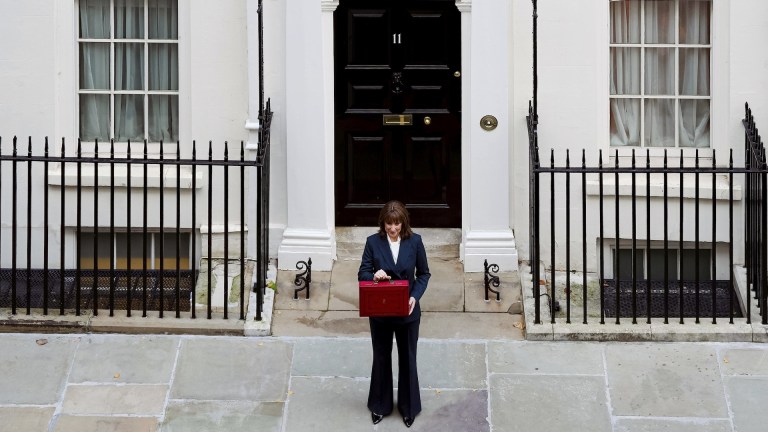
Speaking for the government, chancellor Rachel Reeves sought to play down the row.
Advertising helps fund Big Issue’s mission to end poverty
“On the digital ID, for starters, I do think this story has been a bit overwritten,” she told BBC Breakfast. “We are saying that you will need mandatory digital ID to be able to work in the UK. Now the difference is whether that has to be one piece of ID, a digital ID card, or whether it could be an e-visa or an e-passport, and we’re pretty relaxed about what form that takes… I don’t think most people mind whether it is one piece of digital ID or a form of digital ID that can be verified.”
But civil liberties groups are unimpressed by the government’s reassurances. Akiko Hart, director of Liberty, said concerns around inclusion and surveillance remained.
“We welcome this shift away from compulsory digital ID,” she said. “If the government wants to build a digital ID system fit for the 21st century, it must be voluntary, inclusive and genuinely rights-respecting, with strong safeguards against centralised data risks, surveillance, and cyber threats.
“Fundamentally, it must help people access vital services, give us control over our own data, and protect our rights.”
Do you have a story to tell or opinions to share about this? Get in touch and tell us more.
Change a vendor’s life this winter.
Advertising helps fund Big Issue’s mission to end poverty
Buy from your local Big Issue vendor every week – and always take the magazine. It’s how vendors earn with dignity and how we fund our work to end poverty.
You can also support online with a vendor support kit or a magazine subscription. Thank you for standing with Big Issue vendors.