How family hubs are helping families in poverty when they need it most: ‘Money is never enough’
London launches a £2.2m scheme to help low-income families claim unclaimed financial support, as child poverty affects 700,000 children across the capital
by:
15 Jan 2026
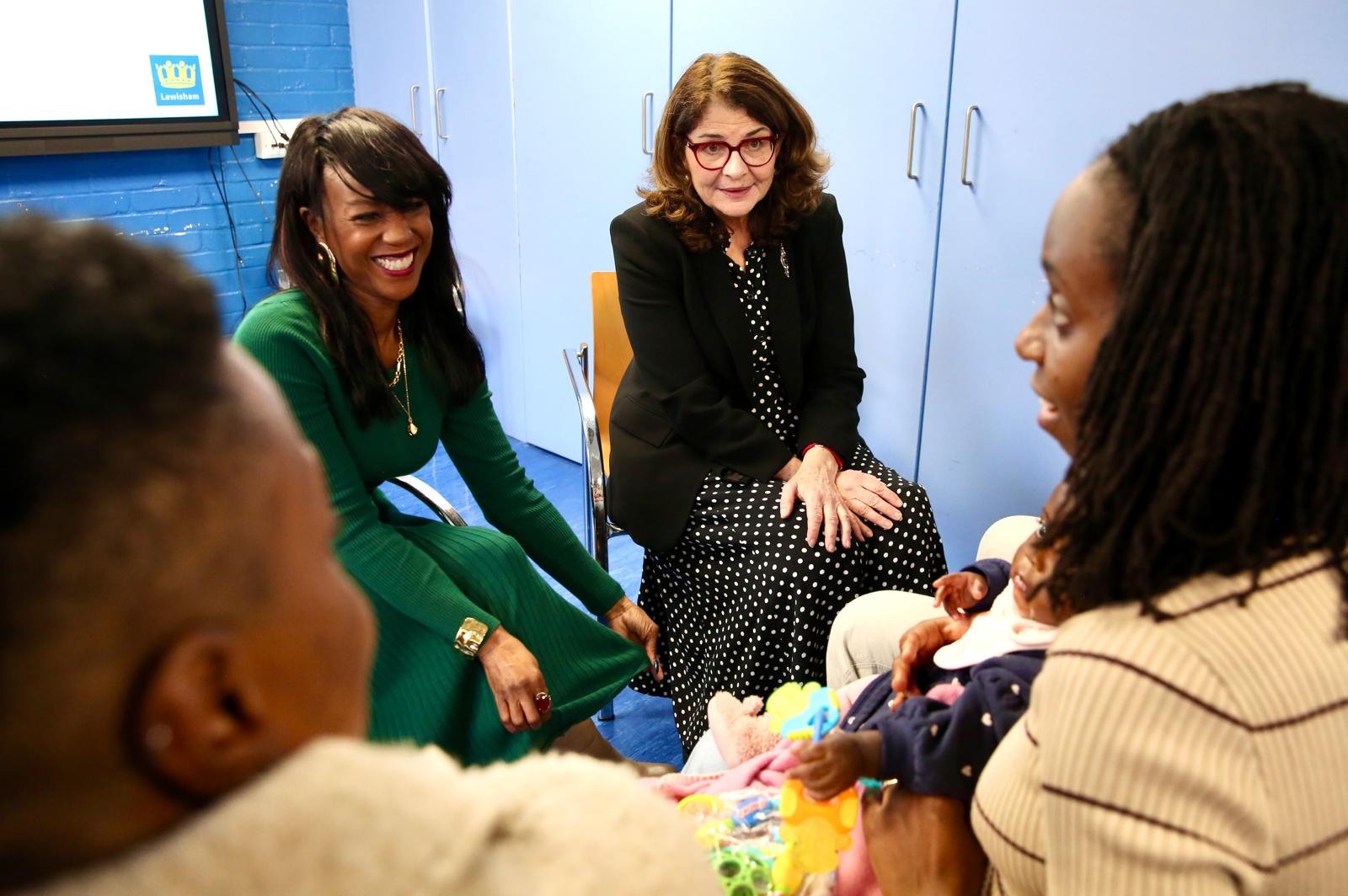
Families gathered at the Deptford Family Hub for the launch of the Family Financial Resilience Partnership. Credit: Greater London Authority
Share
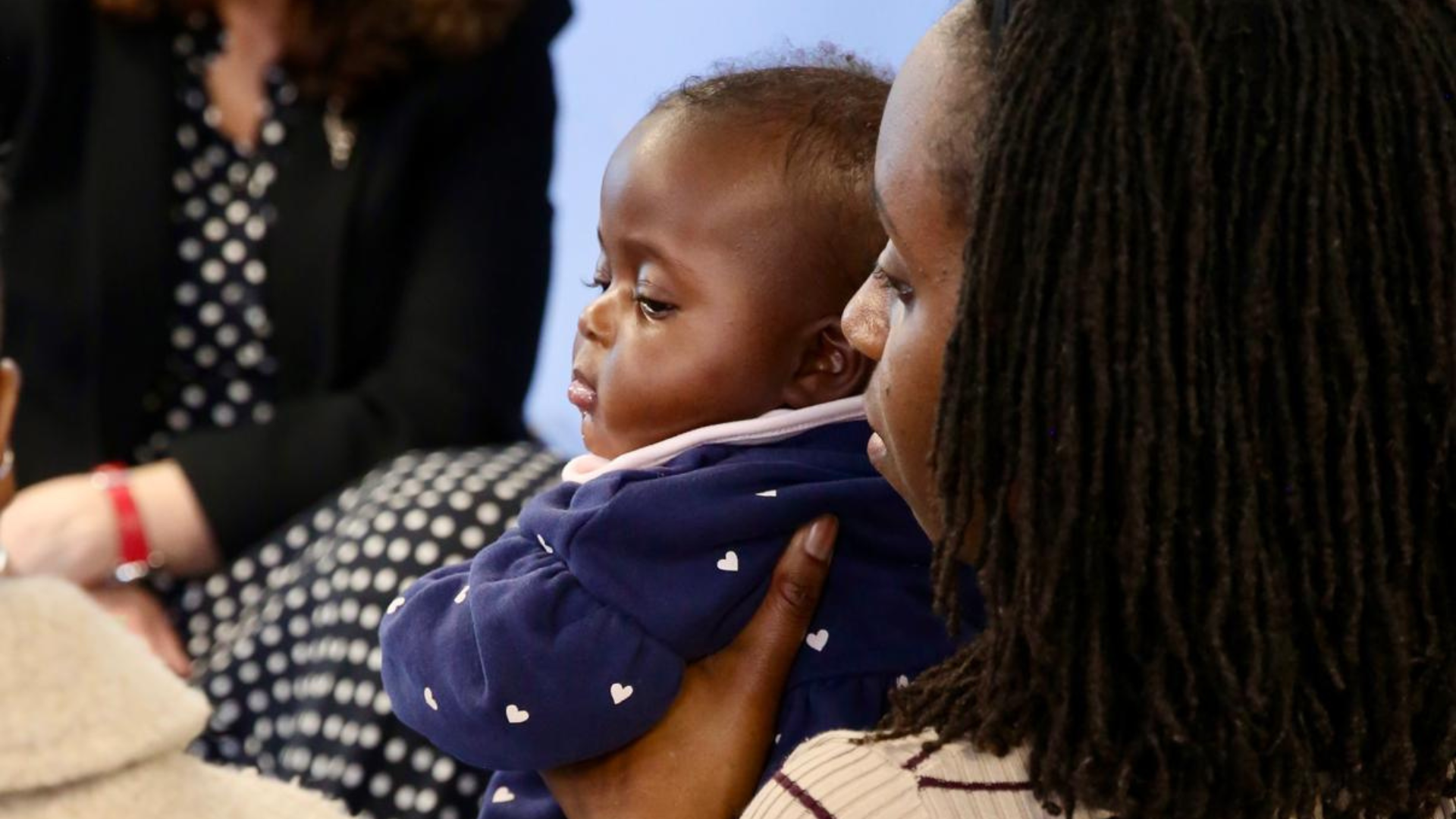
Lyra, a three-and-a-half-month-old baby, sits quietly in her dad Dash’s arms as the upstairs room at Deptford Family Hub in South East London slowly fills with council and charity workers.
She is there with her mum, Lauren, for the launch of a new £2.2 million City Hall programme aimed at helping low-income families access financial support they are entitled to but not currently receiving.
“It’s really inaccessible,” Lauren told Big Issue, describing her attempts to get help before coming to the hub. “I had been trying to call telephone numbers. I mean, I still am trying to navigate some of these places.”
Dash said the difficulty was not a lack of effort from frontline workers, but a lack of capacity.
“They’re under-resourced to answer the phone, and you’re being chased around,” he explained.
Lauren said being able to speak to someone face-to-face had made a real difference.
“It did make a difference to be able to finally speak to someone,” she added. “It was really important to have someone navigate to where you could get help, and what exists, because otherwise you just don’t know.”
‘Difficult to navigate’
The deputy mayor for communities and social justice, Debbie Weekes-Bernard, told Big Issue that families’ experiences reflected deeper structural problems.
Advertising helps fund Big Issue’s mission to end poverty
“We do have a welfare benefit system which is quite difficult,” she said. “It’s difficult to navigate. People don’t necessarily always understand their eligibility, particularly for people who are in work.”
She noted that in-work poverty was a defining feature of life in the capital.
“In London, we’ve got a high proportion of people who are living in poverty but are actually working in a variety of different jobs across the city,” she said.
Weekes-Bernard said stigma often prevented people from seeking help in the first place.
“The people who are most likely to need access to help are the ones who are least likely to ask for it,” she explained.
Locating advisers inside trusted community settings was one way to tackle that, she argued.
Advertising helps fund Big Issue’s mission to end poverty
“If you find yourself in debt or are just finding it really difficult to make ends meet, often the stigma attached to that prevents you from being able to ask a question,” she said.
Asked whether £2.2m was enough to meet the scale of need, she was candid.
“Well, money is never enough,” she said. “£2.2m might feel like a real drop in the ocean, but actually, if people just know what they’re entitled to and also just have someone to hold their hands to go through that process… we’re hoping to help 17,500 families claim up to £8m in financial support, which would otherwise have gone unclaimed.”
Deputy Mayor for Communities and Social Justice, Debbie Weekes-Bernard (left), and Dame Diana Johnson DBE (right) heard from families who had had support from the hub. Credit: Greater London Authority
The launch comes as government data shows more than one in three children in London, around 700,000, are living in poverty after housing costs.
She emphasised that welfare policy ultimately sits with Westminster.
“City Hall, we don’t have responsibility for the welfare benefit budget, so that responsibility lies with the government,” she said. “The bigger responsibility for tackling child poverty lies with the government. Absolutely.”
Advertising helps fund Big Issue’s mission to end poverty
However, she added that City Hall would back wider reform.
“We would probably advocate for the removal of the benefit cap,” she said.
Targets, reform and accountability
Also attending the launch was the DWP minister responsible for the child poverty strategy, Dame Diana Johnson DBE. While the two-child limit has been scrapped as part of the strategy, the benefit cap remains in place. This limits the amount of support families can receive and disproportionately affects larger households.
Asked why the cap had not been removed, Johnson argued the government’s approach would still deliver significant change.
“We think it will move about 450,000 children out of poverty,” she said, referring to the removal of the two-child limit, adding that wider measures could increase that figure to around 550,000.
The government has not committed to legally binding targets to end child poverty, despite such targets being in place under the last Labour government.
Advertising helps fund Big Issue’s mission to end poverty
Johnson defended that decision by pointing to delivery rather than legislation.
“What I’m interested in is actually delivering and making sure that we get the largest number of children out of poverty possible,” she said.
The question of binding targets is central to Big Issue’s Poverty Zero campaign, which calls for a clear and measurable commitment to ending poverty.
Johnson referenced the Child Poverty Act passed under the last Labour government, which introduced legally binding targets to reduce child poverty.
“I was speaking to Stephen Timms, who was the minister who took the Child Poverty Act through parliament in I think it was 2010 where there were targets, statutory targets there that were completely abolished by the incoming government,” she said.
She acknowledged the scale of the challenge facing the current strategy.
Advertising helps fund Big Issue’s mission to end poverty
“We recognise that around 900,000 more children have gone into poverty since 2010,” she said.
‘It’s about affordability’
While much of the debate centres on policy design, families and advisers at the Lewisham hub described how poverty manifests in everyday decisions.
Asked what she would do if she saw someone stealing baby formula, Johnson drew on her background as a former police minister.
“I’ve only ever seen someone steal a bunch of flowers in Marks & Spencer, to be honest, and I went and reported that to the person in Marks & Spencer, because obviously it’s a theft,” she said.
However, she stressed that the underlying issue was not criminality but cost.
“More underlying that issue are the problems around the price of infant formula, and making sure families have access to what they need when they need it,” she said.
Advertising helps fund Big Issue’s mission to end poverty
She added: “There are issues around the pricing of infant formula, which again goes to that child poverty strategy and making sure that families have access to what they need when they need it.”
‘If you get it in early, the child can fly’
Chantelle Francois-Grimes, a member of the hub’s parent and carer advisory group, said many families still did not know where to turn.
“The majority of families that I work with don’t know where to go, or don’t know who to speak to,” she said.
She said repeated cuts had eroded families’ confidence in support services.
“The morale of a lot of families in Lewisham is quite low because they will look for services, ‘Oh, it’s been disbanded, there’s no funding,’ so they just stop their search,” she said.
Stigma remained a powerful barrier, she added.
Advertising helps fund Big Issue’s mission to end poverty
“Asking isn’t embarrassing,” she said. “There’s no stigma. It’s there for the help.”
If you get it in early, the child can fly,” she said.
‘A significant difference’
Launching the programme, the mayor of London, Sadiq Khan, said: “I’m determined to help London’s families cope with the cost of living and put more money back into household budgets.”
He said the investment would ensure parents and carers could access the support they were entitled to and “make a significant difference to their finances”.
Advice will be delivered in partnership with Citizens Advice and the London Legal Support Trust across boroughs, including Lewisham, Southwark, Hackney, Tower Hamlets and Newham.
Advertising helps fund Big Issue’s mission to end poverty
Change a vendor’s life this winter.
Buy from your local Big Issue vendor every week – and always take the magazine. It’s how vendors earn with dignity and how we fund our work to end poverty.