It was a traumatic, hellish fight trying to get SEND support for my daughter
The government is set to announce reforms to the special education (SEND) system, but will it be enough for families like this one?
by:
23 Feb 2026
Gaby and David Boast and their daughter Nellie. Image: Supplied
Share
Gaby Boast speaks to the Big Issue about her fight to secure a specialist school place for her five-year-old daughter Nellie, as part of our series on the special educational needs and disabilities(SEND) system ahead of the government announcing reforms to the system.
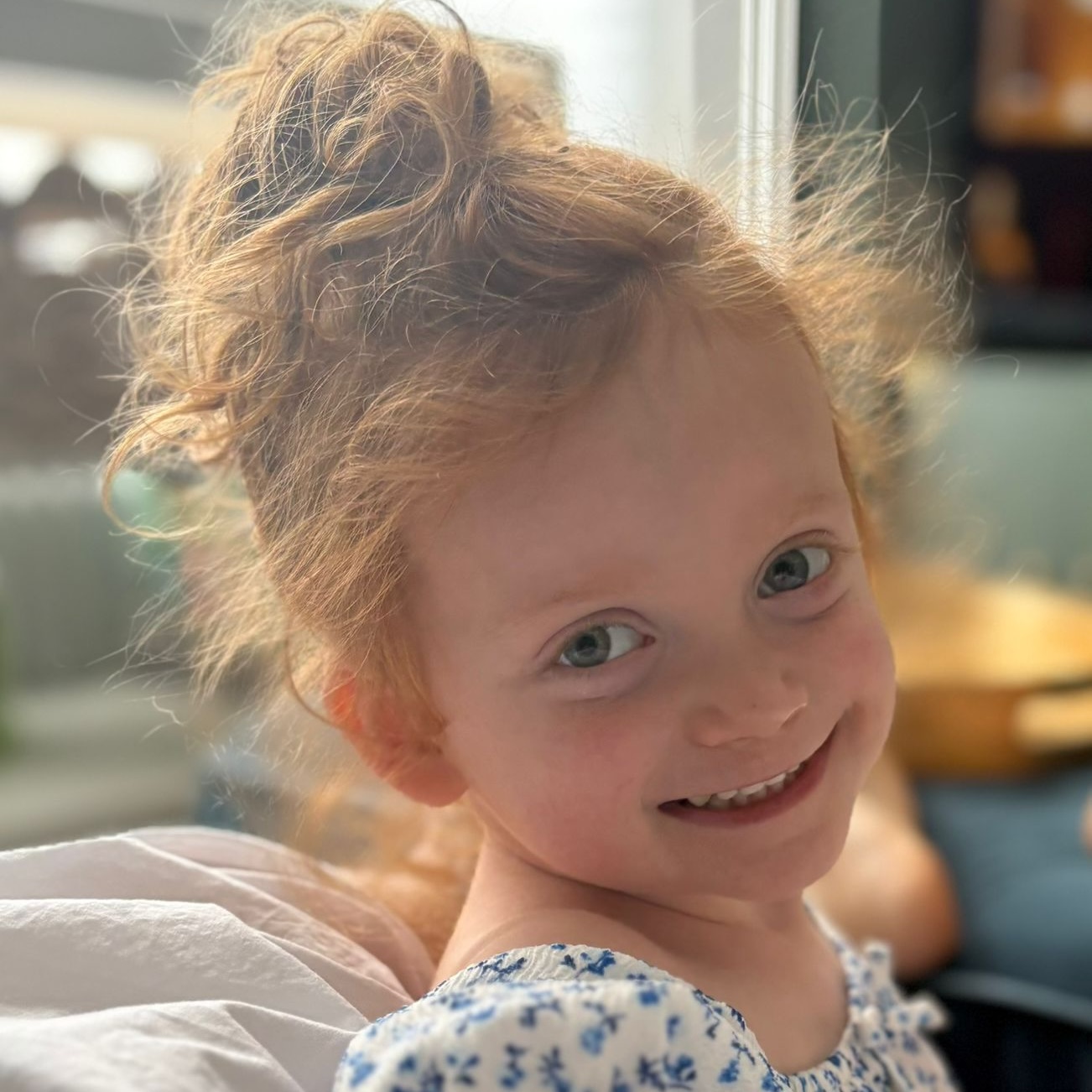
Nellie is our little firecracker. She’s a tenacious, happy, sweet and loving little girl. She has a genetic syndrome called Turner syndrome, which only affects girls – one in 2,000 approximately. It causes physical and developmental changes. For Nellie, it caused a heart defect.
She has been through traumatic operations and needed intervention consistently from a young age. It was horrific for us as first-time parents, but we felt so supported. The NHS was incredible and the team at Great Ormond Street is beyond amazing. We felt like they were team Nellie.
Nellie communicates through Makaton, which is a UK-based language programme using sign, symbols and speech.
We have had to do a lot of fighting to make sure that she is receiving support to enable her to grow and thrive in education. An Education, Health and Care Plan (EHCP) was hard to get. You need an assessment just to get considered for one. If you don’t pass that assessment, you have to go back to square one.
Advertising helps fund Big Issue’s mission to end poverty
Advertisement
It’s a traumatic journey because you have to constantly prove how much support your child needs. You have to demonstrate that they can’t do certain things against the benchmark of other peers their age which makes you feel like a failure as a parent, even though of course you’re not. It’s a red-tape, bureaucratic, long process.
It is great to have an EHCP because it gives you a legally-binding document, but after that, getting the support the child needs takes a long time. You’re given an EHCP and it’s like ‘brilliant, we’ve got one’. Then you then have to fight tooth and nail to even get the most basic support. It’s like having a shopping list and you get to the supermarket and it’s got no food. What’s the point? It needs to fulfil its purpose.
It can be crippling for families because all you want is for your child to have the best experience at a school and have the best opportunity. But unless you have the ability to fight, you either have to settle for what is outlined in the EHCP or you don’t even get one in the first place. It’s a long battle.
We have a lot of evidence for Nellie from a medical point of view from her team at Great Ormond Street, plus support from her nursery and speech therapy. Yet they still wouldn’t give Nellie the kind of support that she would need and also they maintain that she would be fine in a mainstream school.
When you have a child with additional needs, you have to become a lawyer, an advocate, a speech therapist, an occupational therapist, a carer. You have to do so much of what should already be in place. It shouldn’t be that people are having to get legal support to get what they are legally entitled to. An EHCP is legally-binding. I’ll never understand how money has been mismanaged so terribly that there is nothing for these children.
Five-year-old Nellie. Image: Supplied
We have a nice family. We have a nice home. We have lots of support and it nearly killed us emotionally and financially. I can’t imagine how it would be for single-parent families or a parent who has a disability themselves. It’s impossible.
Advertising helps fund Big Issue’s mission to end poverty
We were lucky that there was a specialist school that’s close to us that we loved. We viewed it and felt like it could meet her needs, but the local authority tried to frame it that Nellie’s needs were too severe for the school. The school disagreed but said there is just no space. Schools are becoming so overrun and they are oversubscribed.
The council allocated us a school for children with very severe needs. It wasn’t right for her. Just because we want a special school, it doesn’t mean we’re going to take just any school. We are full-time working parents and we have another child, and this school was 45 minutes away and she would have had to have got into a taxi with a stranger, paid for by the local authority, which is expensive and not sustainable. She was only four.
We got evidence from Nellie’s cardiologist and he said he doesn’t feel comfortable with her being in situations that could cause her anxiety because it could put pressure on her heart.
They still wouldn’t even accept that. Her court date was scheduled for the end of September 2025, which would mean months without school until that process had concluded. It was a year-long battle until it was confirmed that Nellie would have a place at the local special school we had loved in September 2026 and, until then, she’ll be able to go to the local primary school and receive one-to-one support.
We did get a good outcome for Nelly, but we had to go through such a traumatic fight to get to that point. It was hell for us and such a stress for our family. It was such a cost. We got there eventually but I know there are people out of education for years and years.
It is happening to children like Nellie and to children with needs that are so much more severe than Nellie. This isn’t a new issue. It’s been going on for years and years. And because there’s been such uproar and awareness of how many children need support, I think there’s an idea of: ‘Oh god, we don’t have the money. You’re all just trying to rinse the system.’ But actually, there’s been cuts to mainstream schools, so a lot of those issues are just being brought to the surface more.
Advertising helps fund Big Issue’s mission to end poverty
It has to start with making the whole sector work smarter, not harder, to support these families. I think the application process for support needs to change. When we submitted all the evidence, it was hundreds and hundreds and hundreds of pages. It was more than my dissertation. It’s just the most bureaucratic, arduous process and it’s exhausting.
I think there needs to be an injection of money for more specialist schools and more training for teachers and mainstream schools so that they can actually understand the children’s needs. But money alone is not going to solve this problem. There has to be a culture change, implementing more training and supporting teachers and service providers, and giving them the right tools and environments to implement the training that they have learned.
There’s been no consistency of who we’re speaking to at the local authority. There’s been very poor communication, and a very defensive tone. I think it’s because they obviously are experiencing it from all angles from other parents. What people are fighting for is not for themselves, they’re fighting for their kids. Any good parent would do anything they can to give their kids the best opportunities. So when you’re met with a barrier to that, especially when you’re legally entitled to it, what is going on here?
We see how well Nellie has settled in her mainstream school and she’s doing amazingly, but I really feel like this specialist school is her finding her tribe. We all deserve to find our tribe and our people. She’s probably been getting by and navigating this crazy world that probably feels a lot crazier to her because of her needs. I hope she will be able to breathe a bit more, unmask a bit, and feel she is exactly where she should be. As soon as we see that, it will be recognition for why we went through all we did – all the tears and the sleepless nights and the financial and emotional hardship.
Response from the Department for Education
Responding to the Big Issue’s series around the SEND system, a Department for Education spokesperson said: ”These heartbreaking cases show why it’s so crucial we strengthen support for children with SEND and ensure families get help earlier and closer to home.
”We know too many parents are forced to fight for support, with rising demand meaning children’s needs can escalate to crisis point before help arrives. That is not good enough – and our reforms will mean more support for children, not less.
Advertising helps fund Big Issue’s mission to end poverty
“Our reforms are designed to strengthen support for children and ensure help is delivered earlier and more consistently. We have already committed to unprecedented long-term investment, including £200 million to train teachers in SEND and at least £3 billion to create 50,000 new specialist places, and there will always be a legal right to additional support for children with SEND.”
Despite these reassurances, there remain fears that SEND support will be reduced rather than enhanced.
Buy from your local Big Issue vendor every week – and always take the magazine. It’s how vendors earn with dignity and how we fund our work to end poverty.