Data centres are becoming extremely unpopular with the public, so why are governments still keen?
by:
22 Sep 2026
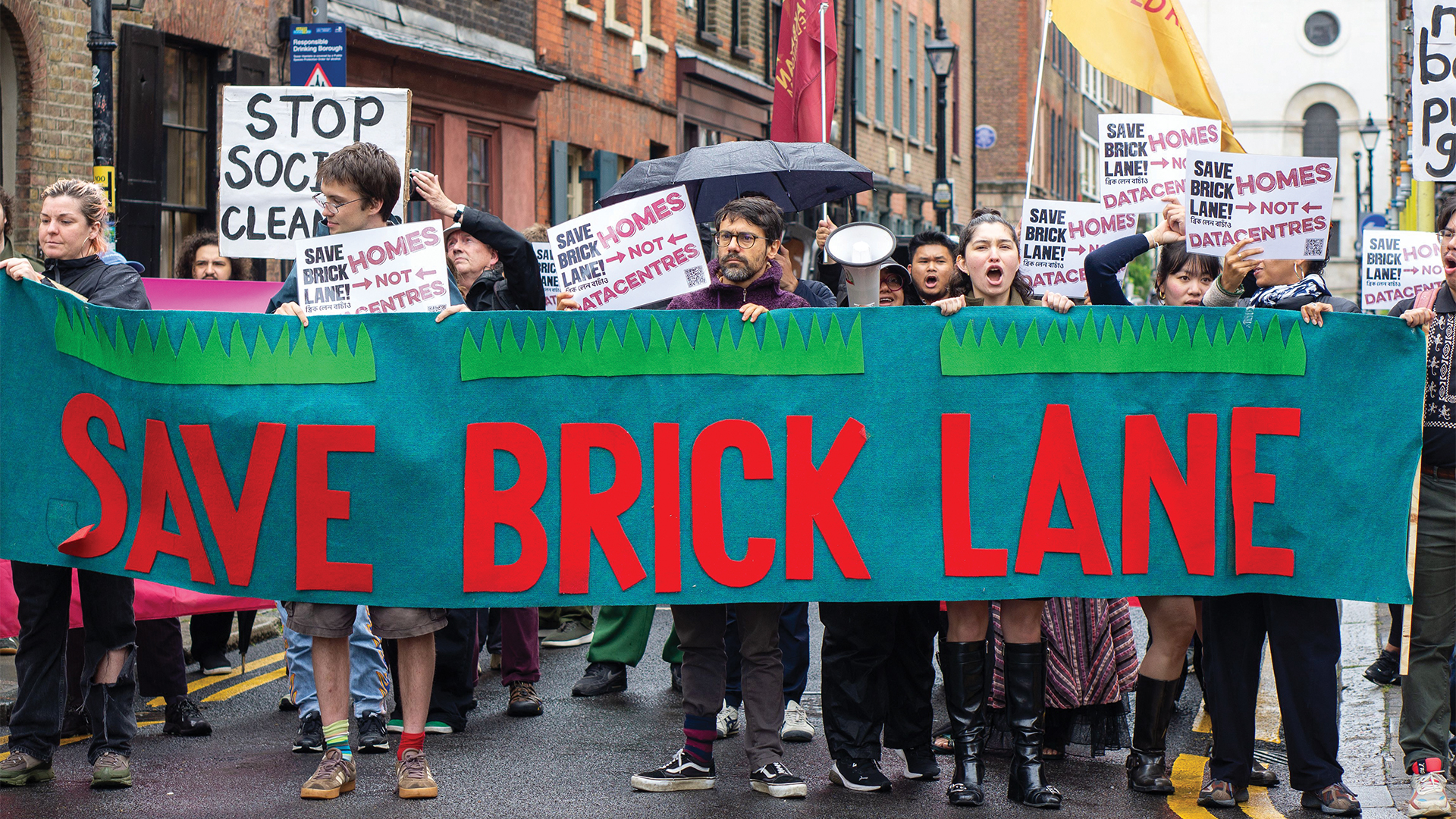
Not everyone is pleased about the data centre planned for Brick Lane’s old Truman Brewery site. Image: Bonnie Britain / SOPA Images / Shutterstock
Share
At his second PMQs, Andy Burnham ruled out a national moratorium on data centres. The prime minister said he understood concerns related to the infrastructure but argued they could be a “magnet” for investment.
But that such a question was even asked – by one of Burnham’s own Labour MPs, no less – says something about the emerging data centre dilemma.
Days earlier, residents of Tower Hamlets, one of London’s most deprived boroughs, gathered outside the Ministry of Housing to protest the government’s approval of a Brick Lane data centre designed to serve the hyperfast trading needs of the City of London.
It could be a taste of the political frustration to come. Across the Atlantic, opposition to data centres has become one of the few issues capable of uniting an otherwise deeply divided political landscape, with nearly two-thirds of Americans opposed to one being built in their community. As the buildout accelerates and opposition intensifies, Big Issue asks: what exactly are these things – and do we need them?
What are data centres?
The internet and artificial intelligence rely on huge warehouses packed with computers and other IT infrastructure. These are data centres. Every time you send a WhatsApp, stream a film or pay a bill online, data is being processed or stored in one of these facilities. They were, until a few years ago, largely politically uncontentious. But the advent of generative AI has changed that. AI requires vastly more computing power than existing data centres can provide, so tech companies around the world are racing to build more of them, and governments are after their investment.
How many data centres does the UK want to build?
Here in the UK, there are over 500 operational data centres of varying sizes, with a combined footprint of around 1.6GW. Government projections suggest capacity could more than triple by 2030, to as much as six gigawatts. Roa Powell, who works on AI sovereignty at the think tank IPPR, is sceptical they’ll be able to deliver it. “The government isn’t necessarily on track for that,” she tells Big Issue. “Because our industrial electricity prices are so high, the grid connection queue is so long, and planning constraints are very real. But there’s no question that the build-out is accelerating.”
Advertising helps fund Big Issue’s mission to end poverty
Advertisement
Greater London is Europe’s largest data centre market, and new hubs are emerging in Manchester, Wales and elsewhere.
Do we need them?
“We do need some,” says Powell. “But as to why we need them – I think that’s an area where there’s a lot of misdirection.”
Powell works on AI sovereignty, which means “looking at what we actually need to own here in the UK, and why… Is it an economic reason? Is it a security reason?”
Keep reading the journalism that powers our mission
Register free to continue and learn more about the stories, campaigns and the support we provide, helping people facing poverty across the UK.
The government has largely made the economic case. Industry body techUK estimates that UK data centres contribute £4.7 billion in gross value added to the economy each year, alongside 43,500 jobs and £640 million in tax revenue. Having data centres close to users can also improve the performance of digital services, which matters for industries such as fintech and advanced manufacturing, while operators pay business rates, corporation tax and other taxes. Then there are the jobs created by building and operating them – the tech industry has predicted tens of thousands as the sector expands.
But think tanks are sceptical of some of these industry-produced figures. TechUK projects a further 40,000 jobs by 2035 from planned expansion – but new analysis by environmental think tank Verdant predicts that all the data centres currently planned are likely to directly employ just 10,400 workers, around a quarter of that figure. And many of these will be short-term contractor roles.
Read more:
Advertising helps fund Big Issue’s mission to end poverty
The government has parroted the techUK number – but that’s a mistake, says Powell. “I think that if it wants to justify the rollout of data centres, the government should shape the narrative around baseline resilience rather than jobs and regional growth, because data centres aren’t going to deliver that many jobs.”
So what does “baseline resilience” mean? For Powell, it’s largely about security and self-sufficiency.
“For all public sector sensitive workloads, you don’t really want to be sending your data all the way over to be served somewhere else and then back here. And even for everyday use – say I’m using ChatGPT – it’d be quite good if the UK could be self-sufficient, without having to rely on US data centres so much to service our needs.”
It matters because AI and cloud services increasingly handle sensitive information. Data centres already support everything from financial services to public services, including the NHS. Keeping some of that infrastructure in the UK means data stays subject to UK law and protections.
In September 2024, the government designated data infrastructure as Critical National Infrastructure, reflecting the risk that disruption could affect everything from NHS services to the wider economy.
At present, the US essentially has a kill switch, explains Powell – something that becomes much more threatening with someone temperamental like Trump at the helm: “As soon as the US thinks it’s scary for other countries to get access to those models, they can cut it. We’ve seen twice now them intervening to stop non-US citizens accessing the frontier models. So the question is, what does the UK need to do to either have a backup of its own, or to have some other asset that we can kind of trade off to maintain access to the frontier of capability.”
Advertising helps fund Big Issue’s mission to end poverty
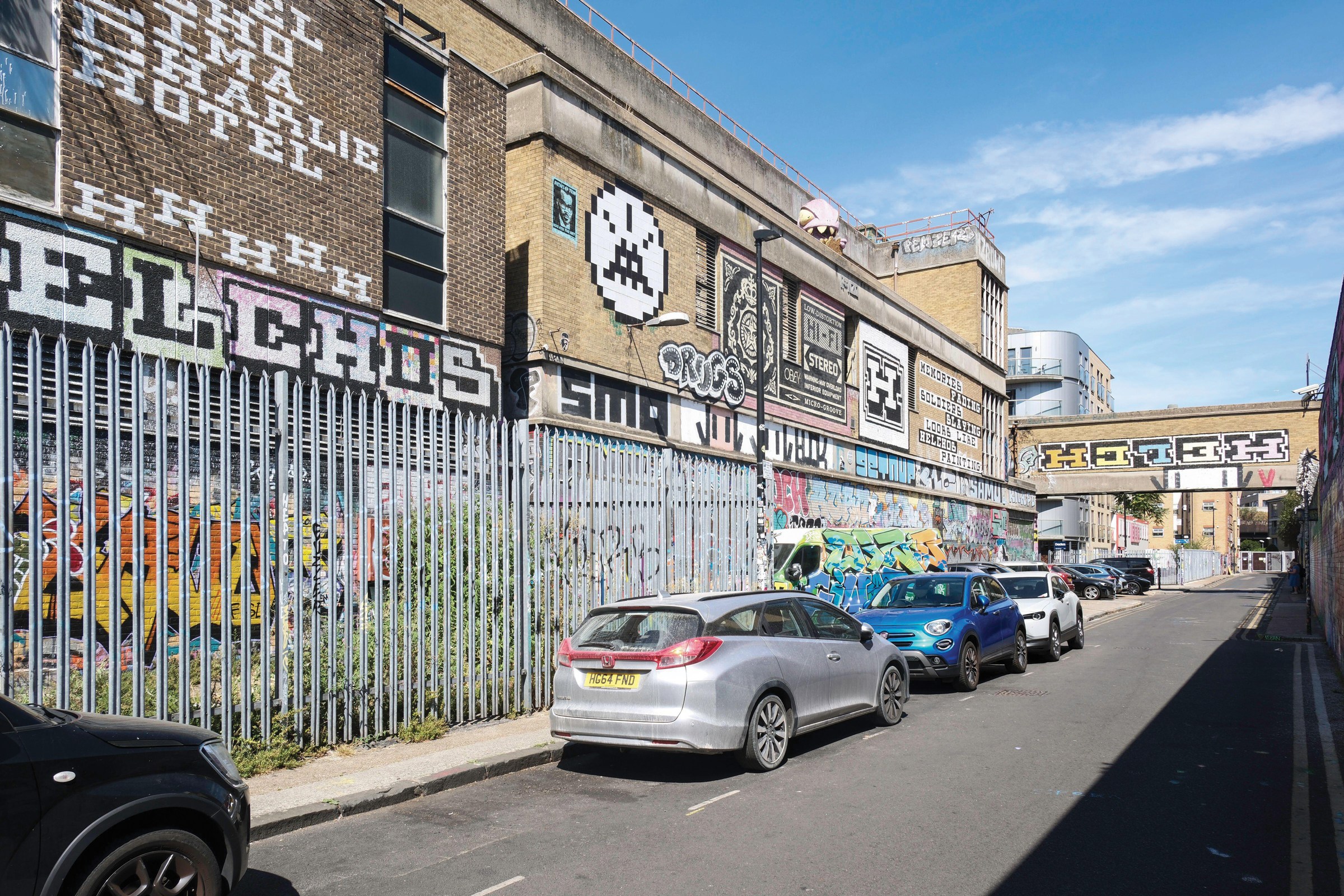
The Grey Eagle Street site of the proposed data centre as part of Truman Estates Brick Lane area redevelopment plan. Image: Mark Phillips / Alamy
But what are the downsides?
Data centres need electricity, and fossil fuels still provide over 60% of total global electricity generation, so more data centres jeopardises our already-threatened net zero goals. It could also jeopardise the government’s 2030 clean power plan, under which 95% of UK power is meant to come from renewables or nuclear. “If any additional demand for power comes online from data centres, it’s going to really put pressure on that target,” warns Hamish Beath, a research associate at Imperial College London.
In some parts of Britain, AI’s electricity demand is already jeopardising housebuilding; London’s data centres use 750,000 homes’ worth of electricity. A report released by the London City Authority late last year found that data centre construction could delay housing delivery in the future. The planned Brick Lane data centre is not for AI. But campaigners claim that if it wasn’t built, the land could be used for affordable homes: “passing over a community plan that would offer nearly 350 desperately needed social housing units is a calculated slap in the face,” said Jonathan Moberly from the Save Brick Lane coalition.
There’s also water. Data centres need cooling, and according to a new study from UN University, AI-related water consumption could equal the basic annual domestic needs of 1.3 billion people by the end of the decade. With Britain’s Environment Agency projecting an “existential” water crisis by mid-century, AI’s “thirst for water” will only add to the strain.
With all this in mind, there’s a more pertinent question: how much AI do we actually want in our lives? “I think there will be really philosophical questions around cognitive offload,” Powell says.
“We need to ask where the boundary is. Also there are questions around preserving certain tasks and jobs for humans. That’s also really important for moral and economic reasons.”