In our daily lives we Brits have become abjectly dependent on US suppliers – our supermarket shelves are dominated by Procter & Gamble, Coca-Cola and Kellogg’s. Beyond supplying the majority of branded goods in supermarkets, US firms are taking over the high street itself – US private equity now owns Morrisons with its 110,000 staff, and one of the fastest growing retail chains is Costco from Washington State. Costco’s logo, like so many US brands, including Colgate and Pepsico, is in the same colours as the stars and stripes. The US invaders are hiding in plain sight.
Apple and Microsoft dominate supplies of consumer hardware and software, and our payments are almost all made through the US giants Visa and Mastercard. Online, our social lives are largely conducted through Facebook, Instagram, WhatsApp and Twitter, all based in California, while our on-screen entertainment is overwhelmingly created on the West Coast of the US by companies such as Disney and Warner Bros.
The most emphatic sign of the loss of control is that the bridges which we have to cross to do business within Britain belong to American companies: we order British goods through Amazon, we book domestic holiday stays through Airbnb, watch films through the Netflix platform, we trade our second-hand goods through eBay and we even meet our partners through US-owned platforms Bumble and Tinder. And behind the scenes virtually all UK data is hosted by the three big US cloud storage companies, AWS, Microsoft Azure and Google.
Keep reading the journalism that powers our mission
Register free to continue and learn more about the stories, campaigns and the support we provide, helping people facing poverty across the UK.
And it’s not just business. The politics of the last few months feels similarly overshadowed by the US. British media is dominated by the Punch & Judy show of Trump vs Biden, and in foreign policy Westminster is synchronised with the US.
So what has become of the UK’s independence? Didn’t we have a referendum in 2016 to take back control? It turns out that the UK exited Europe only to hand over control to the US along with ownership of large swathes of the UK. In Britain US ownership now means profits are sucked out of the country, with only very low taxes paid along the way, and control is exercised thousands of miles away.
It gets worse though: US economic dominance has meant that many of the best people in technology and science emigrate to the US and every year several billion pounds worth of art treasure is hauled across the Atlantic by wealthy buyers. US control has also led to a reshaping of Britain’s economy, and the adoption of regulations which conform to the wishes of our new American masters.
Advertising helps fund Big Issue’s mission to end poverty
There is much that could be done about all this if the political determination were there. Such a will is clearly absent from the Conservative leadership – almost every prime minister and chancellor over the last 14 years has worked for a US company either before or after they were in office.
Few people recognise the extent to which Britain has become a vassal of the US, which is partly because it has all happened so quickly, and partly because it is deliberately hidden by politicians of all colours, but mostly because humans tend to believe what they want to believe.
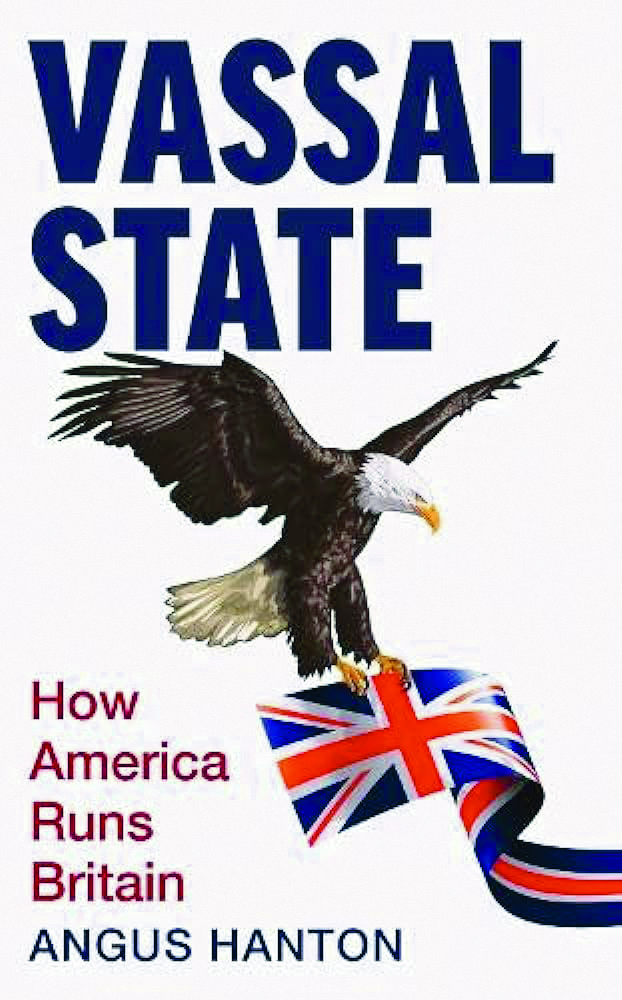
Vassal State: How America Runs Britain by Angus Hanton is out on 11 April (Swift Press, £25). You can buy it from The Big Issue shop on Bookshop.org, which helps to support The Big Issue and independent bookshops.
Do you have a story to tell or opinions to share about this? We want to hear from you. Get in touch and tell us more.
This article is taken from The Big Issue magazine, which exists to give homeless, long-term unemployed and marginalised people the opportunity to earn an income. To support our work buy a copy!
If you cannot reach your local vendor, you can still click HERE to subscribe to The Big Issue or give a gift subscription. You can also purchase one-off issues from The Big Issue Shop or The Big Issue app, available now from the App Store or Google Play
Advertising helps fund Big Issue’s mission to end poverty