Migrant workers pushed into anxiety
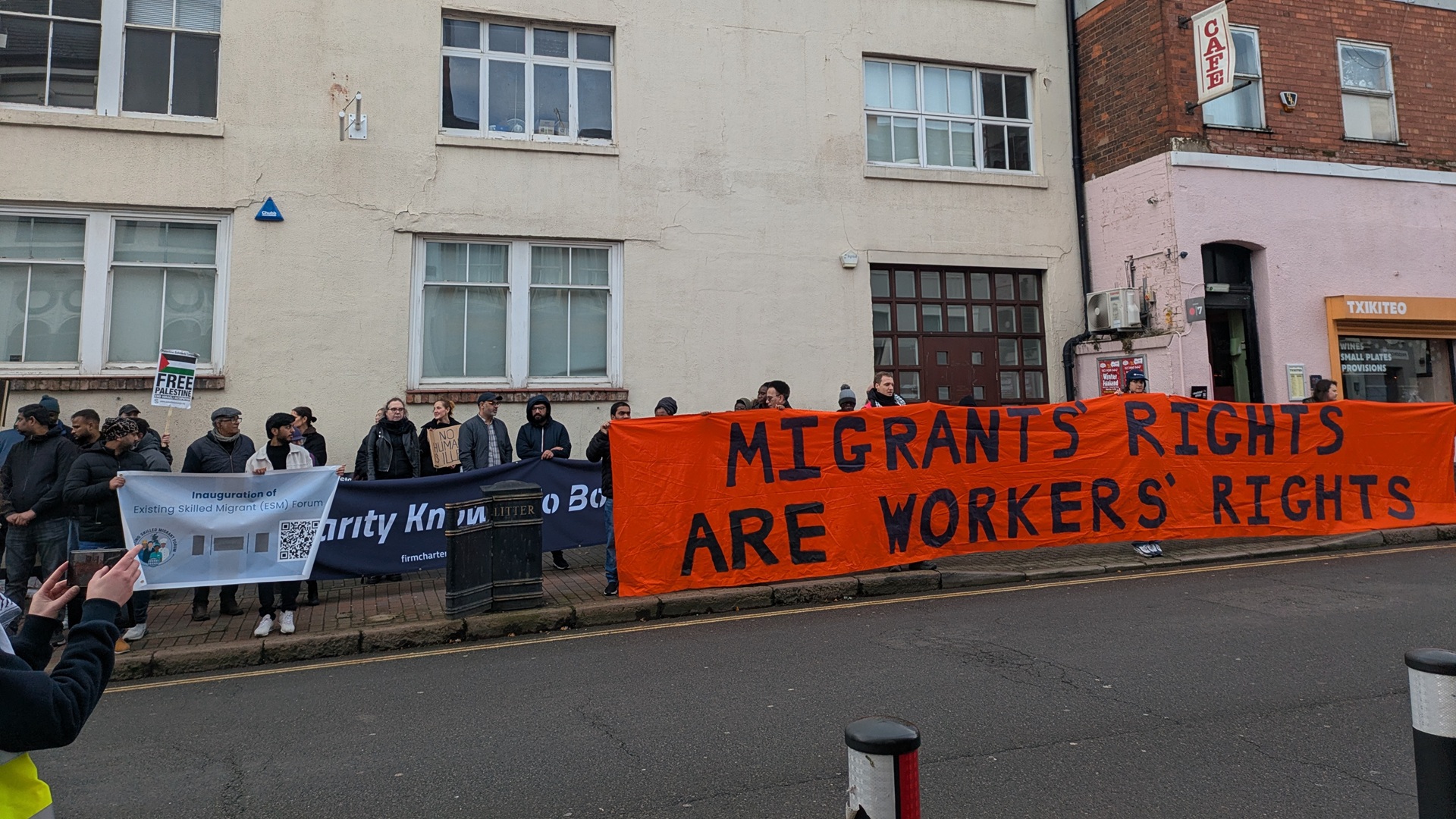
At the national demonstration in Birmingham on 13 December, migrant workers from across the country spoke about the same thing: anxiety and disappointment.
Workers across sectors gathered because recent and proposed changes are already stripping people of routes to remain in the UK – after they sold belongings or emptied savings to build lives here.
Avi Khera, a railway worker affected by the July 22 changes, put it plainly: “Where is the fairness this country claims to uphold? Where is the humanity? We are not numbers. We are not burdens. We are workers. We are contributors. We are neighbours. And we are part of this country’s story.”
I recently met Band 3 NHS nursing assistants in Manchester who are part of a group of 300 NHS workers now at risk of losing their right to live and work in the UK. Some have already lost their status. Others are weeks away from losing it – because rules changed mid-route. Some came as dependents and can no longer be sponsored. Others were promised sponsorship by employers who now fall short of new salary thresholds by a few pounds.
This is not just traumatic. It is dangerous. It pushes people into irregularity, out of the NHS during a staffing crisis, and into exploitation and poverty.
And it is not new. Between 2010 and 2018, more than 5,700 immigration rule changes were made. People could not keep up. Thousands were pushed into undocumented status overnight – and once there, regularisation under current rules can take decades.
Advertising helps fund Big Issue’s mission to end poverty
Read more:
Exploitation by design
If migrant workers had secure status and accessible routes to regularisation, much exploitation would collapse overnight.
Instead, policy ties visas to employers, punishes people for losing work or experiencing crisis, threatens removal if they are made undocumented and speak up – and then blames migrants for being exploited.
This is how exploitation is produced: not by migrants, but by the system itself.
Raids – like the one filmed at a Christmas market in Surrey last week, with officers hunting migrant workers – do not stop exploitation. They drive people further into the shadows.
Settlement is not a privilege, it is a right
The government’s claim that extending settlement routes will “restore control” relies on the same logic as the “pull factor” myth: that stability attracts people who should be deterred.
Advertising helps fund Big Issue’s mission to end poverty
But stability and safety are not incentives. They are human needs.
Millions of Europeans crossed oceans for the same reasons – seeking better lives and fleeing poverty, persecution and endless wars in Europe. Migration is not a moral failure. It is a human response to human need.
Making settlement harder does not deter migration. It deepens suffering, prolongs insecurity and fuels exploitation.
Imperial power, updated
The government’s threats to impose visa penalties on countries that do not “co-operate” with removals reveal a familiar pattern.
The same state that lectures the world about sovereignty is willing to coerce sovereign nations – many formerly colonised by Britain – to serve domestic political goals. Migration is global. Power is not equally shared.
Division is a political choice
These policies make people less safe – both those on the move and those already here. They push people underground and guarantee more harm.
Advertising helps fund Big Issue’s mission to end poverty
On 13 December, people did not just protest – we mobilised and organised. We marched in the Home Secretary’s constituency to say clearly: migrant workers are not disposable. We are here to stay. We belong in every community and in every workplace.
If the government truly wants unity, unity requires choosing rights over raids, security over fear, settlement over endless temporariness, welfare for all over destitution, and dignity over exploitation – and confronting the truth rather than denying it.
Blaming migrants for division is not moral leadership. It is a political choice.
And if this government continues to escalate harm, it would be wise to expect growing resistance – from migrants and British people alike – who are no longer willing to accept attacks on our rights, lives and livelihoods.
Munya Radzi is the founder and campaigner at Regularise, which coordinates the Migrant Workers’ Rights Coalition.
Do you have a story to tell or opinions to share about this? Get in touch and tell us more.
Advertising helps fund Big Issue’s mission to end poverty
Change a vendor’s life this Christmas.
Buy from your local Big Issue vendor every week – or support online with a vendor support kit or a subscription – and help people work their way out of poverty with dignity.