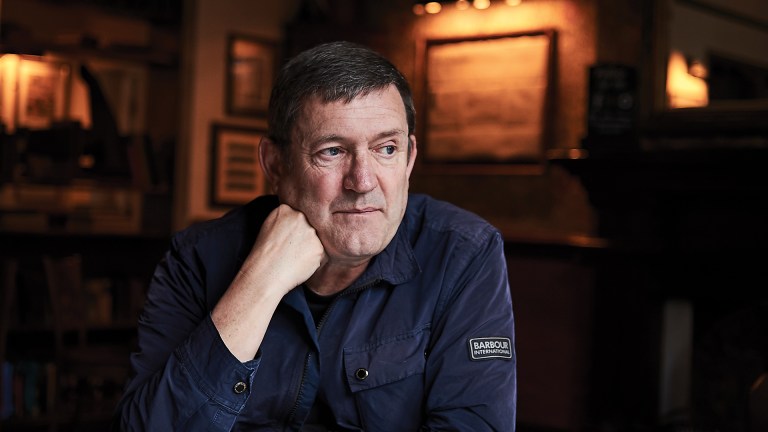
JM: We make sure someone with lived experience of dementia is at every meeting. We’re not making a decision for someone with dementia when there’s not someone with dementia in the room. Howard is an integral member of the taskforce. Having that expert knowledge is vital to put something in place that will make things better.
HG: Not everybody can use technology. But my generation are more able to use technology than my parents’ generation and, as time goes on, future generations will be more savvy. So this work will benefit more people as time goes on.
JM: It’s a big project that aims to get under the hood of what people with dementia want and need from interacting with music. We try to challenge assumptions around what we might think people with dementia want or need from music. That’s why it’s been important for us to work with community groups and people with lived experience.
Keep reading the journalism that powers our mission
Register free to continue and learn more about the stories, campaigns and the support we provide, helping people facing poverty across the UK.
We’ve been hearing a lot around how people value music but it can be difficult to access. There’s a lot of complexity around how we now access music. The task force represents a coordinated industry action and commitment. And that is a big change, to work collectively rather than do things very independently.
Read more:
HG: From the meetings we’ve had, the record labels do seem to get it.
JM: We’ve achieved a clear commitment from industry representatives who make up over 90% of the British recorded music market – they’ve all got round the table, which is already impressive. Now we need a shared set of guidelines that will not just apply to one piece of technology or system. It gets into the deeper meaning of what people need to be in control of music.
HG: Also, music is not a magic panacea. It can evoke memories of trauma and loss. So when you’re dealing with a person with dementia and talking about music, you’ve got to know the person and what the triggers are, because you don’t want people to relive trauma or relive loss over and over again.
JM: As Howard says, music can be powerful. But that power can be negative as well as positive. We very much focus on the ‘music is powerful’ positive angle, and there’s nothing wrong with that. But it misses the complexity of that reaction to music. It’s as important to be able to stop a piece of music as play a piece of music.
HG: Music is an old skill. And CRPD Article 26 [from the UN’s Convention on the Rights of Persons with Disabilities] says we have the right to rehabilitation, while is about relearning old skills but also says we’ve got the right to habilitation, which is learning new skills. And that might be learning to use Alexa. If we can still verbalise, it can be a very good tool.
JM: There’s existing tools people can use. Whether it’s voice activated systems like Alexa, which has proven useful for some people, or YouTube or Spotify subscriptions. What we’re hoping in the future is that it’s really truly thought of in the design in the first instance.
HG: We’re talking about making technology more accessible. Like having videos showing you how to sign up, how to select a song – because it’s all right having it in writing, but a lot of people struggle to read. So you’re giving people options. You can’t have Spotify having an army of people around the country going into people’s homes showing them how to do it. But if you can put up instructional videos in plain English, showing people slowly how to do it, then people will be able to access the technology better.
JM: There’s multiple ways of using music for your own well-being and enjoyment. And that doesn’t stop when you have a dementia diagnosis.
HG: Exactly. People also need to stop making assumptions. With the best intentions, they wrap us in cotton wool. But we still have a life to lead. Being diagnosed at an early stage is a blessing and a curse – because I’ve been able to put things in place and get involved in things like this. But I spent 20 years looking after people with dementia, so I also know what’s coming.
We all have a life story and we have a life. Since I was diagnosed, I’ve become manager, producer and presenter on Deepness Dementia Radio – I do an alternative rock show, a country show, a classical show, an LGBT-orientated show, global music from around the world.
JM: There’s not a one-size-fits-all. There are so many ways to enjoy music. The task force is about showing people there’s more than one image of a person living with dementia. We have to see the diversity of what that might be so as not to limit what we can do with music.
HG: A lot of assumptions are made about people with dementia. Stuff is aimed at cis white British people. But a lot of people with dementia aren’t cis white heteronormative. So it’s about seeing the person. Because the image you see of someone living with dementia is an 80 or 90 year old all hunched over. So many of us are younger. I mean, I haven’t chosen all the music for my funeral yet. But one of the tracks I’ve chosen is Atmosphere by Joy Division – it’s not all Vera Lynn…
Do you have a story to tell or opinions to share about this? Get in touch and tell us more.
Change a vendor’s life.
Buy from your local Big Issue vendor every week – and always take the magazine. It’s how vendors earn with dignity and move forward.
You can also support online:
Subscribe to the magazine or support our work with a monthly gift. Your support helps vendors earn, learn and thrive while strengthening our frontline services.
Thank you for standing with Big Issue vendors.