The big issues of Grand Theft Auto VI: How GTA handles homelessness and poverty
GTA VI is set to be the biggest entertainment release of the year. But behind the crime, the video game series has plenty to say on social issues
by:
19 Nov 2026
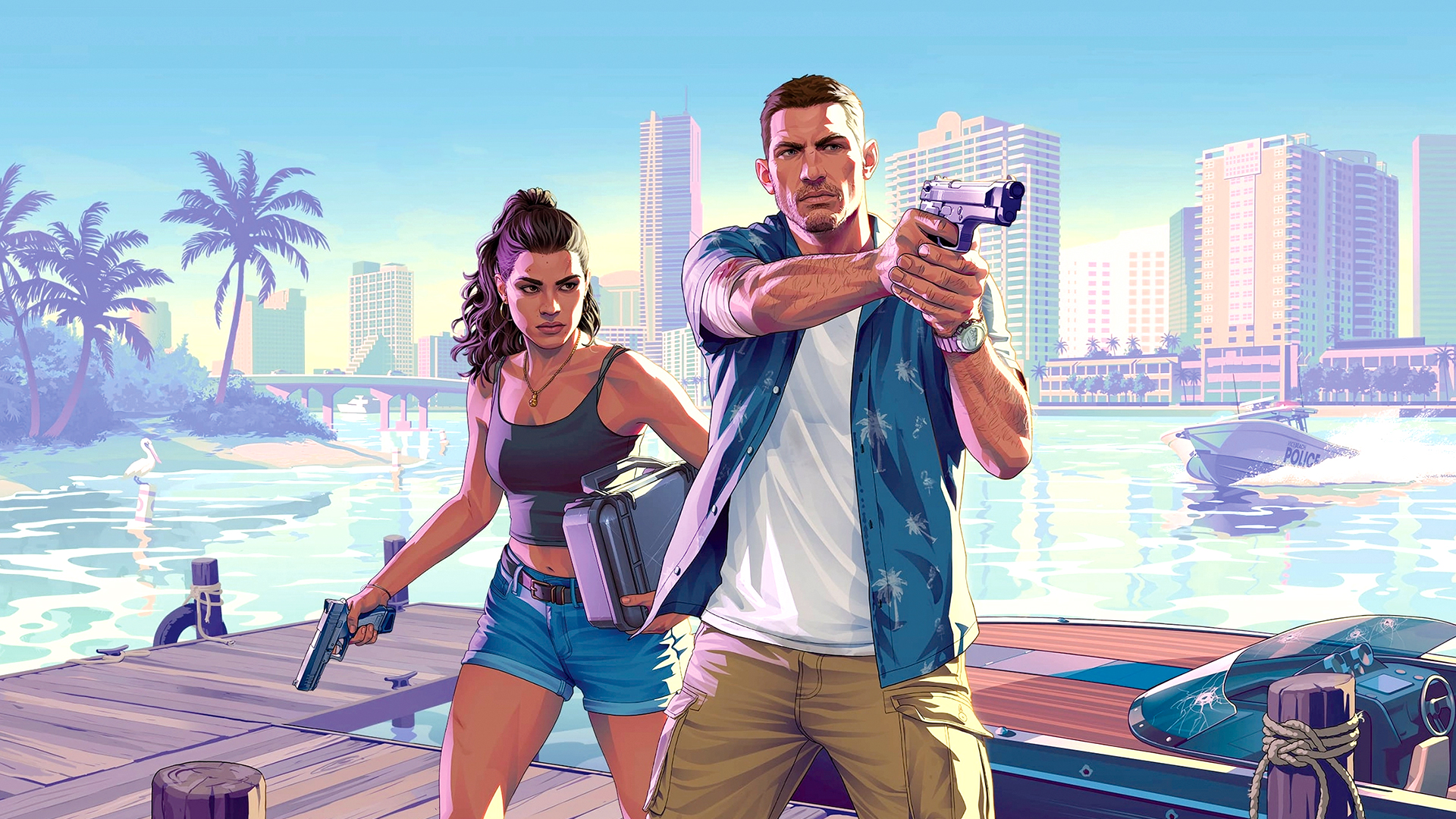
Grand Theft Auto VI protagonists Lucia Caminos and Jason Duval. Image: Rockstar
Share
Grand Theft Auto VI is finally here.
For the uninitiated, you may wonder why a tabloid-baiting, crime-capering, satire-spewing video game is getting so much attention.
But the first new GTA for 13 years is not just a game. It’s a media monolith.
Grand Theft Auto V has sold over 230 million copies. Some people (ahem) have bought it several times since it was first released on PlayStation 3 and Xbox 360. It’s been so long we’re now up to PlayStation 5.
GTA V’s revenue estimates vary but some suggest it has earned more than $10 billion (£7.5bn). Whichever way you shake it, GTA V is the biggest selling entertainment product of all time, dwarfing not only other games but films, music and the rest.
The new game will let players delve into a world of criminality and explore Vice City – an in-game version of Miami – and the surrounding Everglades and countryside in Florida.
Advertising helps fund Big Issue’s mission to end poverty
Advertisement
There is a female protagonist for the first time, with players able to switch between Lucia and Jason. The Bonnie and Clyde-style couple represent another new frontier: the first time the series has made love and romance a central focus.
GTA is famous for police car chases, violence and giving players the power fantasy and freedom of choice to do what they want in a city that feels alive.
But it has also never shied away from covering big issues. Here’s a look at how the games have handled some of them in the past.
Keep reading the journalism that powers our mission
Register free to continue and learn more about the stories, campaigns and the support we provide, helping people facing poverty across the UK.
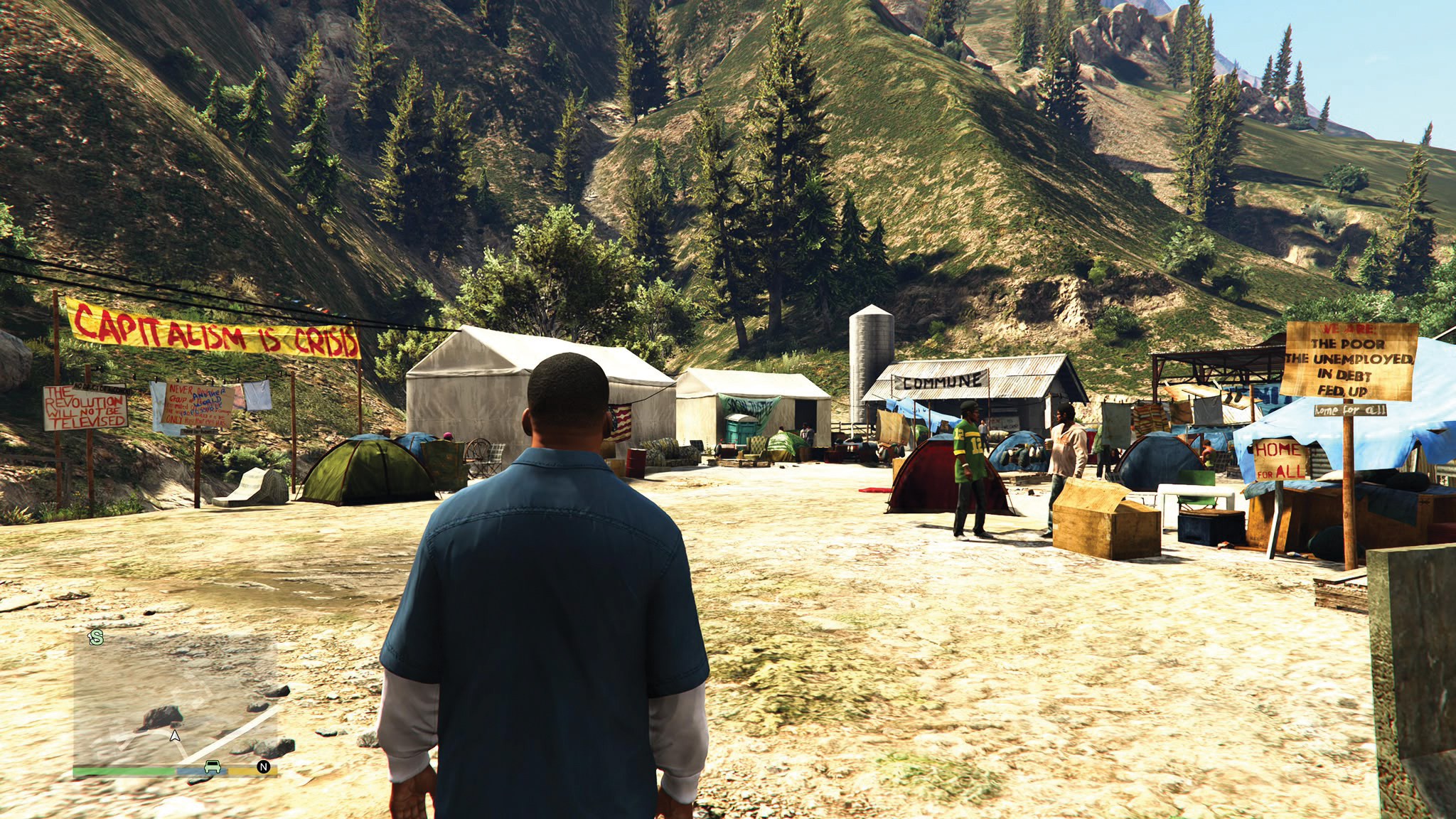
Did you know that tucked away at the top of Grand Theft Auto V’s map, far from the city of Los Santos and through the rural Blaine County, there is a homeless village?
Dignity Village is hard to spot with just a banner visible from the road. Drive through a tunnel and you are greeted with people sitting around tents and a commune-style setup. Signs are visible around the village, reading things like: “Fight for our human rights to housing”, “Capitalism is crisis” or “Where are the homeless landlords?”
It’s not the only tent village in GTA V. Much like real-life Los Angeles, rows of tents can be found on the streets under the freeway while people can be found sleeping rough or begging individually around the game world.
GTA is far from the only open-world video game that has included rough sleeping to echo the real world.
But the extent to which it has featured is notable.
GTA V even inspired an artist to run a five-year project chronicling homelessness in the game. Down and out in Los Santos saw Alan Butler use the in-game smartphone camera to photograph homeless non-player characters (NPCs) in the game.
“The way homelessness is simulated in GTA V is what Butler has described as an “‘ambient reality’, with homeless non-playable characters (NPCs) as props to add realism to the game world,” according to the project’s website.
Homeless people have sometimes acted as quest givers in GTA games. Dignity Village is the setting for a side mission. In GTA IV, homeless veteran Jerry Kapowitz ends up finding diamonds which are central to the game’s story. Radio chatter in the next game reveals he planned to move to Vice City and open a gun shop and liquor store.
Perhaps he will turn up in GTA VI?
Homelessness is not always depicted in a nuanced way in GTA – we often don’t find out how people ended up in the situations they’re in – but the extent to which it is portrayed speaks volumes about the reality of rough sleeping in the real world.
Housing
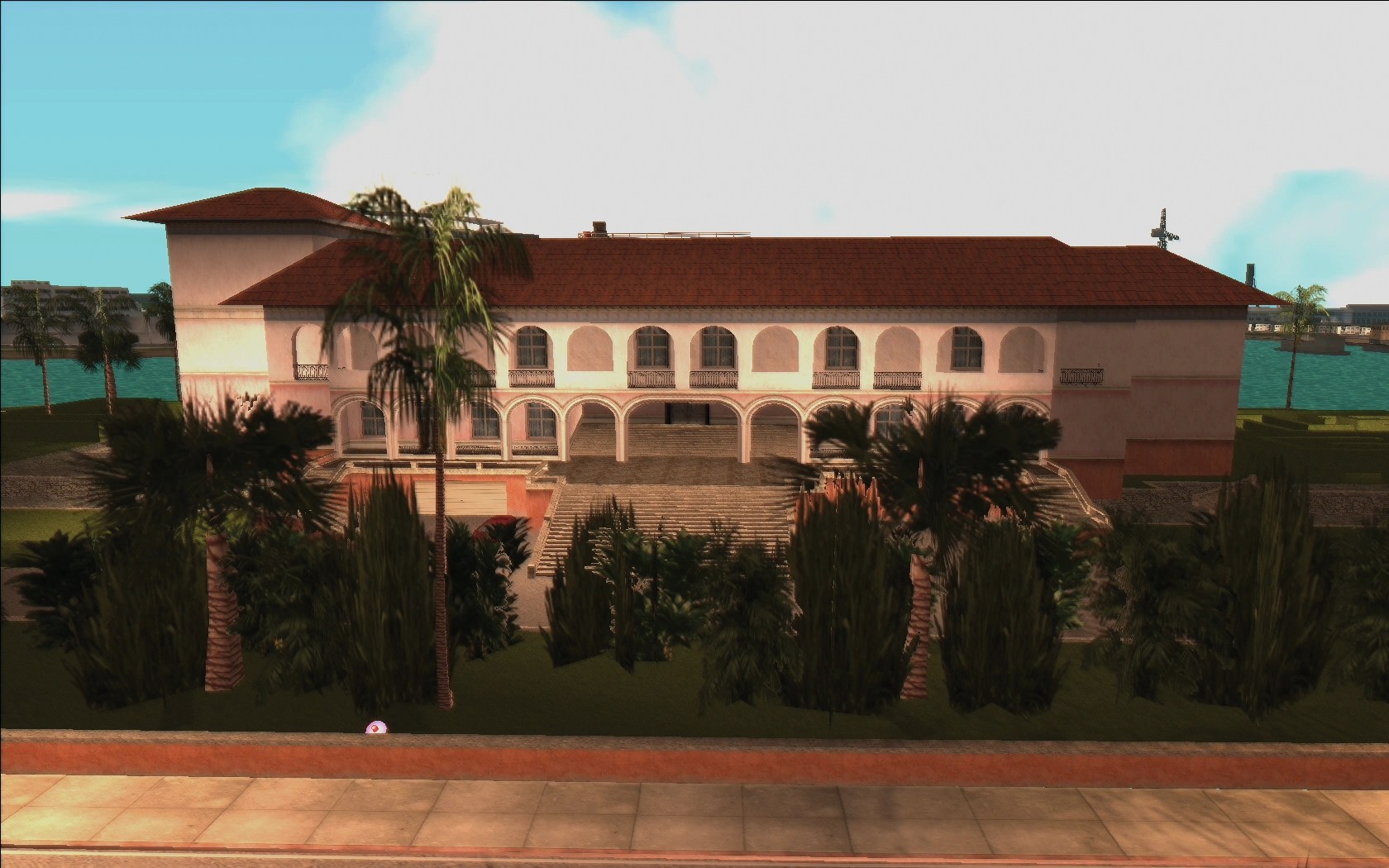
Portland Safehouse, GTA: Vice City. Image: Rockstar Games
As you climb the criminal ladder in GTA, the place you call home has tended to become more expansive.
Safehouses have been in the game since GTA 2, allowing players to save their progress in makeshift homes or even evangelical churches in the top-down 1999 game.
GTA III brought 3D and a sense of progression: the first safehouse is in a back alley of a red-light district rising to a flat in an apartment block, though only the lobby is enterable.
Sequels ramped things up significantly with purchasable properties. In Vice City, you start living out of a hotel room, by the end of the game you have your own Tony Montana-esque mansion. San Andreas charts the journey from returning to the family home to having your own suite in Las Vegas hotels.
By GTA IV, the importance of a home is even more pronounced: one mission asks protagonist Niko Bellic to decide whether to kill characters Playboy X or Dwayne with the reward for choosing Playboy X the chance to get his swanky pad.
GTA V went further, offering the chance to buy properties and businesses to run for profit. One protagonist, Franklin, has a bedroom at his aunt’s palace before striking out on his own while players spend significant time in Michael’s witness protection-funded mansion.
The early indication is that GTA VI may take a backwards step and remove the feature. Jason and Lucia are on the run from the law so permanent properties don’t fit the game’s narrative, messing with their sense of home.
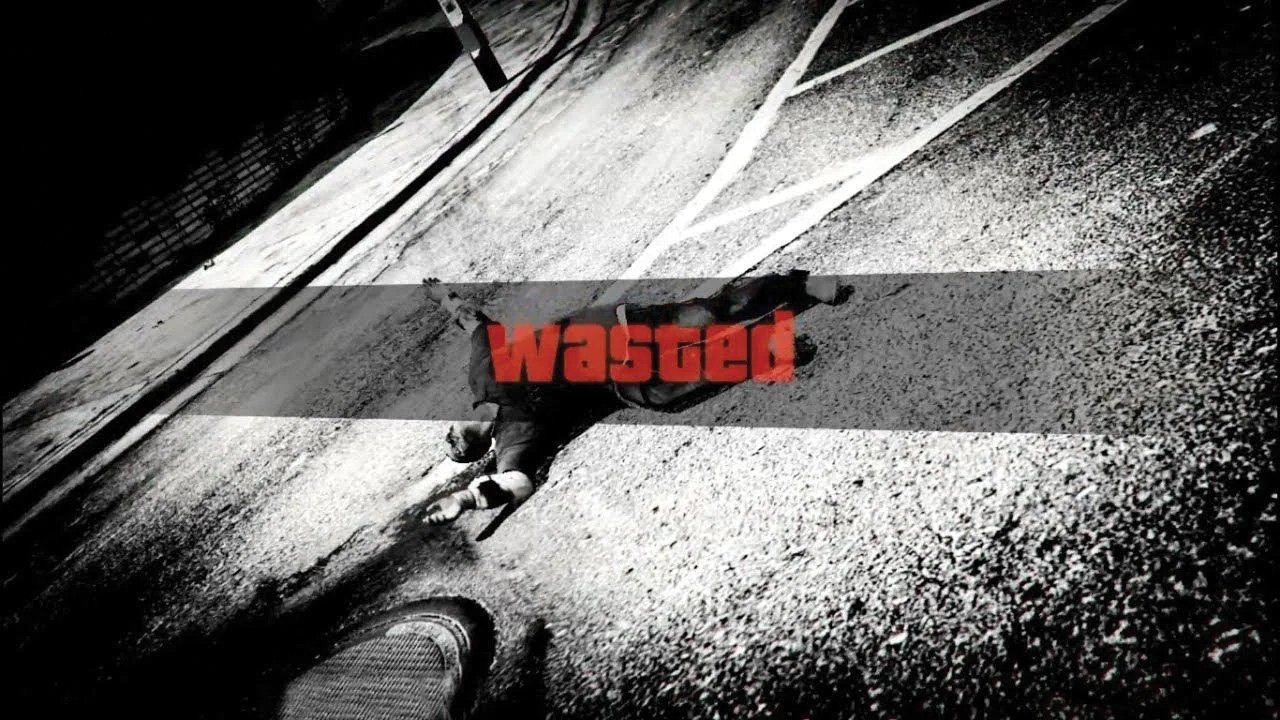
‘Wasted’ appears onscreen when a main character dies in Grand Theft Auto. Image: Rockstar Games
There’s perhaps no more damning indictment of the American healthcare system than GTA’s bleak portrayal. When you die in the game, you are greeted with the message ‘Wasted’ on screen and you reappear outside a hospital without your guns and some money deducted from your bank account to cover the medical bills.
GTA is usually a rags-to-riches tale and, at the start of the game, you can feel the strains of poverty as you struggle to afford things in the game world.
It doesn’t last for long. GTA V was notably a response to the 2008 financial crisis: the evidence is everywhere in the game world with foreclosure signs on businesses all over Los Santos.
The game even introduced an in-world stock market which fluctuated as time passed. Players could even meddle with it through a very GTA-specific form of insider trading: buying up stock and assassinating CEOs to boost rival firms.
Money will be the driving force once again in GTA VI, powering Jason and Lucia’s ambitions and crime sprees.
Prison
GTA maintains a dim view of rehabilitation.
Protagonists such as GTA III’s Claude start games in prison and are pulled into the criminal world on release.
It’s a trope that will continue in GTA VI as the first trailer revealed that Lucia will be released from prison in the game after being jailed due to “bad luck”.
The game will arrive at a time when early prison releases are ongoing in England. In recent years, Big Issue has attempted to prevent reoffending through campaigning to end Friday releases from prison.
There have also been several calls for short-term prison sentences for women to be eradicated, with experts arguing they do more to derail lives than rehabilitate. Perhaps Lucia’s story is not going to do much to counter that view.
Game changers – a potted history of GTA
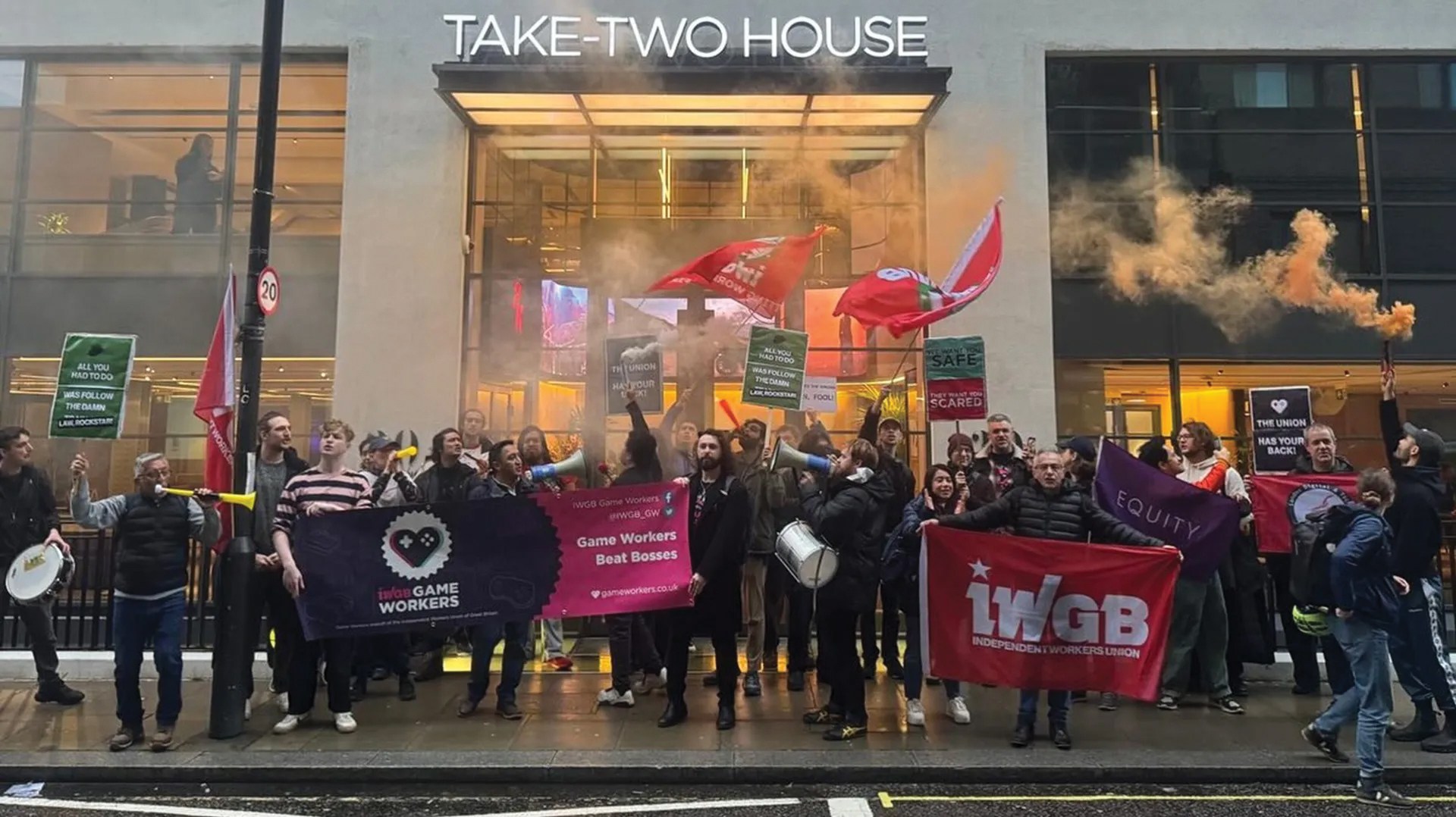
Protests outside Rockstar Games’ parent company Take Two’s London HQ. Image: IWGB
When GTA VI lands on 19 November, it could leave the UK’s internet stuttering as millions download the game while some people will likely pull a sickie from work.
This incredible success didn’t happen overnight.
GTA’s Scottish origins saw DMA Design (as developer Rockstar Games was known back then) craft top-down crime spree games that were popular without shaking the world.
GTA III was the one that changed it all. The first 3D title in the series changed video games forever in 2001, giving players a virtual off-brand version of New York to cause chaos in. It set the template for open-world games that allow players to create their own fun: from getting involved in car chases to simply cruising around listening to the game’s in-world radio stations.
Remarkably, two blockbuster games followed in the space of just three years with Vice City taking the series to Miami in the 1980s and San Andreas bringing a sprawling world covering Los Angeles, San Francisco and Las Vegas and countryside in between.
GTA IV followed in 2008, returning to New York and New Jersey with a new sombre tone and the tale of Eastern European immigrant Niko Bellic.
GTA V arrived five years later, exploring three playable characters’ heists across Los Angeles and the neighbouring counties. It’s been so long since the last mainline game that GTA V largely deals with the consequences of the financial crisis: the 2008 one.
The 13-year gap between V and VI is largely explained by the success of GTA Online, which sees players create their own character to run around Los Santos – GTA’s Los Angeles – carrying out heists and terrorising other players.
GTA’s ascent to the top of the gaming mountain has not come without controversy.
From the outset, the game’s subject matter and focus on giving players the freedom to commit crime has been controversial.
In the early years, lawyer Jack Thompson led a crusade to have the game banned.
Tabloids have taken aim at players’ ability to do things like pick up prostitutes and commit violence against sex workers (something that is possible but the game doesn’t encourage).
The controversy hit fever pitch during the release of San Andreas when an explicit sex mini-game that was cut from the final release of the game was leaked by hackers.
Rockstar has leveraged the controversy around the series to build on its popularity and notoriety.
But that notoriety has blended into the real world in recent times.
An employment tribunal brought by 23 former Rockstar employees who were dismissed by the company last year allegedly over trade union activity is set to deliver its verdict around the time the game is released. In total 31 workers were dismissed without warning in October 2025.
Just ahead of the game’s release, the IWGB Union announced that Rockstar workers had secured a vote on union recognition at the games developer.
The vote, which takes place on 26 November, could see workers get a say on pay and bonuses, overtime, redundancies, flexible working arrangements, and generative AI policies.
If the vote goes through, the Rockstar Games Workers Union will be the biggest recognised union in the UK video games sector.
It could bring awkward headlines for Rockstar but it is unlikely to dent the game’s success.
After all, we are living in a world where Netflix stumped up cash to host a GTA VI trailer for a few hours and NBA team Miami Heat rebranded themselves as Vice City to promote the game.
The cost of gaming – can we afford GTA?
Grand Theft Auto VI lands at a contentious time for the video games industry and at a time when not everyone will be able to afford to buy it.
For the first time in the mainline series’ history, GTA VI will be a digital-only release.
Depending on the quality of your internet connection, it could take quite some time to download. If you don’t have access to the internet then you won’t be able to play it at all.
The debate on physical games is a timely one: PlayStation maker Sony has announced it will be phasing out physical discs entirely in 2028. It’s caused uproar with gamers arguing that it spells bad news for pricing, monopolies and the preservation of games as they age.
Then there’s the space. GTA VI will take up 210gb of hard drive space, which can be almost a third of the total capacity depending on how the console is used. Gamers will have spent the last few weeks eagerly trying to make space.
The cost of memory is one of the reasons why technology has become increasingly expensive, with demand for components used for data centres and tariffs sending prices skywards.
At launch, it cost £369.99 for a digital-only PlayStation 5 in 2020. In days gone by the price of a console would fall over its lifespan. Now a new version of the six-year-old console will set you back £519.99. When the game launches on PC – currently expected to be next year – it will likely cost a lot more than that for a rig that’s powerful enough to play it.
Playing video games has never been a cheap hobby but in many ways it has never been cheaper to buy games than in the modern day. There are countless online sales every week selling games for pittance.
The Standard Edition of the game costs £69.99 – not cheap at a time when the cost of living is rising. The Ultimate Edition costs £89.99. Estimates from a couple of months back suggested 89% of pre-orders were of the premium edition.
The cost of making games has never been higher and the impact of AI has already driven job losses at video game development studios. There have been an estimated 56,000 lay-offs in the video game industry since 2022.
The sky-high costs involved mean lay-offs have happened even when games have been successful. It’s not known how much GTA VI has cost to make but studio leaders have denied rumours of a $1.5 billion price tag.
GTA VI is a singular game. It can afford to be lavish because it is likely going to smash sales records and quickly recoup its investment. But it lands at a time when it’s a different story for the industry and some of the people who may want to play it.