In the UK we have a rich, but largely forgotten, history of public canteens instigated by Churchill himself. During World War II, the government staged an epic public health intervention designed to both sustain the populace nutritionally, and enrich the national spirit.
The government made start-up grants available to set up public meal services, called British Restaurants. These were designed to provide a wholesome, delicious, price-capped meal to the masses under a progressive ethos which commanded well-designed spaces as coterminous to good health.
This model enabled the provision of low-cost meals en masse but it also, implicitly, drew upon the everyday act of meal sharing as a means of upholding norms and values, and of infusing familiarity and comfort to create a convivial experience.
Keep reading the journalism that powers our mission
Register free to continue and learn more about the stories, campaigns and the support we provide, helping people facing poverty across the UK.
At their peak in 1943, there were more than 2,000 British restaurants serving millions of meals each week. They occupied prime retail spaces on the high street and were decorated with commissioned murals and artworks, and were frequented by a diverse mix of diners, forgoing social class and status for the act of meal sharing.
In Nottingham alone, for example, there were nine British Restaurants, with the largest serving 15,000 meals a week.
Although pressure from the burgeoning for-profit restaurant sector saw public eating spaces’ funding being withdrawn, prompting their subsequent decline, the significance of their purposeful design is as apt now as it was then. Badged as ‘centres of civilisation’, British Restaurants were hugely popular, instigating the shift from domestic to the now ubiquitous ‘eating out’ culture.
Advertising helps fund Big Issue’s mission to end poverty
Public canteens can still facilitate shared mealtimes, bringing diverse people together to break bread. And they encourage face-to-face relations, forging conversations and connections in a way that Deliveroo cannot. They represent togetherness, social renewal, and sharing and caring at a time when competing crises leave us feeling overwhelmed. Public canteens can ensure that everyone has the opportunity to eat, eat well and eat together.
Careful stewardship of resources, food and water is vital for our planetary survival, so models that deliver meals en masse respond to this need for efficiencies and the pooling of resources. This can build food security by making affordable meals available through a number of high street and neighbourhood providers. They could be a pragmatic model of delivering nutritious meals made from sustainably sourced UK produce to the masses, via their at-scale procurement processes.
The word ‘canteen’ conjures for most of us memories of school dinner, or hospital or prison canteens – and visions of unappetising food and a lack of choice, served in austere conditions. But can public canteens be reimagined for the modern day? Can public canteen become synonymous with fresh, delicious, affordable and social meals, eaten in well-designed public places?
Practically, some aspects of canteen cultures can be identified here in the UK, from the IKEA canteen where thousands of people get their tray and queue up for meatballs, to Wetherspoons and McDonalds who bring an offer of unpretentious food to the masses. While these for-profit businesses dominate the market, their products don’t have that social sustenance. Instead, we have a system of overproduction, profit-extraction, food wastage, and the hyper-individualisation of mealtimes where choice is promoted over connection.
A recent blog post by Nourish Scotland likened public diners to other familiar infrastructures such as libraries, leisure centres and parks: places that deliver social value as well as a designated social ‘service’. Sociologist Eric Klinenberg, in his appraisal of how social infrastructures save lives in times of crisis, termed these phenomena ‘palaces for the people’.
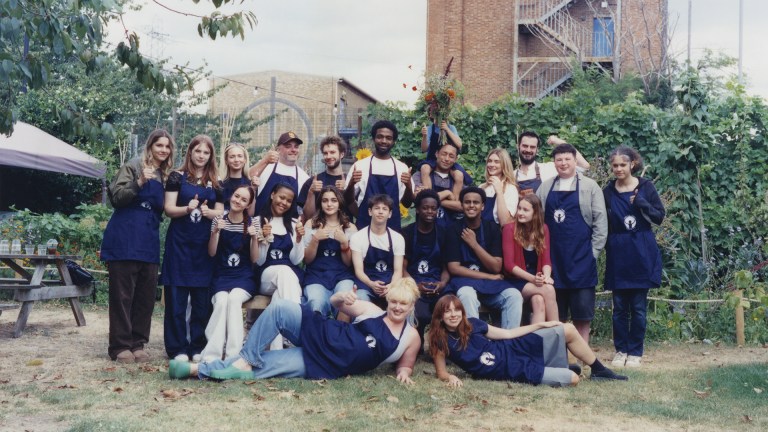
These approaches, which seek to encourage social interactions through shared food consumption, consider the deeper gift of the group mealtime as extending and strengthening social bonds, and the social contract itself. Building on these projects and drawing together a mix of sociologists, historians, restaurateurs and social enterprise experts, the work of the newly established Canteen Culture Coalition is to convene experts, enthusiasts and customers alike to contribute to the story of how public canteens can and should be brought back into use.
Advertising helps fund Big Issue’s mission to end poverty
They are also piloting the development of a canteen culture in two English cities, by inviting commercial hospitality, schools and civic providers to take turns offering monthly price-capped meals. The Canteen Culture Coalition will attract signatories to build the case for investment into new, purpose-built canteens, increase the use of sustainably produced food into the canteen network, and build evidence about the benefits of bringing back the nation’s dinner time.
Dr Marsha Smith is a research fellow at the Centre for Business in Society at Coventry University. Professor Bryce Evans is chair in modern world history at Liverpool Hope University
Do you have a story to tell or opinions to share about this? Get in touch and tell us more. Big Issue exists to give homeless and marginalised people the opportunity to earn an income. To support our work buy a copy of the magazine or get the app from the App Store or Google Play.