Meet Wispy, the AI assistant helping people with dementia live independently
The CrossSense glasses identify objects and provide step-by-step instructions to guide users through everyday tasks
by:
2 Sep 2026
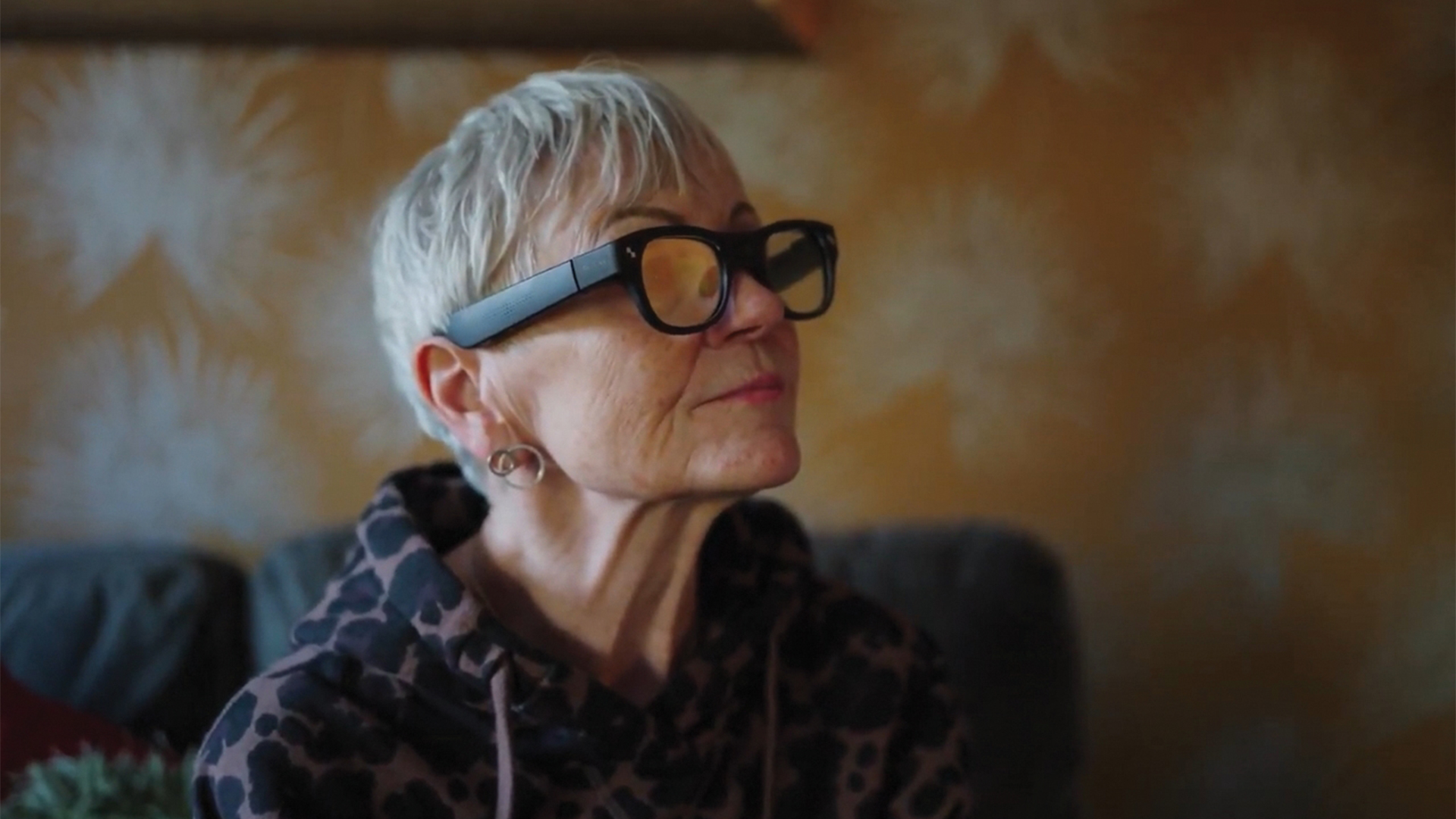
Carole Greig tries the CrossSense glasses, which uses audio and text to help wearers with dementia. Image: Andrew McKay
In association with Specsavers
Share
“Hi Wispy,” Carole Greig smiles. “It’s nice to see you again.”
We’re standing in the kitchen of Carole’s South London flat. She turns on her heel and walks towards the kettle, talking all the while.
“Yes, that’s a nice idea… where’s the milk? Yes, in the fridge… I think I’ll have a biscuit… yes, thank you.”
Many of us talk to ourselves when we’re home alone, and at first glance, you might attribute this domestic monologuing to the same impulse.
But Carole’s not speaking to herself, not really – she’s in conversation. Listening closely, I can hear a soft, vaguely electronic voice answering her questions.
“The kettle is boiled. Pour the water into the mug carefully… pop it back on its basin and switch it off… Would you like milk and sugar? Milk is in the fridge… A biscuit – that’s a perfect treat.”
Advertising helps fund Big Issue’s mission to end poverty
Advertisement
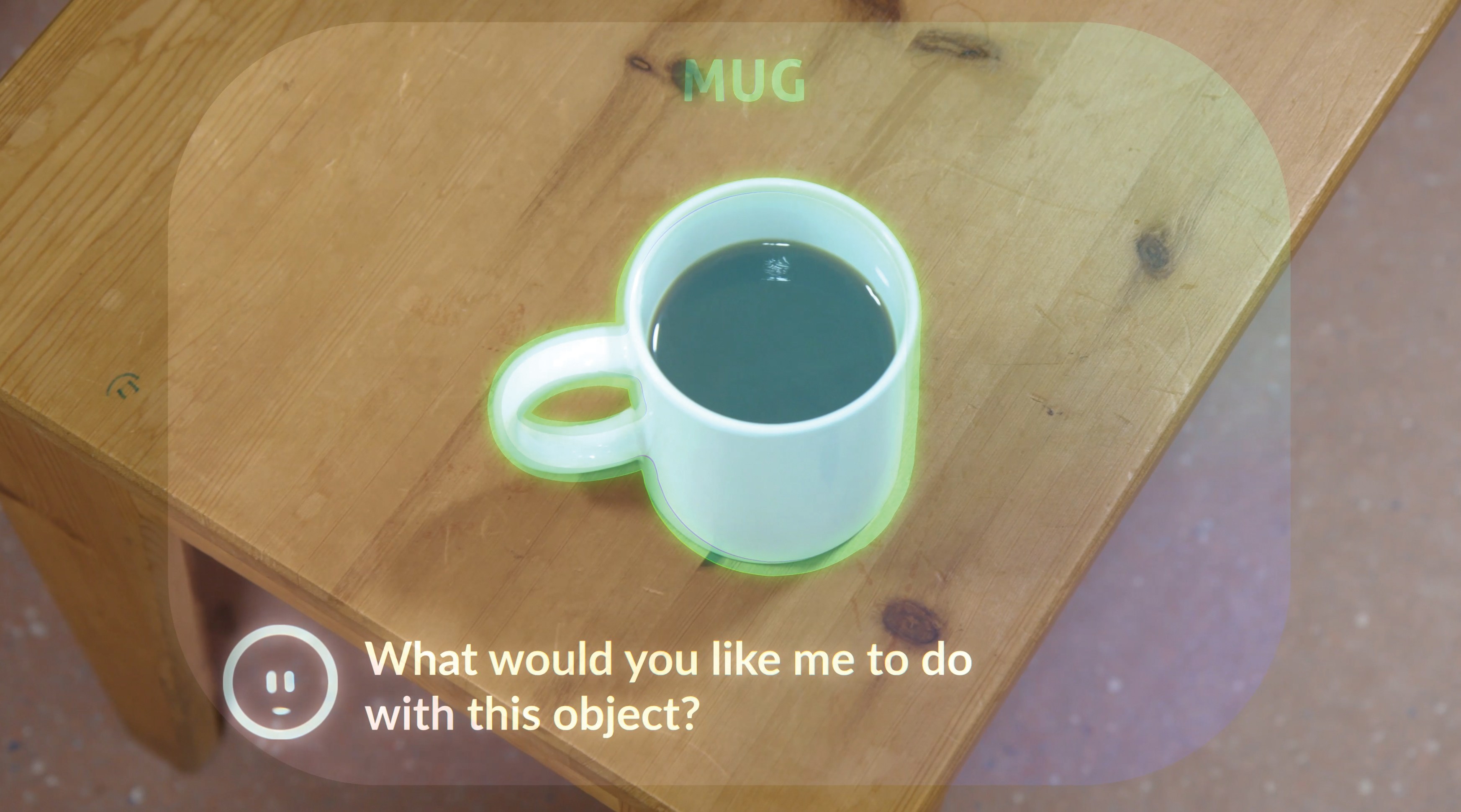
The voice is coming from Carole’s CrossSense smart glasses, an AI-powered device that identifies everyday objects and guides people living with early-stage dementia through daily activities. Wispy is the embedded AI companion that does the talking.
Carole, 71, is still very independent, but can find everyday tasks disorienting. She’s “loved” trialling the glasses, which she’s used at half a dozen sessions this year.
“I live alone. I cope alone. I do my housework on my own. So as I’m going down my journey, I might need the support of something like Wispy,” she says. “I see Wispy as a bit of a companion.
Keep reading the journalism that powers our mission
Register free to continue and learn more about the stories, campaigns and the support we provide, helping people facing poverty across the UK.
“It would be like having your own carer living in, because you can talk to him at any time. You can ask him any question.”
Before her own diagnosis, Carole spent years volunteering as a dementia companion. She still runs groups for other people with dementia. Stimulation, she says, can help people “stay in the world for longer”.
“There’s this stereotype about what dementia looks like,” she says, flopping forward. “It’s someone sitting in a chair like that. Not really recognising their surroundings, not knowing who they’re talking to.
Advertising helps fund Big Issue’s mission to end poverty
“Well, let me tell you, I know 100 people with dementia, various types of dementia, varying levels of dementia, and they are so far away from that image.”
CrossSense is built around that premise. It beat 174 other inventions from around the world to win the Longitude Prize on Dementia. It’s currently in the testing phase, but the £1 million prize money means it will likely go to market at the start of next year.
“There are a lot of cases of people having advanced dementia on a neurological level, [with] a huge build-up of amyloid plaques and protein tangles. Yet they can function quite well, which we believe is because they’re able to reroute signals in a different way,” says CrossSense CEO Szczepan Orlins, sitting opposite Carole. “This is the basic starting point for CrossSense, which is that if you cannot retrieve information one way, there must be another way.”
A preliminary study – yet to be peer reviewed – hints at how the glasses might help. A team at the University of Sussex tested CrossSense with 23 pairs of people living with dementia and their carers. Without the smart glasses, participants with dementia could name less than half (46%) of household items correctly. With the glasses, that rose to 82%. An hour after participants took the glasses off, the average was still 78%.
When Big Issue visits, Carole takes the glasses for a spin. After sitting down with her coffee, she gets up to look out the window and asks Wispy about the weather.
Advertising helps fund Big Issue’s mission to end poverty
An example of what the CrossSense glasses show users living with dementia
“It’s 27 degrees and very warm,” it tells her. “Don’t forget you have your coffee and biscuits waiting, would you like to go and enjoy them?”
“That’s good,” says Carole, “because that is something that would be forgotten. I do it all the time now. I make a cup of coffee and then realise I’ve not drunk it two hours later.”
Wispy is currently limited – it can’t direct you through a complex recipe, for example, and the battery life is just one hour. But Carole thinks its potential to assist with simple tasks, like brushing your teeth, is huge.
“[It can say] This is Sensodyne. Is that what you want?” Carole explains. “Because you could have any amount of tubes in the bathroom. You could be picking up denture adhesive. You don’t want that all around your mouth.”
For Carole, Wispy’s greatest potential is its capacity for patience.
“I constantly stress in my groups: allow the individual to do what they can for as long as they can. The partners sometimes say, ‘Yeah, but they take so long.’ I say, ‘It doesn’t matter, it’s not a race.’
Advertising helps fund Big Issue’s mission to end poverty
“You don’t want to patronise people. We’re not children. We still have an element of intellect, although that intellect is diminishing. We want our independence. We want to be supported.”
A device that watches and listens in someone’s home raises the obvious question of privacy. CrossSense has just finished the ICO’s regulatory sandbox programme, Orlins says – a service that helps organisations navigate privacy risks.
“Preferential privacy, letting people know what is being recorded and why, removing information when you don’t need it, like not storing intimate images,” Orlins says.
Then there’s the AI question.
“Two years ago, AI would hallucinate, telling you to put glue on your pizza,” Orlins says. “How do we know [Wispy] won’t suggest frying eggs in the kettle?”
He says that it’s “not like an AI that you just chuck things into.” It has a knowledge graph structure underneath that governs what it can and cannot say.
Advertising helps fund Big Issue’s mission to end poverty
There are limits, too, on what Wispy is allowed to do. It won’t diagnose anything – “with AI, you need to be careful with this,” Orlins says – and it won’t talk about medicines or advise on what someone has or hasn’t taken. It only operates in the home and garden, and won’t help you drive.
“We’re just trying to be fair and honest about what we can promise.”
Part of that means not promising the type of emotional connection a human can provide.
Wispy is no substitute for human companionship – as Carole knows from her years volunteering as a dementia companion. “One of my ladies, she’s far along, and I go, and I see her – I’ve been seeing her for 20 years – and I paint her nails,” she says.
“She looked in the mirror and she said, ‘Aren’t I beautiful?’ I wanted to cry. And I think, please god, let somebody be there for me to do that.”
Wispy can’t hold your hand or paint your nails. “I wonder how Wispy would react if you were emotional,” Carole asks. “If you were tearful. I very often start my days like that, and I have to talk myself out of that. People don’t understand that about dementia. There are so many different emotions in play.”
Advertising helps fund Big Issue’s mission to end poverty
But when the choice is silence or glasses that are stimulating, engaging and listening, the preference seems pretty clear.
“How would Wispy react, yes…” Orlins pauses for a moment. “Wispy could listen to you.”
“That could make a difference,” Carole says. “It’s wonderful to think that someone is listening to you.”