‘I was diagnosed with a rare dementia that affects my vision. I turned it into an art project’
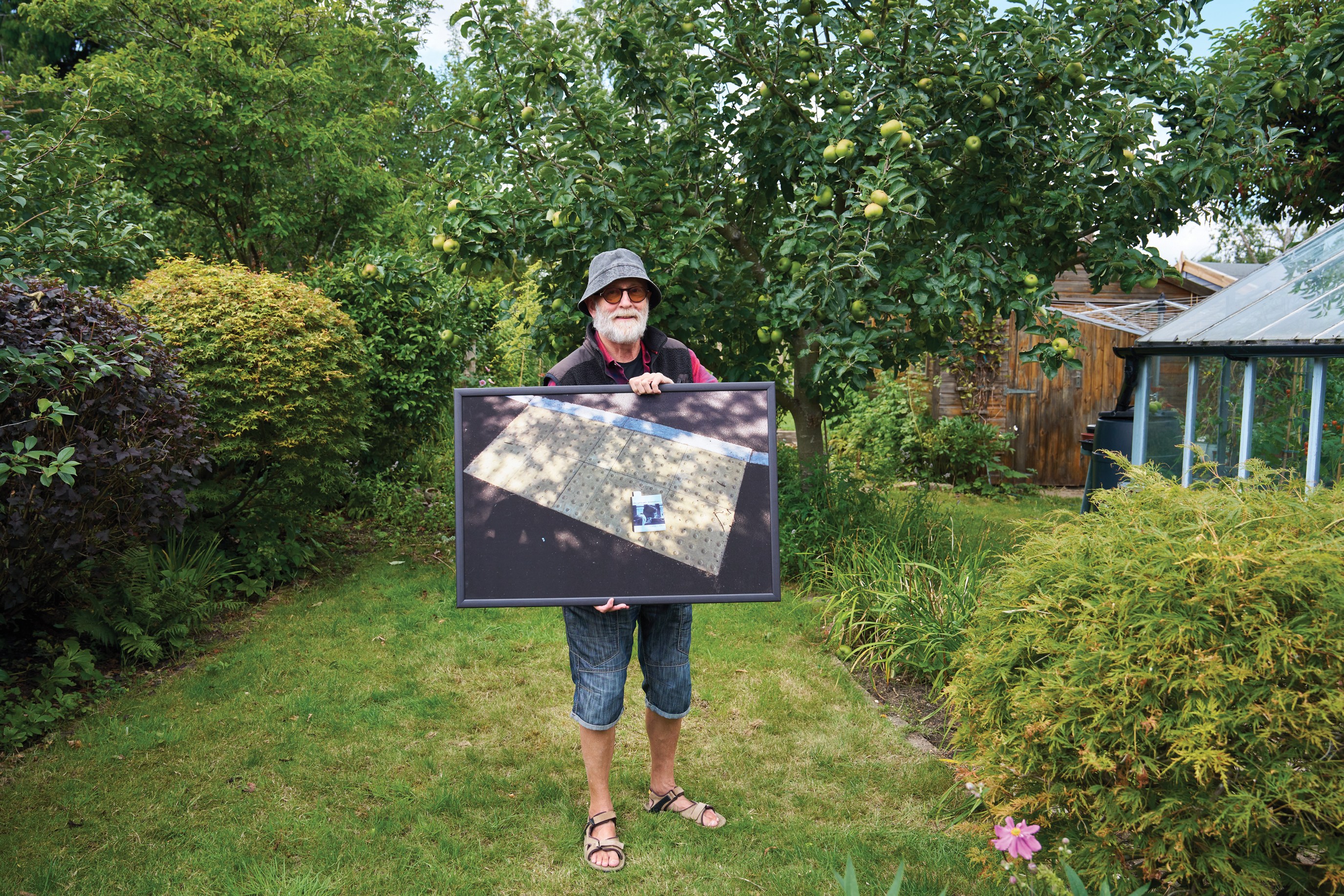
When 73-year-old Steve Baker was given his diagnosis, his immediate response was: “OK, well this is an art project now”
by: Steve Baker
6 Sep 2026
Steve Baker and his wife Aly. Image: Greg Woodward
In association with Specsavers
Share
I have a rare dementia called posterior cortical atrophy, which usually begins by affecting a person’s vision.
I’ve only ever had one eye that focuses properly, so I’ve had annual checkups since the age of three. My vision was worsening and I told the optician: “This diagnosis that you’ve given me isn’t working. I obviously need a stronger prescription.”
He said my eyesight hadn’t deteriorated at all, which was confusing. I wasn’t referred to anyone for further investigation.
I later went to the GP, who took me very seriously, and she referred me to a neurologist. By the end of a 45-minute conversation, the neurologist had given me my diagnosis.
People’s eyesight isn’t the problem when they have posterior cortical atrophy, but the part of the brain that processes information from our eyes is impacted by the disease. I wish more opticians knew to signpost people to their GPs so that other people don’t have a three-year long wait like I did.
Read more:
Advertising helps fund Big Issue’s mission to end poverty
Before I retired in 2008, I’d been a university academic teaching art and art history. So, when I was given my diagnosis, my immediate response was: “OK, well this is an art project now.” And that has continued to be my way of engaging with it in a positive way.
I slowly started taking a set of photographs because I was still, and I think I still am, able to use my digital SLR camera. I don’t think I’d be able to change the settings now though. I’ve lost 75% of my eyesight.
When I first got the diagnosis, I could still read. Now I can’t read at all. I’m completely dependent on my wife Aly for that and she’s incredibly patient and helpful. As a nod to what I have lost, for this project, I photographed books that I had gathered over almost 20 years. I took them on my daily walks to take the photographs.
Keep reading the journalism that powers our mission
Register free to continue and learn more about the stories, campaigns and the support we provide, helping people facing poverty across the UK.
Since the start of the pandemic I’ve been going out on walks every day on my own. I didn’t want my diagnosis to stop that happening. I carry a white cane and wear a high-vis jacket. I try and minimise the number of road crossings and walk familiar routes, and I carry a tracker as well as my mobile phone and that means I can contact Aly.
I selected around 68 publications for the final photographs. That led to the publication of my photography book, Plaques and Tangles. The name comes from the plaques and tangles created by proteins in the brain when someone has dementia. It felt fitting.
What is posterior cortical atrophy?
Posterior cortical atrophy is an uncommon type of dementia that usually begins by affecting a person’s vision.
It is also known as Benson’s syndrome, ‘visual variant’ or ‘visual-spatial’ Alzheimer’s disease.
What causes posterior cortical atrophy?
PCA is caused by damage that builds up in the brain cells at the back of the brain. This is the part of our brain that processes information from our eyes, and allows us to make sense of what we are seeing and where things are.
Alzheimer’s disease is the most common cause of the brain cell damage in PCA. Sometimes, it is caused by other types of dementia, such as vascular dementia or dementia with Lewy bodies.
Early symptoms of posterior cortical atrophy
Alzheimer’s usually affects a person’s memory first, but in PCA the first symptoms are often problems with vision and spatial awareness.
Changes in someone’s ability to drive can be one of the first noticeable symptoms. It can also often cause difficulties with reading and locating or recognising objects.
At the moment we can’t be sure how many people in the UK are affected by PCA. Around one in ten people diagnosed with Alzheimer’s disease at specialist dementia clinics might have symptoms of PCA.