David Baddiel: ‘My worst moment was telling my dad my mum died. I had to tell him again and again’
As part of our special takeover of the magazine by people with dementia and their families, Big Issue paired comedian David Baddiel with Chris Snell, a young man who started caring for his dad when he was 19. They speak about the challenges of caring for people with dementia, the funny moments carers had with their dads, and their hopes for change
by:
4 Sep 2026
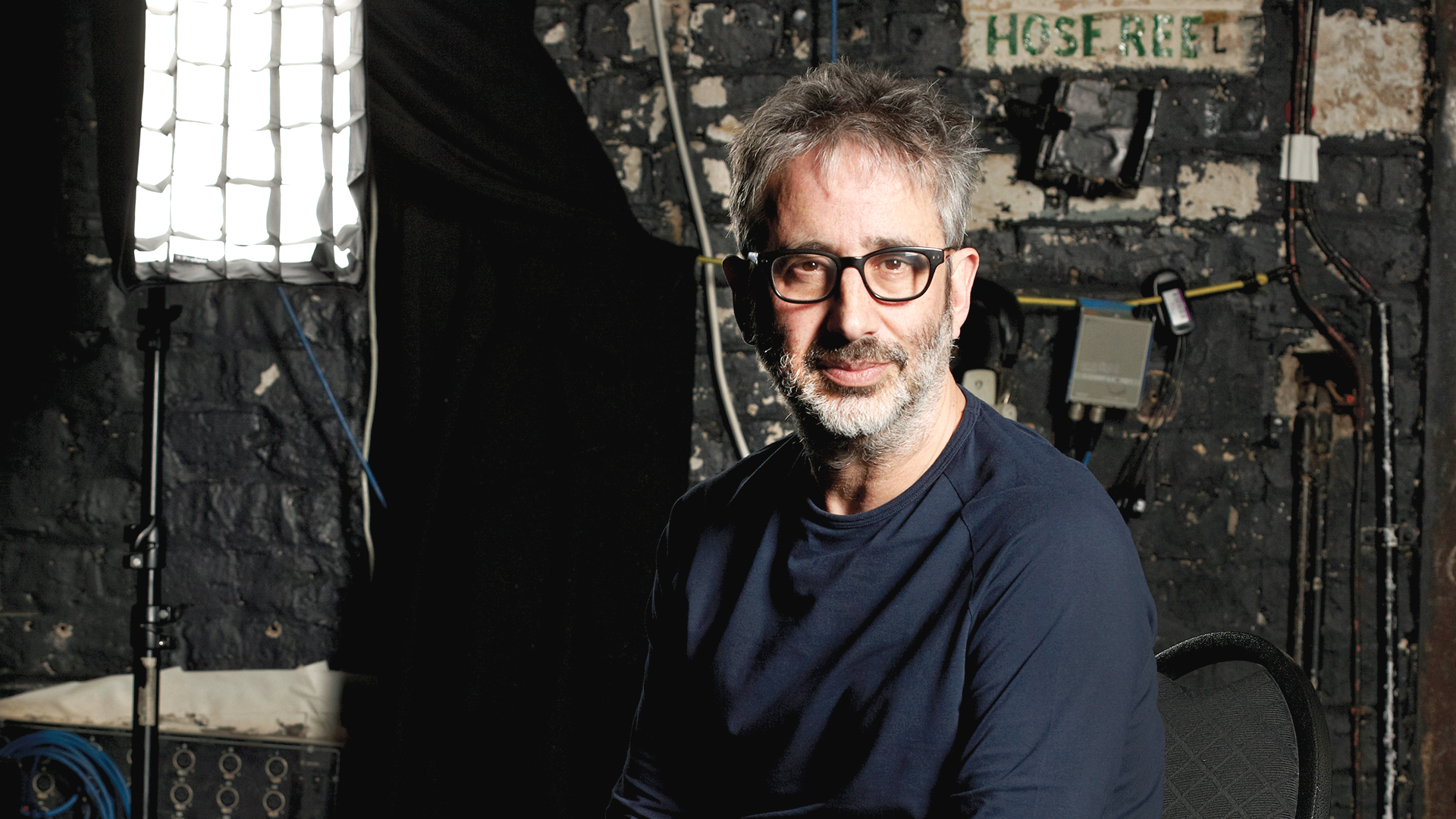
David Baddiel. Image: Tessa Hallmann
In association with Specsavers
Share
David Baddiel’s father Colin had a rare dementia called Pick’s disease, which causes the frontal lobes of the brain to slowly shrink, leading to behavioural and personality changes.
In 2017 the comedian, author and presenter made a documentary, The Trouble with Dad, with his brother Ivor to raise awareness.
Since Colin died in 2022, Baddiel has continued speaking about the realities of caring for a person with dementia as an ambassador for Alzheimer’s Society.
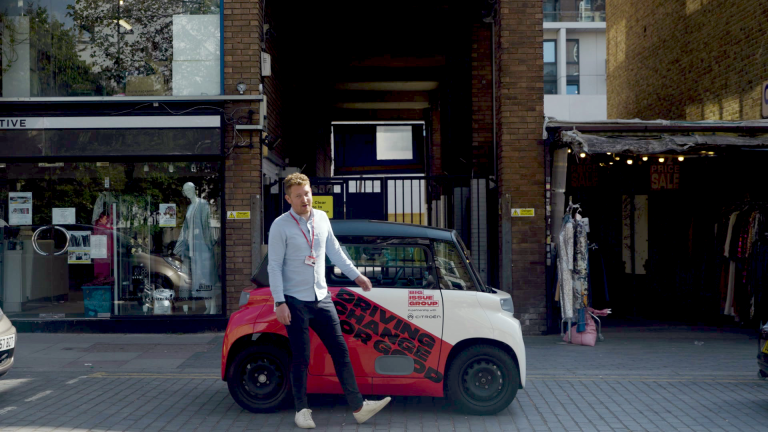
Big Issue paired the comedian with Chris Snell, a 34-year-old who was 19 when his father was diagnosed with dementia. Snell became his father’s primary carer.
Baddiel and Snell speak about the challenges of caring for people with dementia, the funny moments they had with their dads, and their hopes for change.
Chris Snell was only 19 when he became carer for his dad
Chris Snell: What are the differences between Pick’s disease and Alzheimer’s?
Advertising helps fund Big Issue’s mission to end poverty
Advertisement
David Baddiel: It’s rare that dementia is one thing. My dad had Pick’s, but I also think he had vascular dementia and Alzheimer’s.
We never put him in a care home. He would be so sweary and aggressive that they either wouldn’t take him, or they would say they needed four people on him at once. That would have got expensive. He wasn’t like that at home. He was sweary but not aggressive. He felt comfortable. He was happier there, so we got carers in the home.
He started to get urinary tract infections a lot… I don’t know if that happened with your dad?
Keep reading the journalism that powers our mission
Register free to continue and learn more about the stories, campaigns and the support we provide, helping people facing poverty across the UK.
DB: The UTIs were constant. His dementia would be affected by that. He was usually like a bull in a china shop: energetic, loud, uncontrollable. After a UTI, he became more like the standard idea of dementia: quiet and unengaged and lost. I didn’t know until then that a physical thing could affect dementia.
CS: Once my dad got a urine infection, he would start to hallucinate a lot. I noticed him become more mellow after that. He’s in a care home now. He’s been there for about three years because it got to the point where it wasn’t safe any more. He would leave the gas on. It wasn’t just a danger for him but also the people around him.
Advertising helps fund Big Issue’s mission to end poverty
DB: When did you first notice it?
CS: My partner at the time noticed. My dad told the same story five times in one conversation. I was in denial. I thought it was old age. That happened for about a year. The turning point was that he couldn’t remember his laptop password and he burst into tears – and my dad is not a crier.
DB: That’s interesting because I forget my password. I wonder at what point those small cognitive lapses become a sign that something is wrong. There was an odd period where I remember my dad being lucid enough for me to say, “I’m a bit worried about your memory.” After that, it became more obvious through him constantly forgetting things. Because he was so blokey, I never had that moment where he could talk emotionally about what it might be to have dementia. Big figures now – like Paul Gambaccini and Jon Snow – talk about the fact they have dementia. That wasn’t possible with my dad. He came from a different generation of men.
CS: It was the same for me. After the diagnosis, my dad said, “He don’t bloody know what he’s talking about, does he?” I said, “What do you mean?” He goes, “Nothing wrong with me.” But he gave me a look where I knew he didn’t really believe what he said. I said, “Whatever happens, I’ll be there for you, so don’t worry about the future.”
DB: That’s really moving. The denial is strong and I feel for them. I’ve spent my whole life over-expressing myself and talking about my feelings. But that doesn’t mean that if I became aware that I have dementia I would be easily able to talk about it. It’s an incredibly terrifying thing.
Read more:
Advertising helps fund Big Issue’s mission to end poverty
DB: Well, what happened, which was not all that great, is that my mum became his primary carer. My parents did not have a great marriage. My mum would go to meetings of people in similar situations and would say, “They’re all talking about how much they want to care for their husbands. I want to scream and say I don’t want to have a husband with dementia.”
My mum was a complicated woman. And then she died. She had been ill in a different way for a long time. My brother was meeting my mum and she didn’t turn up. He went to their house and the door was locked. He got the ambulances and they knocked the door down. When they came in my mum was out cold and my dad was swearing at the paramedics. He didn’t understand.
Maybe the worst moment of my life is having to tell my dad that this had happened. They didn’t have a good marriage, but it was a long marriage, and they had a co-dependent relationship. She was his primary carer. I have never seen this very guarded, defensive man look so vulnerable. We hugged him, told him it would be all right, and then 45 minutes later we had to tell him again. And then again, for about a year. That’s one of the most extreme experiences of my life.
When my mum died, me and my brother were in charge of my dad. We were in our 40s and 50s but it still feels disorientating that suddenly you’re the children in charge of the parent. You’re the one making important decisions. My older brother was better than me. He’s more responsible than me. You seem like a responsible person. It sounds like you took control.
CS: I felt like I had to. My mum and dad split up when I was 18. My dad moved in by himself and then after about a year or so I moved in with him. Around six months later we realised something was wrong. I had to deal with that from 19 years old, all by myself. And at that time, I wanted to go out partying with my friends and get into music.
Advertising helps fund Big Issue’s mission to end poverty
DB: That is very young. For a lot of people, it’s very difficult to accept that they are going to be a carer. I don’t know if I could have done it at 19. I wonder if you felt angry? Did you ever go, “Fuck it, I’m going out”?
CS: No. I didn’t have it in me to abandon him. I would have too much regret and guilt.
DB: Were you able to employ carers?
CS: I looked after him for about five years by myself. Cost was a big issue. I was still going through the process of getting power of attorney. I was trying to juggle work and had to explain to customers that my dad has Alzheimer’s so there may be a situation where I had to leave. Sometimes I did lose customers.
DB: Right, that is really difficult. For us, it was difficult, but we could pay for care. We had a pool of carers rotating, and some of them were much better than others. Some of them responded well to my dad. Even though he’s a difficult bloke, they fell in love with him. He was funny and liked to have a laugh.
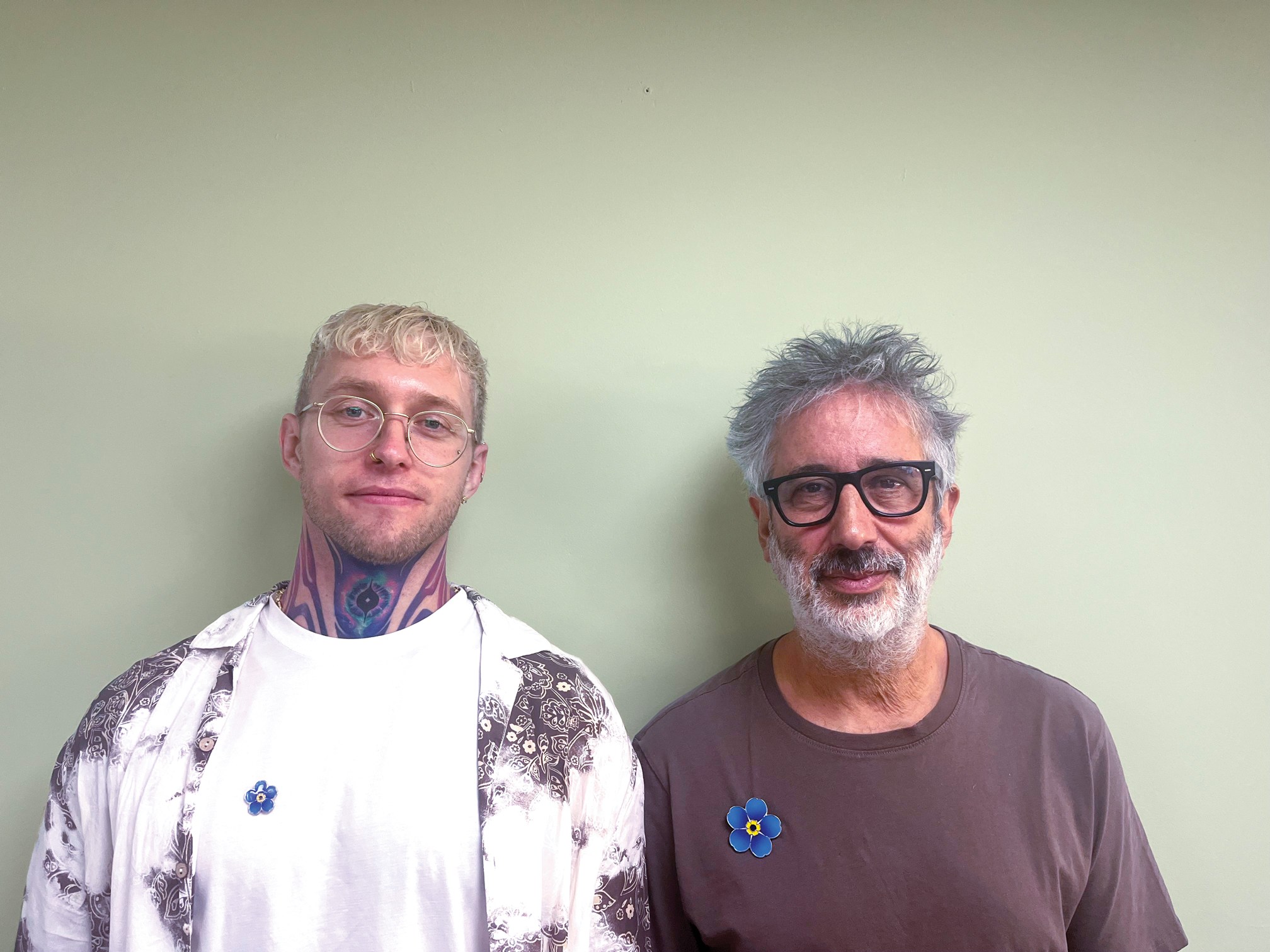
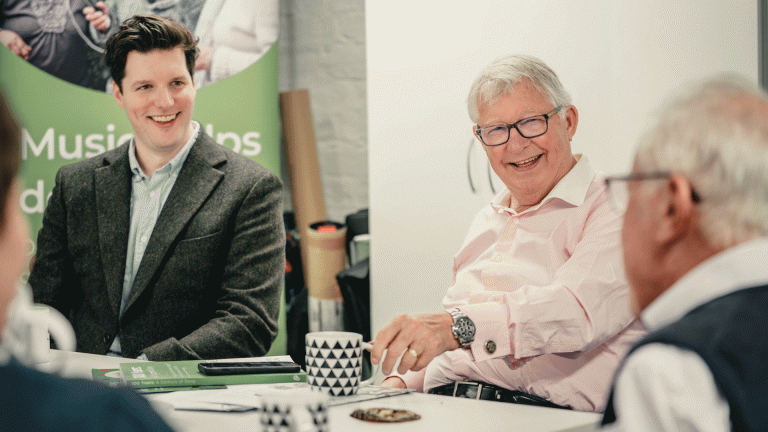
Chris Snell and David Baddiel
CS: My dad’s sarcastic and knows how to have a laugh too. I’m similar in that sense. I used comedy to deal with difficult times. Do you feel like that helped you deal with it?
Advertising helps fund Big Issue’s mission to end poverty
DB: Oh yeah. There are loads of funny things that happened. The permission to find some of it funny is important. It’s a good resource and some of it just is funny, right? My dad was a man of catchphrases. He came from a time of The Goons on the radio. When I was young, he was always saying little catchphrases. We would sometimes try and trigger these in him to remind ourselves that he was still there. We would say: “I’m off.” And he would say: “You’ve been off for years.” If he didn’t say that we’d worry.
CS: My dad would burp and I’d say: “Pardon?” And he’d say: “Granted.”
DB: That’s exactly it. Men of that generation loved that shit. My dad lost the power of speech almost entirely by the end and the thing that he used to do was a raspberry.
CS: My dad is heavily into Buddy Holly. I would often play his music if dad’s having a bit of a down day to see if I could lift his mood a bit. Nine times out of 10, he would start singing or tapping his feet.
DB: People talk about music, and I’m really into music. My dad was never into music. But he was into football. In the 2016 Euros, Wales were in the quarter-finals against Belgium. I’m sure if you asked my dad who the teams were, he wouldn’t know. He might remember that he’s Welsh. But there’s a story playing out on screen that he’s relating to. When a Welsh goal went in, I felt he was uplifted.
CS: Did you ever get support from your local council?
Advertising helps fund Big Issue’s mission to end poverty
DB: My dad, within the last year of his life, needed constant care. He couldn’t do anything for himself at all, and we still weren’t offered that by the council. It adds to the burden of caring for someone, dealing with council regulations.
CS: I felt my council could have done more. They pushed me to breaking point. I tried to get him in a care home, but they said I would need to sell the property. I wasn’t in a position to do that because I had nowhere to go. Eventually I broke down in tears in the council office. They asked me to write a letter. Two days later they said they would disregard the property. But that had been a two-and-a-half-year battle.
DB: When he went into a home, how was that?
CS: I thought I would feel guilty letting him go. But after a week, his mood had uplifted. He was getting the care he deserves.
DB: I wonder if it would have been better if we’d made the effort – which would have been enormous – to get my dad in a home. I don’t think my dad was ever not content at home, but there were physical issues like the UTIs.
CS: We had a few issues in hospitals as well. I’m not sure if you had the same.
Advertising helps fund Big Issue’s mission to end poverty
DB: A lot of it is that the NHS is under enormous strain. There’s an ageing population with more dementia. A&E is a nightmare. But in general, I am very grateful for them.
CS: What do you hope changes for people living with dementia?
DB: This might be a pie in the sky thing, but I hope that we find a cure. I’m considerably older than you. When one has a history in the family, you get anxious about your own memory. There’s a huge fear of dementia, as if it’s the end. My dad lived for 15 years after diagnosis, so it isn’t death. There is light and shade, even though sometimes the shade is very dark. I guess that’s the thing I would hope for beyond a cure, is that people feel there is light as well as shade.