It’s 10 years since BHS folded. How do we put the spark back into the British high street?
British high streets lost nearly 30% of their total chain outlets between 2014 and 2024. What does the future hold for them?
by: Tom Horn
28 Aug 2026
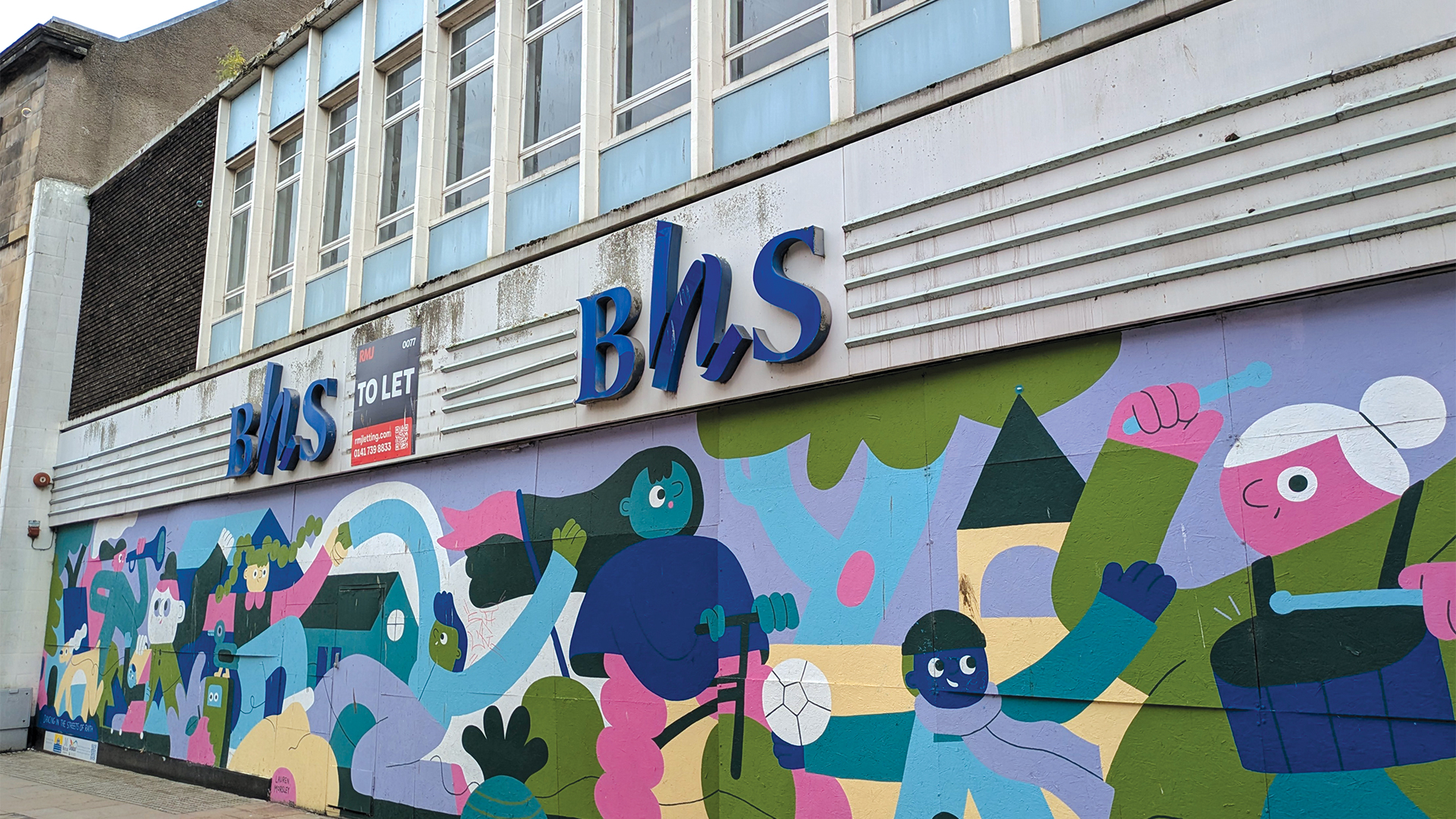
The site of the old BHS in Kirkcaldy has been spruced up by locals but remains empty.
Share
It’s been a long decade for the high street. When British Home Stores, one of the lynchpins of British retail, closed the doors of its remaining 22 locations for the last time on 28 August 2016, few would have predicted we’d still be seeing the consequences 10 years on, as town and city centres fail to fill the gaping holes they left behind. While some stores were taken over by other retailers, most were dealt one of several sorry fates, including being divided into smaller outlets, repurposed into accommodation, boarded up and left empty, or outright demolished.
Many high streets – from Stirling to Stevenage – still have a big BHS-shaped hole in the high street.
BHS was just one nail in the department store coffin, though. A recent report from PwC UK and Green Street revealed British high streets lost nearly 30% of their total chain outlets between 2014 and 2024. Previous analysis from property developers CoStar Group showed Britain lost 83% of its department stores between 2016 and 2021, after Debenhams shut up shop and House of Fraser closed dozens of stores.
“We’ve seen a transition from high street shopping to out-of-town and online, meaning there is just less demand for retail space on the high street,” says Jessica Craig, policy manager at Power to Change. “A retail-led model for the high street is no longer fit for purpose. In some places, as much as 40% of the retail space is going to need to be repurposed in the next few years” as shoppers turn elsewhere.
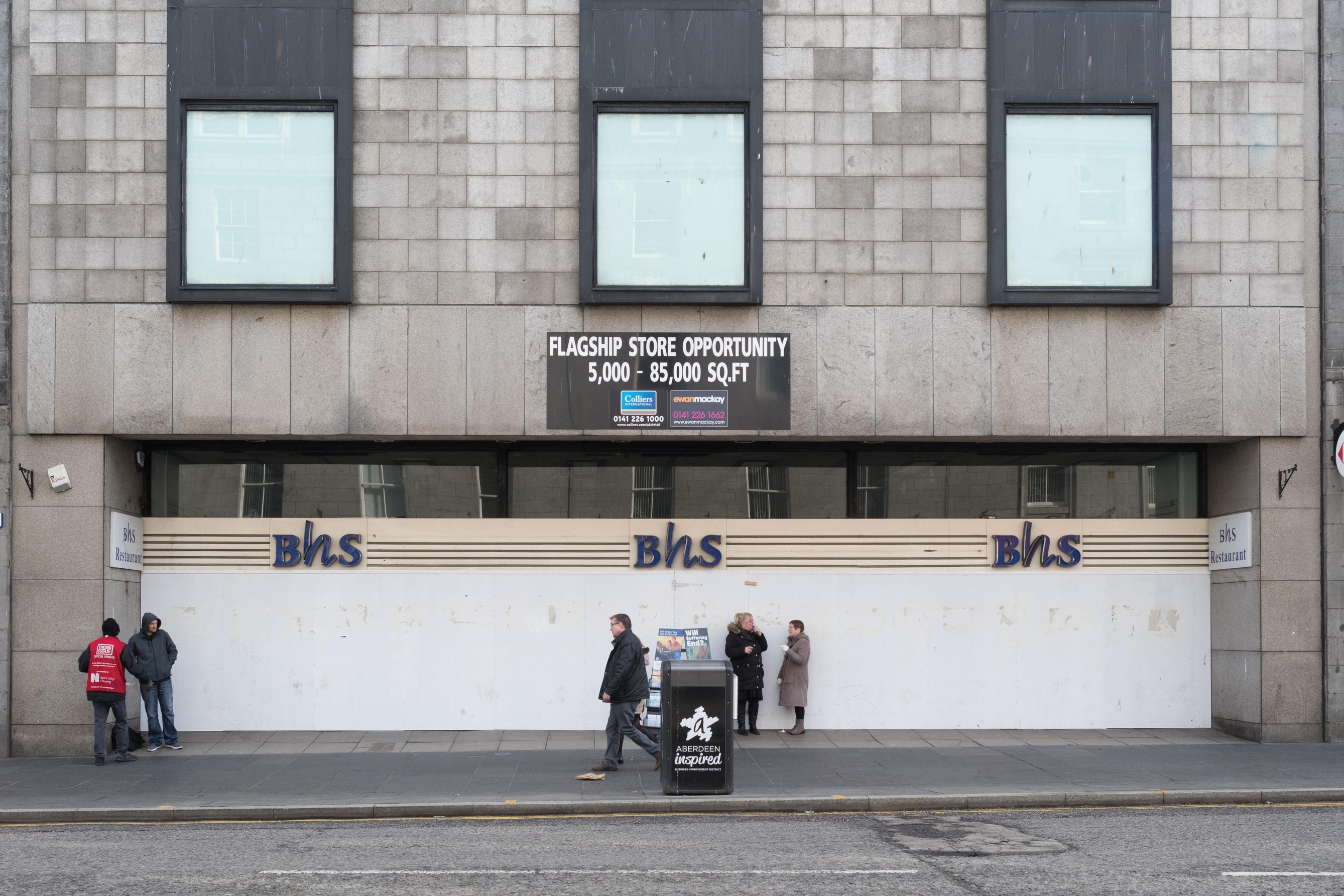
The empty BHS building on Union Street, Aberdeen, is replicated all over the country. Image: Kay Roxby / Alamy
This decline is bad news for all of us – and not just because it’s harder to buy a lamp, an iPad and your underwear in the same shop.
“As you have more empty shops, you see some of those buildings start to get into a really tricky state of decline that attracts or reinforces antisocial behaviour, which makes people feel the state of the high street is not very nice, or that it’s potentially unsafe and they don’t want to go there,” Craig explains.
Advertising helps fund Big Issue’s mission to end poverty
Advertisement
The issue goes way beyond where we do our shopping, though. High streets are a strong indicator of the nation’s economic wellbeing, as they directly reflect an area’s prosperity or decline, and how it feels about itself. When our quality of life goes down, it’s quickly reflected in our high streets, which Craig says has made them political footballs.
“We found that areas with the highest rates of sustained high street vacancy had seen a statistically significant increase in support for Reform UK relative to places that have more prosperous high streets – that’s reflecting a sense of people feeling like politics has left them behind or forgotten their places,” she says.
Department stores aren’t often mentioned as a tonic to divided times, but perhaps they should be: they have quietly played a critical social role for decades. A role which most have only begun to notice as it’s been taken away.
Keep reading the journalism that powers our mission
Register free to continue and learn more about the stories, campaigns and the support we provide, helping people facing poverty across the UK.
“These stores were the community centres back in the in the ’70s and ’80s,” says Kathryn Chiswell Jones, CEO of Artspace Lifespace and co-director of community-focused department store Sparks.
“Post-war there was a decline of central community spaces and retail really filled that gap for people: they would come and congregate, meet with their friends and go shopping in town… We really still need those spaces for community and connection.”
Read more:
Advertising helps fund Big Issue’s mission to end poverty
The government knows this, and is investing £5 billion into 250 communities across the UK through its Pride in Place scheme. The initiative allows ‘Neighbourhood Boards’ made up of local authorities, businesses and community groups to allocate funding to regenerate their community.
But with high streets in decline everywhere, long-term investment into a select group of places will not help most communities. According to Chiswell Jones, communities without funding are being priced out of their own areas by property developers, particularly in cities, where government support is less forthcoming and prices are higher.
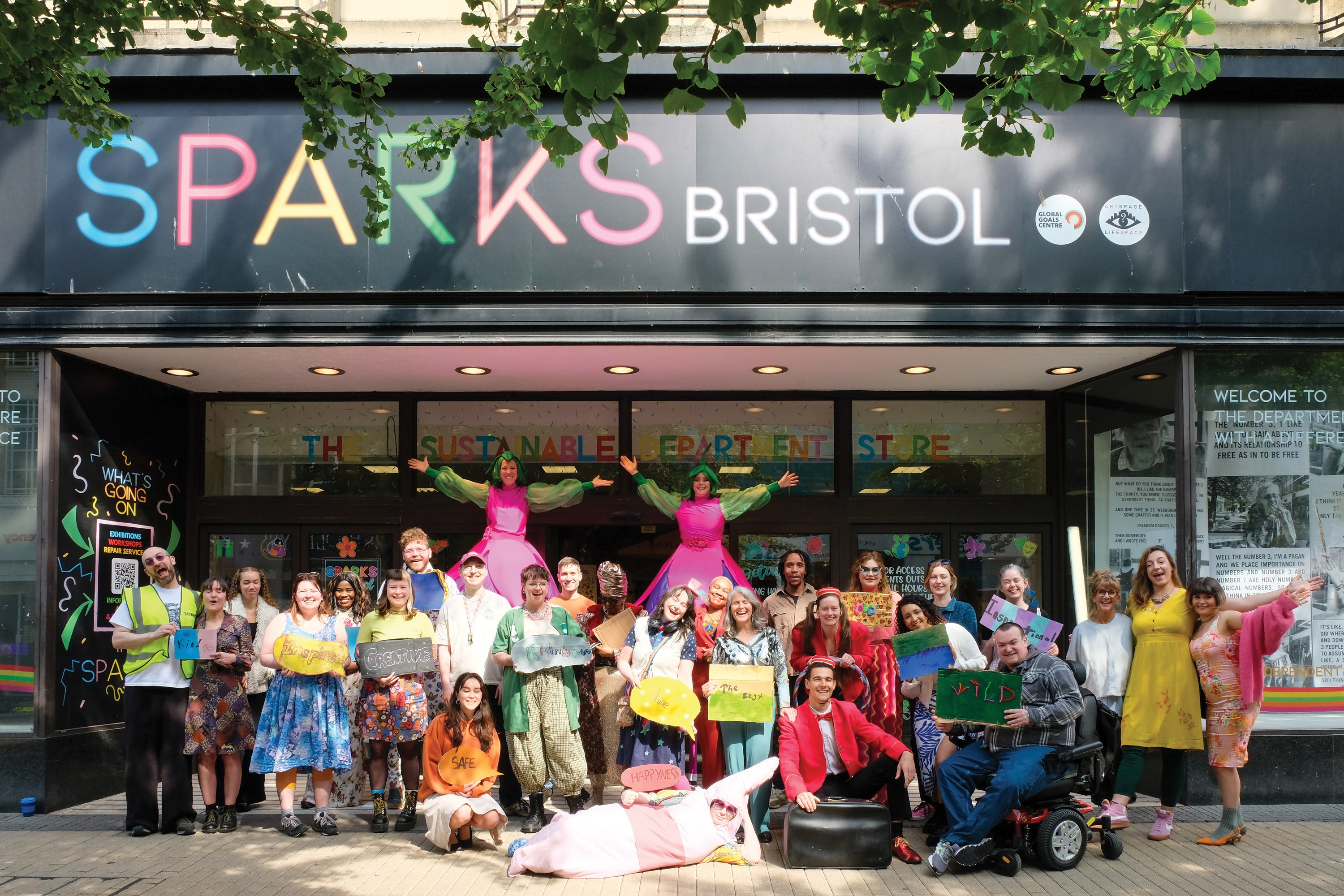
Sparks, the former M&S department store in Broadmead, Bristol, which she manages, was opened in 2023 and has been a rip-roaring success. Half a million people pass through the doors every year to visit a combination of independent retailers, community and artistic spaces, which host everything from meditation to bike maintenance sessions. It would never have been possible, though, were it not for the peppercorn rent – a tiny, token payment required to make a lease legally valid – Sparks pays on the building, which drastically reduces its running costs.
“We’ve achieved this with very little financial government support and created the services that a local authority might be providing,” Chiswell Jones explains.
“For a place like Bristol, where it is impossible to buy these places [department stores] at commercial market values, the community is completely priced out… You desperately need support if local communities are going to be able to compete with the big developers who just see the land values.”
Some major cities have grown tired of waiting for public sector support and have banded together through Business Improvement Districts [BIDs], to help themselves. The non-political organisations bring together local businesses big and small to invest in projects which will regenerate their area and drive footfall to their shops. They’re funded by a small levy on their member retailers’ takings, so the scale of contributions varies depending on the size of the business.
Advertising helps fund Big Issue’s mission to end poverty
Sparks in Bristol repurposed the disused M&S building for small local businesses with huge success. Image: Daianne Moreno-Mempin
The model has proven popular, with hundreds of active BIDs now operating across the UK. One of the most successful is LeedsBID, which invests £3.5 million from around 800 businesses into projects around Leeds, most recently dotting a life-sized game of Trivial Pursuit across the city to draw in families during the summer holiday.
The BID’s CEO Andrew Cooper says it acts as “the conductor of the orchestra” in bringing local businesses and authorities together.
“We’re not driven by politics, we’re not driven by profit, we’re just driven by doing what’s best for the place,” he says. “A lot of things now are coming through BIDs across the country because they’re seen as a stable environment that delivers and gets on with things.”
“Ultimately, growth comes from the centre of our cities and high streets because they’re the communities, the places where people meet and work.”
The high street is already a very different place from the one that BHS, among others, left behind. In another decade, it might not be full of enormous department stores where you can buy everything all at once, but as long as we have communities in need of central places to come together, it will always have a role.