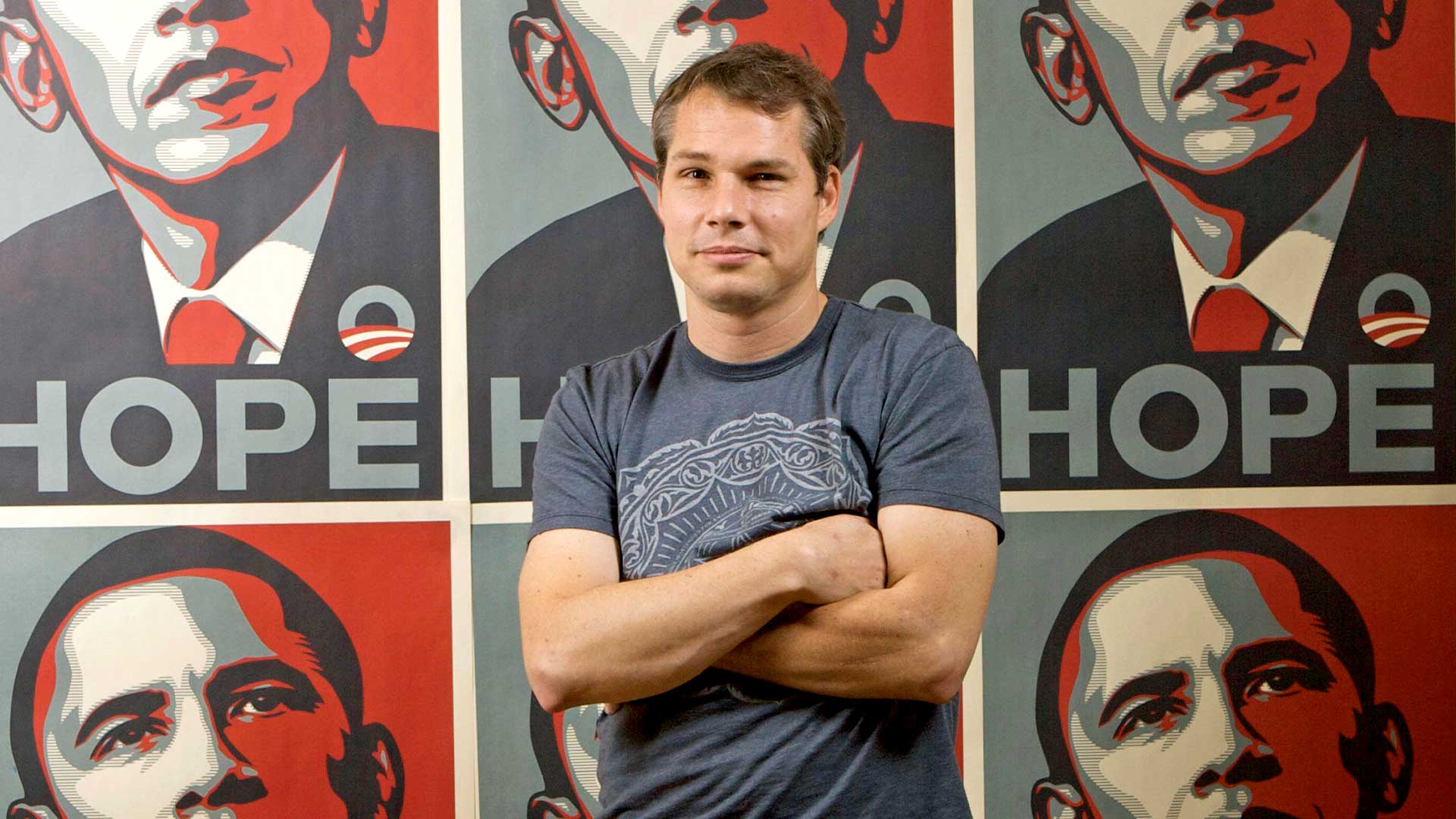
Shepard Fairey: My immediate feeling is relief, but also concern because the euphoria of the victory needs to translate into vigilance in digging out of the deep hole that brought us to the brink of fascism.
Do politicians make good subjects for artworks?
Politics in the broader sense is about human relations, which is also what all of my artwork is about. With that in mind, the people most consequential to politics in the more formal sense are relevant subjects, though I wish more people with a stake in human relationships were engaged so individuals with their egos and fallibility weren’t so consequential to the rest of us. Sometimes an individual politician’s courage can lead others to follow, which I’m inspired by.
Keep reading the journalism that powers our mission
Register free to continue and learn more about the stories, campaigns and the support we provide, helping people facing poverty across the UK.
How do you feel about this artwork hanging in a gallery, while also on the street with our vendors?
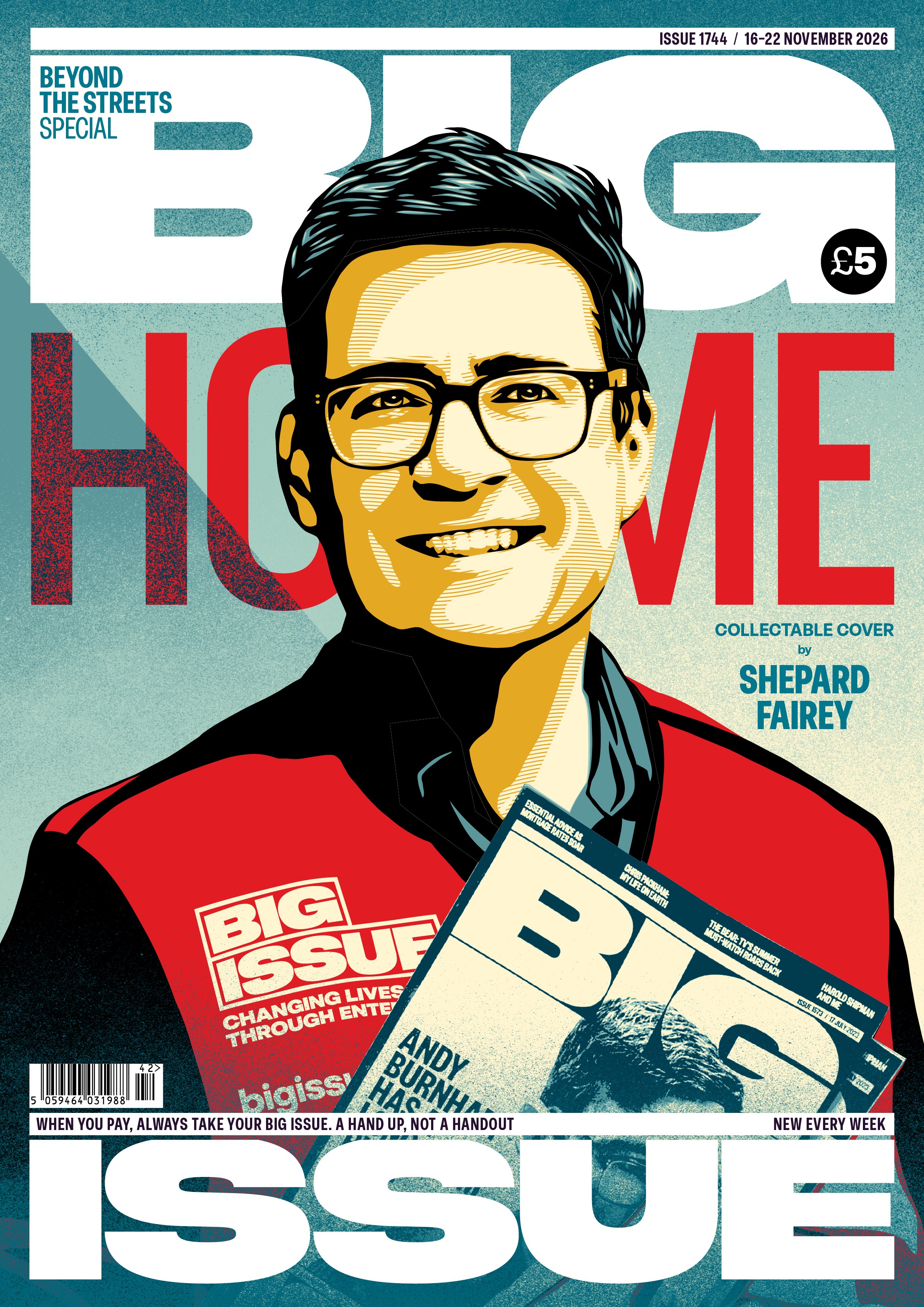
The street was my original gallery and continues to be a very important place for my art to live, so I’m overjoyed that this work, showing that the prime minister cares about vulnerable people, will be out in the public sphere. I see art as a tool of communication more than as a precious object, but if this cover being perceived as gallery-worthy art helps more people pay attention to the cause of homelessness and associated struggles, then great.
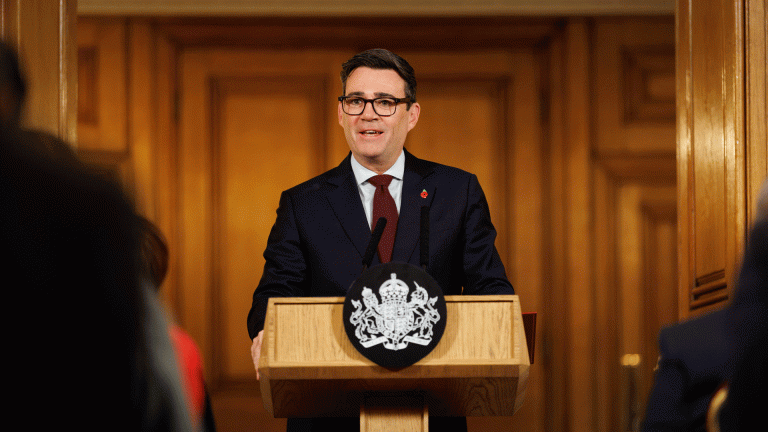
On his first day in office Burnham pledged to end rough sleeping – the ambition is great, we’ll keep an eye on the execution. I’ve seen you say that “propaganda is meant to end the conversation, while what I do is meant to begin an alternative conversation”. How can this artwork and magazine cover help keep the conversation about homelessness going?
This cover reminds us of the pledge Burnham made. Politicians often want people to forget to hold them accountable for the promises they’ve made. That is harder to do when a symbol of that promise is in thousands of people’s hands, and of course, metaphorically, it’s in all of our hands.
What are your initial impressions about Andy Burnham in the short time he has been prime minister
of the UK?
I’m not familiar enough with him to comment meaningfully, but knowing how most politicians pander to the wealthy and ignore the needs of the poor, Burnham’s emphasis on people sleeping on the street is encouraging.
I hope other aspects of his policies address wealth inequality and the concentration of vast wealth and power in too few hands, which is happening globally.
What aspect of him – either his personality or the role of PM – did you want to convey?
What I really wanted to convey was simply warmth and a reminder that he has actually been out on the streets promoting and selling the magazine, even before he was prime minister.
What does home mean to you?
Home can be a lot of places for me, because it’s about a feeling of being comfortable and welcomed. I think we all want to feel that way in our literal home, but also in our neighbourhood, our city, and our country; I’d like to see it as a concept for the wider world, where everyone treats each other like neighbours.
What’s the thread that runs through all of your work?
A push for justice, which applies to equality on every front and treating the planet well enough to provide a good home for all of us. I also think that art naturally promotes sharing one’s personal expression that may resonate with more universal themes. All of this connects to a more harmonious world.
Read more:
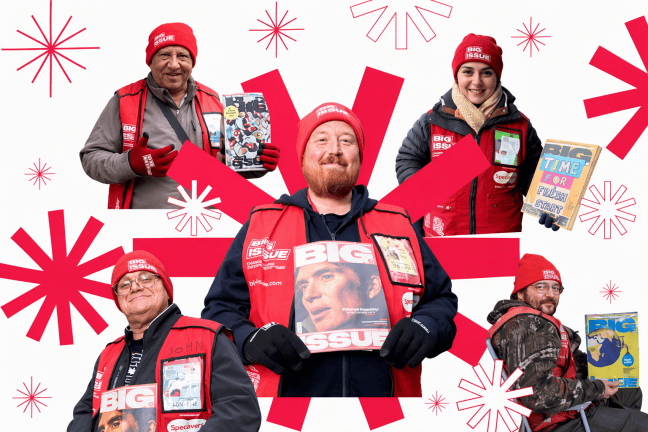
Our magazine exists to give marginalised people the opportunity to earn their own income and improve their lives. The medium is the message – are there parallels with the purpose and power of street art?
Big Issue has a beauty in how simple and reflexive it is as a tool for people to engage with and support the unhoused while also learning about their lives. There’s an ecosystem that is completely logical and directly and indirectly helps address the problem through its communication and function.
Street art is an act of individual expression and defiance in a realm that should be democratic for the public. It is, of course, the public domain, but that right to personal expression has to be asserted, and in contrast to government signage and commercial advertising which dominate the cityscape, it can be a way to make a need visible that was invisible before. I think that’s the strongest parallel to how Big Issue works.
Does art have the power to generate change?
Art is a very powerful way to bypass existing prejudices by connecting with visual and emotional power. Art, of course, has to compete with AI and algorithms, which are powerful tools of psychological manipulation. I still strongly believe in art, and no matter what it’s up against, it’s worth creating and trying to make a difference.
Is the role of the artist growing in importance due to the rise of AI, increasing division and inequality
and plenty to want to protest about?
I think the artist’s unique style and interpretation of the things they encounter is more necessary because competent regurgitation by AI means that almost anyone can produce imagery, but does it have a unique style and a unique voice? I think a unique style and voice will be more and more appreciated as AI infiltrates every aspect of our lives.
Has your position as being a dissenter changed as you’ve become one of the most recognised and acclaimed artists in the world?
I’m perpetually dissatisfied with the things that make life in this world difficult. If those things include systems, corporate power, etc, then I am definitely a dissenter. As I’ve been invited into some of those more powerful structures, I remain a dissenter, but I think it’s important to infiltrate and change the culture of those places, rather than being someone seen immediately as a threat. This isn’t a change in my dissent, just an adjustment to my strategy to move culture and systems in a more just direction.
Shepard Fairey’s work features in the Beyond the Streets exhibition, showing at Saatchi Gallery, London until 5 May 2027
Do you have a story to tell or opinions to share about this? Get in touch and tell us more.
Change a vendor’s life.
Buy from your local Big Issue vendor every week – and always take the magazine. It’s how vendors earn with dignity and move forward.
You can also support online:
Subscribe to the magazine or support our work with a monthly gift. Your support helps vendors earn, learn and thrive while strengthening our frontline services.
Thank you for standing with Big Issue vendors.