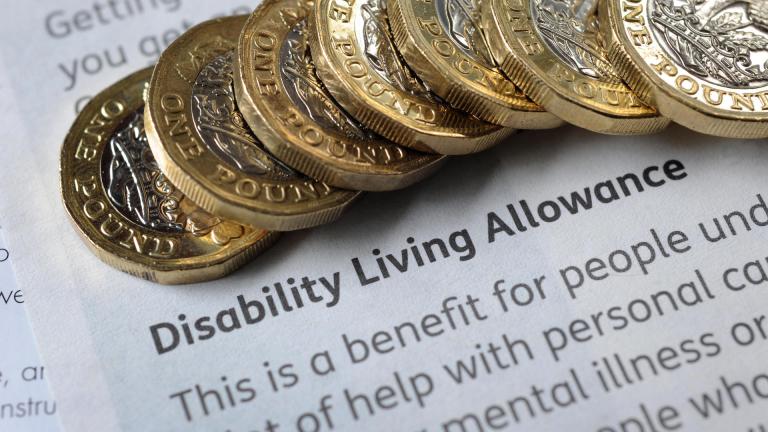
Applications to the scheme doubled between 2018-19 and 2024-25 – from 76,100 to 157,000 – driven by “increased identification of mental health conditions and neurodiversity.”
DWP have doubled the number of staff working on the scheme, bringing the total dedicated staff up to 580 in 2024-25. the NAO found – but this increased workforce has been unable to keep up.
“Demand for the scheme has grown significantly,” said Gareth Davies, head of the NAO.
“Maximising the value for money of the scheme will require government to improve how it administers the current system, to get on top of the backlogs and to properly assess the scheme’s impact.”
As demand has increased, so has spending, nearly doubling from £163 million in 2018-19 to £321m last financial year. Total spending is forecast to reach £517m by 2029–30.
It is in this context that rumours around cuts to AtW have circulated.
Advertising helps fund Big Issue’s mission to end poverty
Since early 2024, disabled people, advocates and support providers have reported significant cuts to their awards. Disability advocates have described the “stealth cuts” as an exercise in cost reduction.
A government consultation on Access to Work closed at the end of June with ministers currently looking at how to rework the scheme.
As claimants and disability advocates await the new guidance, the system is creaking under pressure.
Several organisations that the NAO consulted said that “application delays and late payments have affected employees’ job security”.
One noted that in some cases “delays have resulted in people having job offers withdrawn”.
Cashflow problems are “particularly damaging to small business,” the report continued.
Advertising helps fund Big Issue’s mission to end poverty
A DWP spokesperson said that the department was “streamlining processes and increasing staffing to improve the customer experience.”
“But we recognise the scheme we inherited is failing both employees and employers and needs reform. That’s why we are looking carefully at this scheme and welcome the NAO’s recommendations.”
“Through the Keep Britain Working Review, we’re also working with employers to build a system that genuinely supports disabled people to access the opportunities that work provides.”
As demand mounts, DWP has sought to cut the backlog by improving the productivity of its case managers. According to the NAO report, each manager ought to process an average of 2.4 cases per day.
But this efficiency drive can backfire. Blind psychologist Danielle Verity had her award cut from 37 to 24 hours. An error on the calculation wasn’t spotted until the second appeal, when the Royal National Institute of Blind People intervened.
“You’re telling me that they’ve done their due diligence on that process and run an appeal with my documents and they couldn’t see that?” Verity said. “That is abysmal.”
Advertising helps fund Big Issue’s mission to end poverty
The NAO has called on the DWP to “update guidance so it aligns more closely with the scheme’s objectives and supports caseworkers to make consistent decisions”.
It is likely that any guidance will seek to clarify the reasons that caseworkers should reject or accept applicants.
Mark Gale, Policy Manager at the national disability charity Sense called delays “concerning” – but urged the government not to make cuts at the expense of people who need support.
“Reducing delays mustn’t come at the expense of some disabled people becoming ineligible to receive this funding,” he said. “Instead, we want to see more investment into Access to Work, including better promotion of the scheme, so that every disabled person has a fair chance to stay in employment.”
What’s behind the increase in Access to Work demands?
The NAO report said there were surging number of applications citing mental health and neurodivergence.
The total number of people who received payments from the scheme increased by 97% from 37,700 in 2018-19 to 74,200 in 2024-25 – with just over half (51%) having mental health or learning conditions in the most recent count.
Advertising helps fund Big Issue’s mission to end poverty
The number of people in receipt of a payment who had mental health or learning conditions more than trebled, in this period, from 11,200 to 37,900.
Mental health support services funded by A2W grant include a vocational counselling service. For neurodivergent applicants, support workers and other adjustments can be invaluable work aids.
Big Issue previously covered case of entrepreneur Rachel Parker, who is autistic and has various sensory and communication challenges.
AtW played a crucial role by funding a 1:1 support worker who helped her navigate administrative tasks and cope with running her business, the award-winning Frangipane Bakery. But she lost everything when her AtW renewal failed last year.
Clearly, severe cuts to support have a serious impact, particularly when they are done without official changes to the guidance. These official changes are in the works – but advocates fear they will merely formalise the brutal cuts that have become the norm in AtW renewals.
Do you have a story to tell or opinions to share about this? Get in touch and tell us more.
Advertising helps fund Big Issue’s mission to end poverty
Change a vendor’s life this winter.
Buy from your local Big Issue vendor every week – and always take the magazine. It’s how vendors earn with dignity and how we fund our work to end poverty.
You can also support online with a vendor support kit or a magazine subscription. Thank you for standing with Big Issue vendors.