It matters to me for a very simple reason – it’s an issue that’s very associated with poverty, disadvantage and inequality. I was brought up by my mum. I didn’t know my dad. I lived in the west end of Newcastle, a very poor part. So I got very lucky in my life. I ended up in the cabinet. Life shouldn’t really depend on luck. It should be about opportunity. And this generation is in danger of becoming a lost generation. They can’t afford it, and the country definitely can’t afford it.
How do you think we’ve got to that point? What’s different for this generation?
The starting point is this is not young people’s fault. Sometimes there’s a debate that says, oh, there’s something going on with this generation – it’s the ‘self’ generation, the snowflake generation. I’ve seen no evidence of that.
Keep reading the journalism that powers our mission
Register free to continue and learn more about the stories, campaigns and the support we provide, helping people facing poverty across the UK.
I’ve talked to literally hundreds of young people in the course of this review. I see a generation who is trying hard, literally sometimes applying for hundreds of jobs, never getting a reply of any sorts, definitely not getting an interview, not getting a job offer. And they still keep trying. It’s an anxious generation but they’ve got a remarkable degree of resilience, despite everything.
Read more:
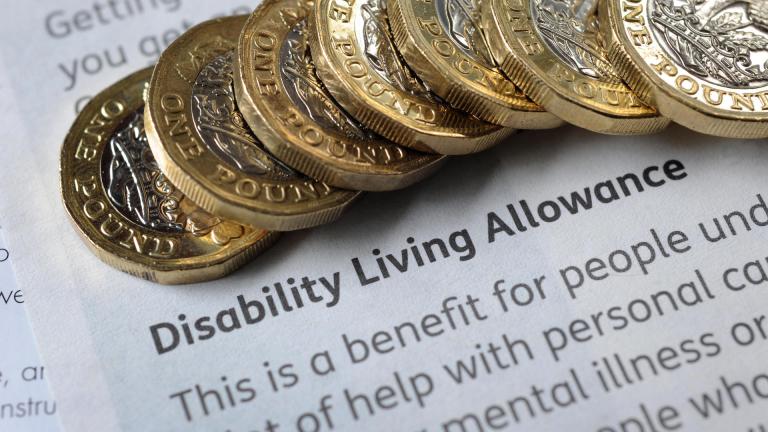
How did we get here? The economy’s changing. A lot. But the big change has been that this question of young people not being in education, employment and training is now very strongly related to ill health. About half of young people who are not in education, employment or training report a health condition – a lot of that is mental ill health, neurodiversity. The number of young people getting health and disability benefits has doubled in five years.
Advertising helps fund Big Issue’s mission to end poverty
Sixty per cent of these young people are not even looking for work. They’re economically inactive. And if you’ve got 45% of 24-year-olds who’ve never worked, the chances are if you haven’t worked at 24, you’re not going to have worked at 34. This cascades through life and it’s a scar on those young people.
At Big Issue Recruit a job coach works intensively on a one-to-one basis for a long period of time, and we’ve seen a lot of success. What have you found works to engage people who are disengaged and struggling to motivate themselves?
The work you’re doing is a good example of what can be done. A lot of this is about understanding the motivations and aspirations of the individual. What we can’t do is just apply blunt instruments and say there’s a box and you’ve got to fit in it. The starting question should always be, what is it that you would like to be able to do, what is it that you think you can do?
All too often the welfare system asks the wrong question of people. People want to work. People know that work overwhelmingly is good for your mental health. Certainly not being in work is disastrously bad for your mental health, we know that.
This is where employers have got a really big part to play – it’s not just about what an organisation like yours does, or what the government does. It’s also about what employers do about flexibility, support in the workplace, enabling people to progress on the career ladder. And a lot of that has disappeared over recent years.
Going forwards – now, but also five and 10 years’ time – with economic uncertainty and the emergence of AI, where do you think those jobs are going to be?
Advertising helps fund Big Issue’s mission to end poverty
The world has already changed, and it’s going to change even faster. If you think about traditional jobs young people have gone into – hospitality, working in a pub or restaurant or hotel – the decline in vacancies has been about 50% over the last five years. And you’ve got the impact of AI coming through.
However, what we do know is employers are looking for qualifications – without them it’s much harder – but also some very basic social skills. Can you communicate? Can you make eye contact? Can you collaborate with others? Can you use creativity?
Everybody has something. Everybody’s got some potential and some talent. And the job of the system – including the school system – is to get that out of people. We need to change how the schools work, how the welfare system works, how the skills system and the health system work, in order that more people can fulfil their aspirations to progress in life.
What single thing would you like to see change over the next five years?
Alan: The biggest change I would like to see is that every young person has a decent opportunity to learn or earn. And those opportunities frankly aren’t there at the moment. And by we, I mean society and not just the government. I mean employers and not just ministers. I mean local authorities and not just government departments.
Every employer I have a conversation with says, look, we want to employ more young people. We really do. We want to give people a good start in life. So that could be a supported internship, a part time job, a few hours, it can be full time, it could be an apprenticeship. There’s no lack of willing on the part of employers. And the job of the government is to make it as easy as possible for employers to engage people.
Advertising helps fund Big Issue’s mission to end poverty
About Big Issue Recruit
Finding a job isn’t always easy. For marginalised people – those facing poverty, hardship, or barriers like disability or ill-health – that challenge is often much greater. Big Issue Recruit is Big Issue’s attempt to bridge that gap.
Launched in 2022, it is a specialist recruitment service designed to connect employers with people who might otherwise be excluded from the labour market. It focuses on those who have experienced homelessness, long-term unemployment, or limited formal qualifications, as well as people dealing with health, financial or social barriers to work.
Unlike traditional recruitment agencies, Big Issue Recruit is free for candidates. Participants are paired with job coaches who help them build confidence, develop workplace skills and navigate applications and interviews.
The service also works closely with employers, encouraging more inclusive hiring practices and helping businesses access a wider, often overlooked talent pool.Find out more.
Do you have a story to tell or opinions to share about this? Get in touch and tell us more.
Advertising helps fund Big Issue’s mission to end poverty
Change a vendor’s life.
Buy from your local Big Issue vendor every week – and always take the magazine. It’s how vendors earn with dignity and move forward.
You can also support online:
Subscribe to the magazine or support our work with a monthly gift. Your support helps vendors earn, learn and thrive while strengthening our frontline services.
Thank you for standing with Big Issue vendors.