The scale of financial extraction is staggering, says Williams. “What we’ve had in the English water companies is really extraction, which has left an intolerable burden of debt inside the company,” he adds. “Then a proportion of customer bills go to servicing that debt.”
Nationalisation alone is not enough, he stresses, but it does protect the system from the kind of extreme extraction seen under Macquarie, the Australian infrastructure bank that owned Thames Water from 2006 to 2017. During that period, the company’s debt ballooned from around £3.4bn to nearly £11bn, while billions were paid out in dividends. Subsequent owners added more debt, pushing it to nearly £20bn today.
Today, servicing that debt pile consumes an estimated 28% of the company’s revenue – meaning a substantial share of every Thames Water bill goes not towards repairing pipes or reducing sewage spills, but to paying interest.
Liberal Democrat MP Charlie Maynard describes this dynamic as a “debt doom loop”.
“These companies are not fixing our rivers,” he told Big Issue in 2025. “Between a quarter and a third of your bills will be spent on just the interest expenses.”
The government fears nationalisation could cost around £100bn, but campaigners dispute this. That figure is based on the “regulatory capital value” (RCV) – a legacy accounting benchmark – rather than the real market value of companies. Thames Water, for example, has an RCV of £21bn, yet KKR valued it at just £4bn.
Advertising helps fund Big Issue’s mission to end poverty
“The refinancing of the water sector in public ownership will be cheaper than the current privatised system,” the People’s Commission on the Water Sector concluded. Some economists suggest the cost could fall further if part of the sector’s debt were written off, arguing that companies have not met all their obligations, such as controlling sewage pollution. “Social ownership will likely cost less than the scare story estimates,” Williams says.
2: Charge the rich
Ending privatisation is “necessary”, says Williams, “but it’s not sufficient.” The system also struggles because there isn’t enough revenue to maintain it properly.
Keeping the country’s pipes, sewers, treatment plants, reservoirs and pumps working is expensive. For every £1 of revenue, Murky Water analysis finds, water companies in England and Wales operate around £6.50 worth of physical assets. Tesco and other supermarkets typically employ less than 5p worth of physical assets per pound of revenue.
“There isn’t enough revenue in the system from current forms of charging to allow it to perform well in terms of water supply and sewage disposal,” Williams explains, “because the revenue won’t cover the cost of the financial capital which pays for physical investment.”
Dŵr Cymru (Welsh Water), the not-for-profit utility often held up as the alternative to for-profit privatisation, illustrates the point. It has no shareholders and reinvests surpluses, but it still raises money through bonds and pays interest. Dŵr’s sewage discharge record in 2025 was the worst in a decade, and average household bills are set to rise from £503 to £639 in 2025-26.
“If Dŵr could apply all the money from bills to physical investment, it would be OK,” Williams says. “But you have to raise the money for investment too, which Dŵr does through selling bonds, and nobody is going to give you free capital. So you need some money from bills to pay interest on your borrowed capital.
Advertising helps fund Big Issue’s mission to end poverty
“The end result is that Dŵr Cymru like the other companies just piles up debt.”
The solution, according to Murky Water, is progressive charging – linking water bills to household income. Currently, the system is regressive. Poorer households spend a larger share of their income on water, while wealthier households often pay less. Social tariffs exist but are patchy and funded by other customers.
Murky Water’s modelling shows that even a flat-rate system could double industry revenue from £9.5bn to £19bn. A fully progressive system could raise at least as much while also delivering far greater social fairness.
Read more:
3: Avoid ‘projectification’
In late November, the taps ran dry in Tunbridge Wells. Some 24,000 residents had their water supply cut off for almost a week after chemicals contaminated water at the local South East Water treatment plant.
While this was a supply failure rather than a drought, the chaos may be a taste of what is to come. By 2050, there is a one-in-four chance households across England and Wales will face extended water cut-offs, and experts say we will need to add an extra million litres per day to the national supply to prevent shortages.
Advertising helps fund Big Issue’s mission to end poverty
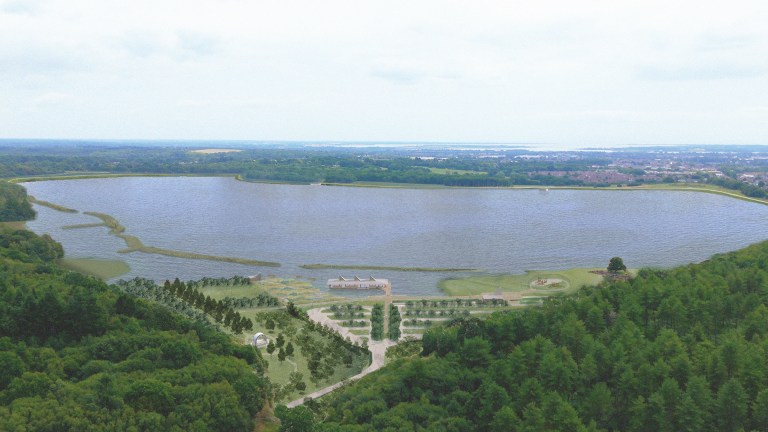
We need more water infrastructure – including new reservoirs. But the way these are currently planned is “catastrophic”, said Williams. “Companies carve out one-off, privately financed projects,” he explains, “because they lack the retained earnings to upgrade the system as a whole, so they create one-off projects whose costs are passed directly to customers.”
Take Thames Tideway, the “super sewer” under London. It is financed through a special purpose vehicle (a separate company set up to finance one project) established by the heavily indebted Thames Water.
Households pay for this via a £25-£26 annual surcharge, locked in for 100 years – at an overall value of more than £600 million. This guarantees century-long revenue streams for investors even as Thames Water teeters on the precipice of collapse.
Across England, 27 major private finance projects, from reservoirs to sewer upgrades, are planned in the same way. Billed as ‘good news’, these projects lock in costs for households; by the end of the decade, Williams estimates, surcharges combined with rising base bills could double household costs. Under a nationalised or social ownership model, he argues, reservoirs could instead be publicly funded, coherently planned and paired with progressive charging.
4: Embrace nature
Nature provides natural plumbing. Planting trees in upland catchments and restoring floodplains slows rainwater running off the land and can reduce flood peaks by up to 65%. That water doesn’t disappear – it soaks into the soil, recharging rivers and underground aquifers.
But nature-based solutions – planting upland forests, restoring wetlands, reconnecting rivers to their floodplains, and creating reedbeds to filter pollutants – “don’t make anyone any money”, says Williams. That’s why they often get overlooked. “You can’t make a Private Finance Initiative (PFI) project out of it,” he adds. “So that sustained pressure hasn’t existed.”
Advertising helps fund Big Issue’s mission to end poverty
If nature-based projects were used properly at scale, they could help capture millions of litres of water a year, reducing the pressure on reservoirs and treatment plants. Right now, around 70% of UK drinking water comes from upland catchments, so managing these areas is crucial for supply and for curbing downstream flooding.
The government has taken some steps: it’s committed £25 million to a Natural Flood Management programme, funding projects that slow and store water naturally. There are also 144 nature-based schemes funded through the £5.2bn flood and coastal defence programme. But Williams warns this still isn’t enough.
“But there is no systematic approach to this, and there isn’t a structure of incentives and punishments to actually persuade upland farmers and landowners to plant trees, for example,” he says.
“It’s a huge, huge missed opportunity.”
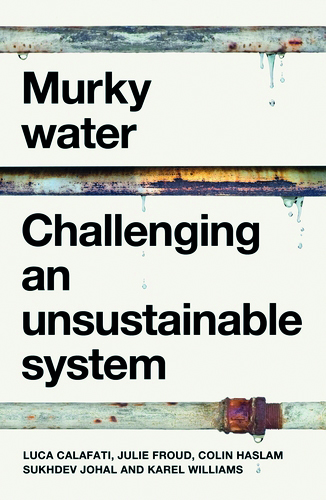
Murky Waterby Luca Calafati, Julie Froud, Colin Haslam, Sukhdev Johal and Karel Williams, is out now (Manchester University Press, £14.99).
You can buy it from the Big Issue shop on bookshop.org, which helps to support Big Issue and independent bookshops.
Advertising helps fund Big Issue’s mission to end poverty
Do you have a story to tell or opinions to share about this? Get in touch and tell us more.
Change a vendor’s life this winter.
Buy from your local Big Issue vendor every week – and always take the magazine. It’s how vendors earn with dignity and how we fund our work to end poverty.
You can also support online with a vendor support kit or a magazine subscription. Thank you for standing with Big Issue vendors.