Building Safety Regulator delays leaving leaseholders in limbo: ‘It’s stressful and upsetting’
Waits for the Building Safety Regulator to clear new buildings and safety works should take 12 weeks but are taking nine months, a House of Lords report said
by:
18 Dec 2025
The Building Safety Regulator has taken up to nine months to approve works despite a statutory target of 12 weeks. Image: Shraga Kopstein / Unsplash
Share
People caught up in the post-Grenfell building safety crisis have become accustomed to waiting for action to fix unsafe homes, but problems with the Building Safety Regulator (BSR) are the latest stumbling block.
The BSR was set up to scrutinise new buildings, particularly high-rise homes, in the wake of the Grenfell disaster as well as remediation works on unsafe homes with dangerous cladding.
But the House of Lords’ Industry and Regulators Committee found issues with approval processes have seen waits of up to nine months for decisions on whether construction projects should be allowed to go ahead, despite a statutory target of 12 weeks.
The “unacceptable” delays are adding to the mental and financial toll leaseholders in buildings with unsafe cladding already face. Peers also warned the delays could put Labour’s pledge to build 1.5 million homes by 2029 in further jeopardy.
Committee chair Baroness Ann Taylor said: “The tragic loss of 72 lives at the Grenfell Tower fire laid bare the urgent need to reform building safety regulation in England, particularly for high-rise buildings. The introduction of the Building Safety Regulator was a necessary and welcome step.
“However, the scale of the delays caused by the BSR has stretched far beyond the regulator’s statutory timelines for building control decisions. This is unacceptable. We welcome that the government and the BSR are now acting to try and make practical improvements, but this will not address the anxiety and frustration that residents and companies have experienced.
Advertising helps fund Big Issue’s mission to end poverty
Advertisement
“It does not improve safety to delay vital remediation and refurbishments, nor to deter the delivery of new housing in high-rise buildings. We expect to see further action from the government and the BSR to ensure that construction projects in high-rise buildings can be brought forward more quickly, without compromising on vital safety improvements.”
The committee’s report said that high-rise buildings are a minority of housing stock but are essential to deliver new housing in large cities.
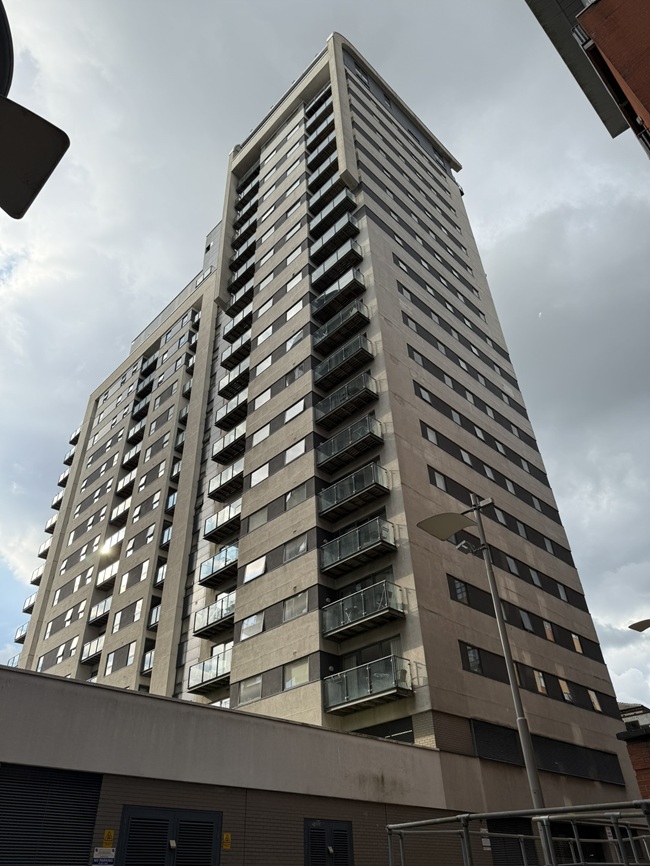
For Stephen Squires, a leaseholder who has lived at Britton House in Manchester’s Green Quarter since 2013, the BSR delays have added to six years of anxiety after learning the building was unsafe in 2020.
A gateway 2 submission was sent to the BSR in February this year. The submission is an application that must be submitted to the regulator under the Building Safety Act before works can begin to remediate high-risk buildings.
When Squires spoke to Big Issue after peers’ report, he said he was still waiting to hear when work could begin on the 22-floor apartment block after several missed deadlines.
Read more:
Advertising helps fund Big Issue’s mission to end poverty
“It’s been 10 months and there’s been no progress, stuck in the gateway 2 with the Building Safety Regulator and we don’t seem to be getting anywhere fast or slowly,” said Squires.
“It’s now been six years and I’ve lost track of how many times we’ve been told that it’s progressing or it’s moving along and still nothing’s happened.
“It’s really stressful, it’s really upsetting. We can’t really sell, certainly not for the market value. We can’t remortgage, we can’t move into a bigger property. We’re just stuck waiting and now it seems like the government’s own processes are what’s delaying it because they don’t enough people to deal with the gateway 2 submissions.”
Like many leaseholders caught up in the scandal, Squires is facing high costs while there is a delay to works.
He told Big Issue he is paying £3,500 a year in service charges, insurance and ground rent.
“The only people that are completely faultless in this, which is people like myself who bought an apartment, they are the ones footing the bill for it. It’s just completely wrong,” Squires added.
Advertising helps fund Big Issue’s mission to end poverty
“We should be in charge of the building that we live in and we should be in charge of how our money is spent. We’ve just got absolutely no say in it.”
End Our Cladding Scandal – the pressure group Squires is a part of – said residents of unsafe high-rise buildings have “been forced to pay the financial and mental cost for a well-intentioned system that has not worked since inception”.
The Lords committee criticised the BSR for several failures, including not giving clear enough guidance to applicants and the difficulties of relying on an ageing workforce of building inspectors who are struggling to meet demand.
The report also basic errors and applicants’ inability to evidence how they are considering elements of fire and structural safety were also behind delays and pointed the finger at the construction industry.
Peers recommended streamlining processes or removing smaller works from the BSR to speed up approvals and called on the government to provide long-term funding for the training of new building and fire inspectors.
A BSR spokesperson told Big Issue the regulator had introduced a new ‘innovation unit’ to speed things up and improved communication with applicants.
Advertising helps fund Big Issue’s mission to end poverty
The changes have enabled construction to proceed on over 11,000 new homes in the 12 weeks up to 24 November, the regulator said, adding that there was a 73% approval rate for newbuild decisions during that time.
“We recognise that building control applications have been taking too long to process,” the BSR spokesperson said.
“We remain firmly committed to being a proportionate and enabling regulator that works alongside the construction sector to protect residents and deliver safe buildings in support of the government’s housing targets.”
Developer Berkeley Group said in September that resolving delays with the regulator will be vital to improving housebuilding.
Issues with the regulator are one of the reasons cited for London’s dramatic housebuilding collapse in 2025.
Advertising helps fund Big Issue’s mission to end poverty
Just 2,904 affordable homes were built in London in the six months up to September this year, according to Greater London Authority figures, with 1,239 homes started.
The government and the Mayor of London recently agreed to lower the quota of affordable homes needed to fast-track planning permission from 35% to 20% in order to boost delivery.
Stephen Teagle, chair of The Housing Forum, said: “The delays caused by the Building Safety Regulator have caused immense difficulties for the housing and construction sector’s efforts to build much-needed new homes, especially in London and other major cities.
“There have been positive changes at the BSR recently reflecting the government’s focus on delivery and we are aware that the backlog of applications at gateway 2 is now being addressed. It is important that similar problems do not emerge at gateway 3, which would leave newbuild homes sitting empty. It is vital that the BSR keeps up momentum and ensures that its processes are effective and efficient.”
Advertising helps fund Big Issue’s mission to end poverty
Buy from your local Big Issue vendor every week – or support online with a vendor support kit or a subscription – and help people work their way out of poverty with dignity.
Advertising helps fund Big Issue’s mission to end poverty