Can apprenticeships fix the housing crisis? ‘I worked in childcare, now I fix social homes’
As National Apprenticeship Week begins, Georgina Campbell-Holmes explains how becoming an apprentice helped her move into housing and why thousands need to follow
by:
10 Feb 2026
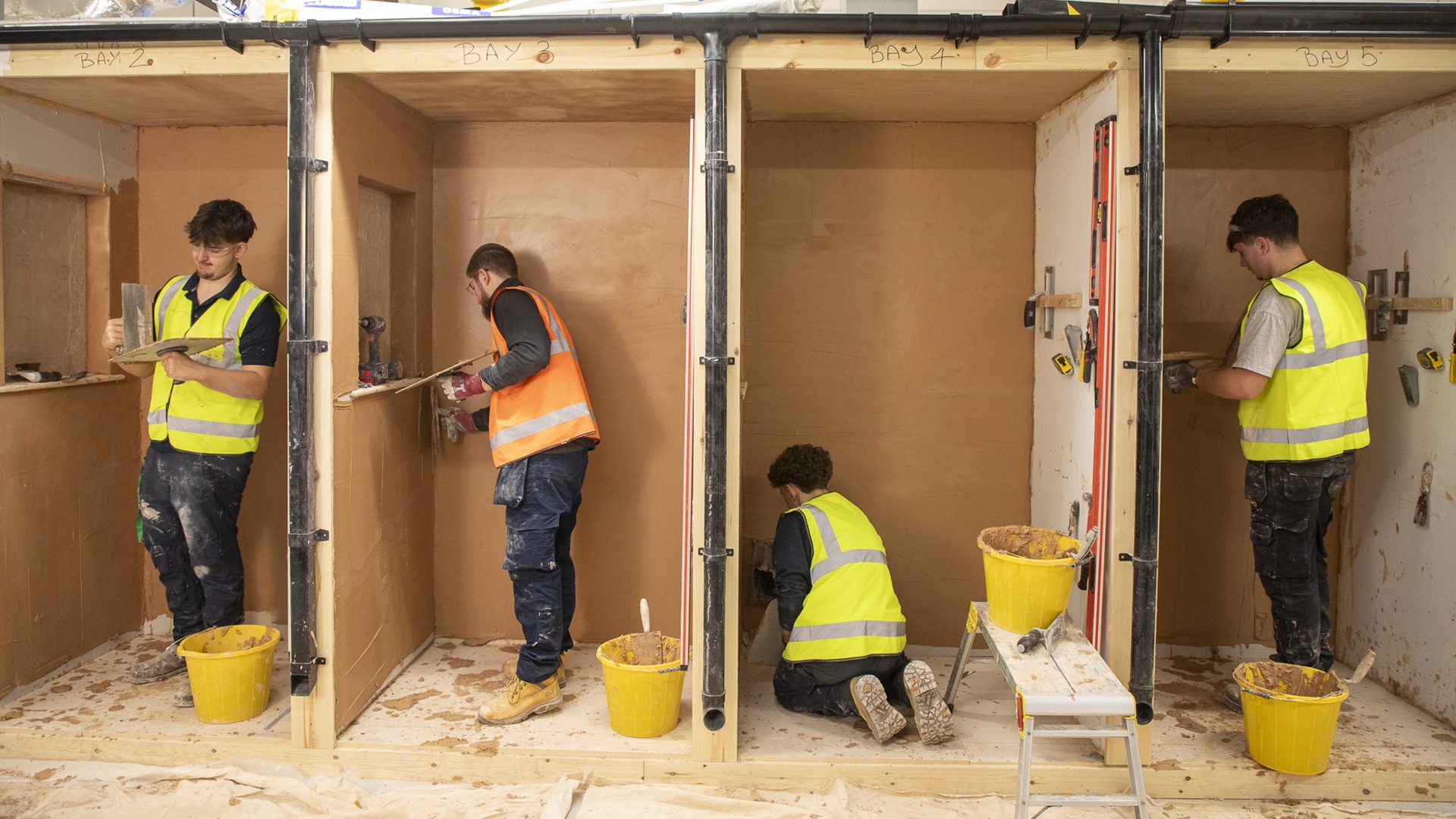
Apprentices working at PfP Thrive, which was set up to fill skill shortages in the construction industry. Images: PfP Thrive
Share
Georgina Campbell-Holmes’s route into building and fixing homes wasn’t the most conventional but apprenticeships may prove key to tackling the housing crisis.
When Campbell-Holmes started to get fed-up of the childcare role she had done since leaving education as a teenager, her apprenticeship through Places for People’s PfP Thrive was switched to construction.
Now she is working for housing association Clarion as an electrician after undergoing an apprenticeship to learn the ropes. Campbell-Holmes started a four-year course to become a fully qualified electrician in September and is combining that with fixing up vacant homes across West Yorkshire.
Apprenticeships paved the way for Georgina Campbell-Holmes to move from childcare to fixing up homes. Image: Supplied
With the Labour government targeting building 1.5 million homes by 2029 and also announcing a £3bn Warm Homes Plan to retrofit properties, that skills shortage is a huge barrier to overcome.
And it will take apprenticeships like Campbell-Holmes’ to get workers up to speed and ready to tackle the housing crisis.
Advertising helps fund Big Issue’s mission to end poverty
Advertisement
“I didn’t really know what I wanted to do after school or anything like that. I was always good with kids so I thought I’d go for that,” says the 30-year-old, from Leeds, who went travelling into New Zealand but found herself disillusioned when she returned.
“I still enjoyed the job, but I was getting a bit bored, a bit fed up, and I’ve always liked doing stuff with my hands and being active and building things.”
Campbell-Holmes spent two years undertaking a multi-disciplinary apprenticeship and now works for Clarion.
She said that an “apprenticeship provides the perfect backdrop to learn”.
“Basically, my week is split up between day-to-day jobs. So what the tenants reported and then also voids as well,” said Campbell-Holmes. “So where tenants have vacated, the voids team come in and gut it and restart the whole process again. And then we go in and fix all the remedials: the lights, switches, showers, anything that needs fixing and then we test it as well before it can go back to a new tenant.
“I love it. I’m working with a lad called AB at the moment; he’s very patient. He’s never had an apprentice before, so we’re both learning really.”
Advertising helps fund Big Issue’s mission to end poverty
Places for People is one of the biggest social enterprises in the UK, and Places Foundation gave Big Issue’s social investment arm Big Issue Invest £325,000 back in 2020 to support other social enterprises.
It turned its attention to addressing skills shortages in the construction industry a year ago, setting up PfP Thrive.
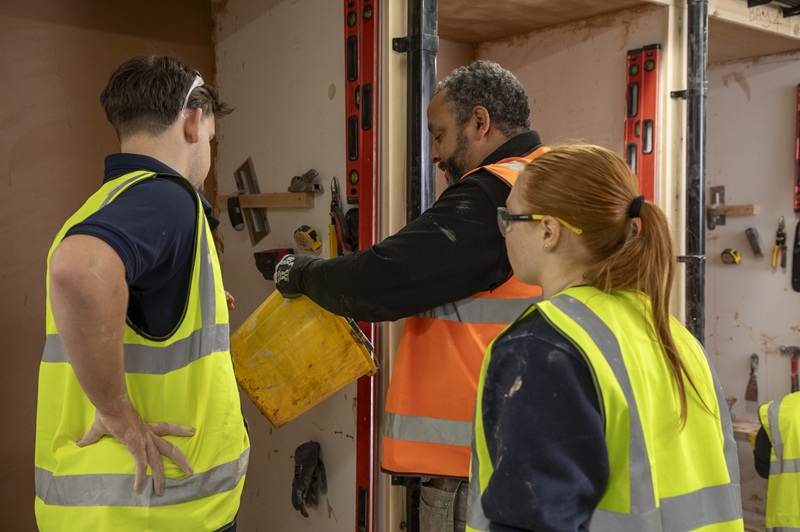
PfP Thrive works with 50 partners in the construction industry to give apprentices the opportunity to make their mark in the industry. Image: PfP Thrive
PfP director Tom Arey told Big Issue that an ageing workforce was seeing numbers of construction workers decline – an estimated 750,000 construction workers will retire by 2036.
Couple that with the need to build ‘green skills’ to retrofit homes through insulation, solar panels, heat pumps and more and boost training quality, PfP Thrive is a bid to address the sector’s struggles.
“We have, at Places for People, been a bit disappointed that the housing sector specifically doesn’t have a dedicated training facility,” says Arey. “There’s a lot of dedicated training facilities for lots of different sectors, whether that be construction or engineering, but we don’t have a centre for housing.”
Read more:
Advertising helps fund Big Issue’s mission to end poverty
PfP Thrive works with 50 partners in the housing sector to build pathways for apprentices to make their way into the industry.
So far, PfP Thrive has set up 114 apprenticeships at the moment, with plans to double that number this year.
The demand for apprenticeships is there, Arey tells Big Issue, but barriers remain in convincing firms to take a chance on unskilled workers.
Those hurdles explain why apprenticeship levy cash – a tax on employers with an annual payroll over £3 million, charged at 0.5% of the total bill used to fund apprenticeships – often returns to the Treasury.
“We’ll get hundreds of applications for a plumbing apprentice,” says Arey as an example. “The real critical bit is organisations employing apprentices, and being confident to employ those apprentices.
Advertising helps fund Big Issue’s mission to end poverty
“We need to start breaking down the barriers of organisations understanding how to navigate the apprenticeship levy, understanding that an apprentice is no longer just a 16 year old person on a construction site. Actually, it’s a real key element to tackling the skill shortage itself.
“I think there is a little bit of a stigma around apprenticeships, that people just think that they are for people on a construction site where that is not the case, and it’s about unlocking people’s understanding that an apprentice is just someone that is learning whilst they work.”
The Labour government has launched Skills England in a bid to train up people to work in sectors with skills shortages.
The Warm Homes Plan pledges to create 180,000 additional high-quality, well-paid, future-proofed jobs in energy efficiency and clean heating by 2030. Ministers have laid out a plan to unlock £38 billion in total investment in retrofitting homes, including additional funding for skills, innovation and UK manufacturing.
At the beginning of National Apprenticeship Week, Labour announced a university clearance-style system where ‘near miss’ applicants who don’t secure their top choice apprenticeship will be redirected to similar opportunities in their area.
PfP Thrive also wants to be part of the solution.
Advertising helps fund Big Issue’s mission to end poverty
“We genuinely want to be a force for good across the sector because it’s a requirement,” says Arey. “We have to do something about the skill shortage if we’re going to fulfill a lot of the government’s government’s targets in construction. We need the skills.”
For people like Campbell-Holmes, an apprenticeship will be the way into the construction industry.
Without an apprenticeship, it would not have been possible for her to make the switch, she tells Big Issue.
“My apprenticeship is fantastic, and I’m looking forward to continuing to learn all I can,” she says. “I would highly recommend this route, especially to anyone who struggles with solely learning in a classroom environment. The hands-on experience is second to none.”
Advertising helps fund Big Issue’s mission to end poverty
Buy from your local Big Issue vendor every week – and always take the magazine. It’s how vendors earn with dignity and how we fund our work to end poverty.