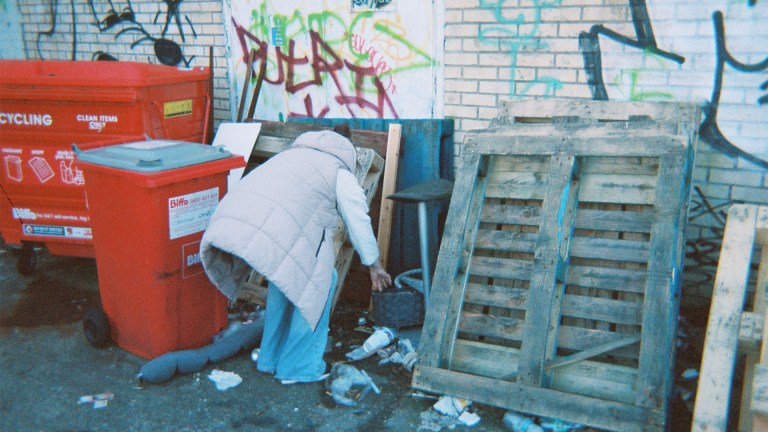
“People are placed in unsafe, pay-per-night accommodation without support and left to fall through the gaps. We are pleased to see the motivation to tackle homelessness and investment in community solutions coming out of government.
“However, it must create high quality settings with relationships and consistent wrap around support to support healing, rather than hastily put together sit-up services or isolated, dangerous placements.’’
Reacting to the news, Big Issue founder Lord John Bird said: “The fact that 1,720 people died homeless in a single year shows the level of national failure which the prime minister must now confront.
Keep reading the journalism that powers our mission
Register free to continue and learn more about the stories, campaigns and the support we provide, helping people facing poverty across the UK.
“Earlier this week, I took the prime minister to a supported accommodation charity in Bootle to show him a model that truly transforms the lives of long-term rough sleepers – people who may have ended up as one of these statistics if they hadn’t received such holistic, wraparound support. If the government wants to turn the tide on homelessness deaths, this is the kind of services it must back.”
The Dying Homeless project found more than 30% of all deaths recorded in 2025 occurred either on the streets or in short-term accommodation intended for people who had recently slept rough.
MOH said the investigation found “a long-term picture of a system that pours billions of pounds into substandard emergency and temporary accommodation without the support in place”.
In total, 214 people died whilst rough sleeping or with no fixed abode. The grassroots group uncovered evidence that people often take their chances on the street rather than go into ‘sit-up’ accommodation offers or dangerous settings
Among the most high-profile cases were Claudio Aquilino and Daniel Coleman, who died at the hands of serial killer James Desborough while living at a hotel used to accommodate homeless people in Newquay, Cornwall. Four more deaths at the same accommodation have also been under police investigation.
Just over half of cases where the cause of death was known were considered “deaths of despair”, meaning they were related to drugs, alcohol or suicide. By comparison, equivalent deaths account for less than 3% of deaths within the wider population.
Drug and alcohol-related deaths remained the single largest category, accounting for 40% of known causes of death. Suicide accounted for 12%, while the number of suicides increased from 51 to 60. Among people sleeping rough or with no fixed abode, 14 people died by suicide, double the number recorded in 2024.
The figures also found 44 people died shortly after being released from prison.
Read more:
Deaths in England rose by 8% from 1,142 deaths in 2024 to 1,235 in 2025. The number of fatalities recorded in London fell from 326 to 286 in the space of a year.
Elsewhere, Bristol recorded the highest number of deaths at 55, ahead of Liverpool where the number of people losing their lives surged from five in 2024 to 45 a year later. Manchester (35), Kent (33) and Brighton and Hove (32) rounded out the top five places outside of London.
The highest mortality rate was recorded in Scotland, which abolished ‘priority need’ rules in 2022. Deaths in the country have risen by 38% – from 168 to 232 – with one in four deaths occurring in Edinburgh. The number of people dying whilst on the streets tripled and the number of people dying in rough sleepers accommodation also increased by 38%.
Both Northern Ireland and Wales recorded decreases of 9.5% and 31% respectively, although MOH notes some key local authorities in Wales did not respond to freedom of information requests.
Overall, 15% of authorities either failed to respond or stated that they did not hold the data requested.
MOH noted that more than one in 10 recorded deaths were found outside official local authority reporting mechanisms.
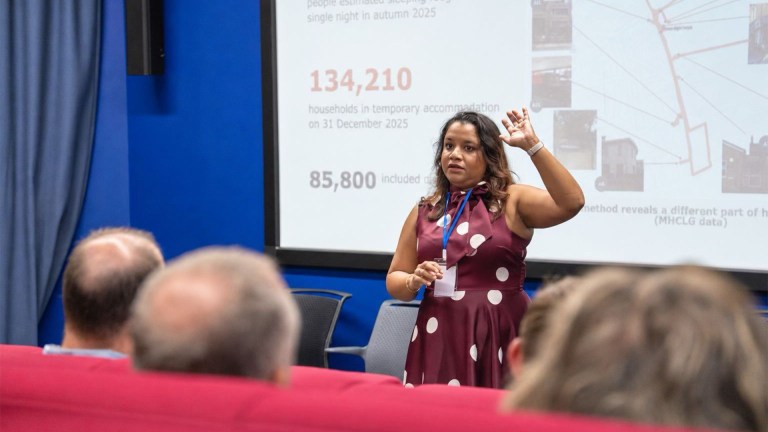
“We fear that the true scale is much higher than local authorities are telling us,” said Gill Taylor, MOH’s strategic lead for the project.
The Dying Homeless project findings come in the same week that prime minister Burnham reiterated his pledge to end rough sleeping in his speech at Labour Party conference.
“I will not rest until we live in a Britain where everyone has a roof over their head every night and no one is forced to sleep rough on our streets,” he told Labour delegates in Liverpool.
“On my first day in this job, on the steps of Downing Street, I set an immediate mission to end the need for rough sleeping. Everyone In. Our new permanent national policy.
“Putting the right principles and standards back at the heart of this country.”
The MOH count warned “moving people off the streets is not a solution to homelessness and does not necessarily save lives”.
Ahead of the count, MOH wrote an open letter to the prime minister, as well as housing secretary Angela Rayner and homelessness minister Florence Eshalomi. The letter cited fears that “hastily bringing people into accommodation without the right approaches may result in solutions that we know do not work”.
That was in reference to the Everyone In scheme which was introduced during the early days of the Covid-19 pandemic.
The scheme housed more than 30,000 people, many of them rough sleepers, mainly in hotels and saved hundred of lives. But it failed to prevent rough sleeping in the long-term and the official government snapshot figures found the highest number of people on the streets on record last autumn.
Turtle told Big Issue: “We need to see any move to bring everyone in implemented with adequate resource, the right offers, safe, flexible, trauma-conscious accommodation, but also with enough wraparound support to give people a chance with it.
“I think there is a danger that it’s rolled out without enough resource and with a workforce and volunteers that frankly are probably still burnt out from the last Everyone In. We need to have enough in place to make it work.
“We really do support this direction for tackling rough sleeping and tackling some of the wider structural causes of homelessness as well. We need to be pragmatic and realistic about what it takes to do it properly and that Everyone In wasn’t a solution to homelessness, it was a public health measure.”
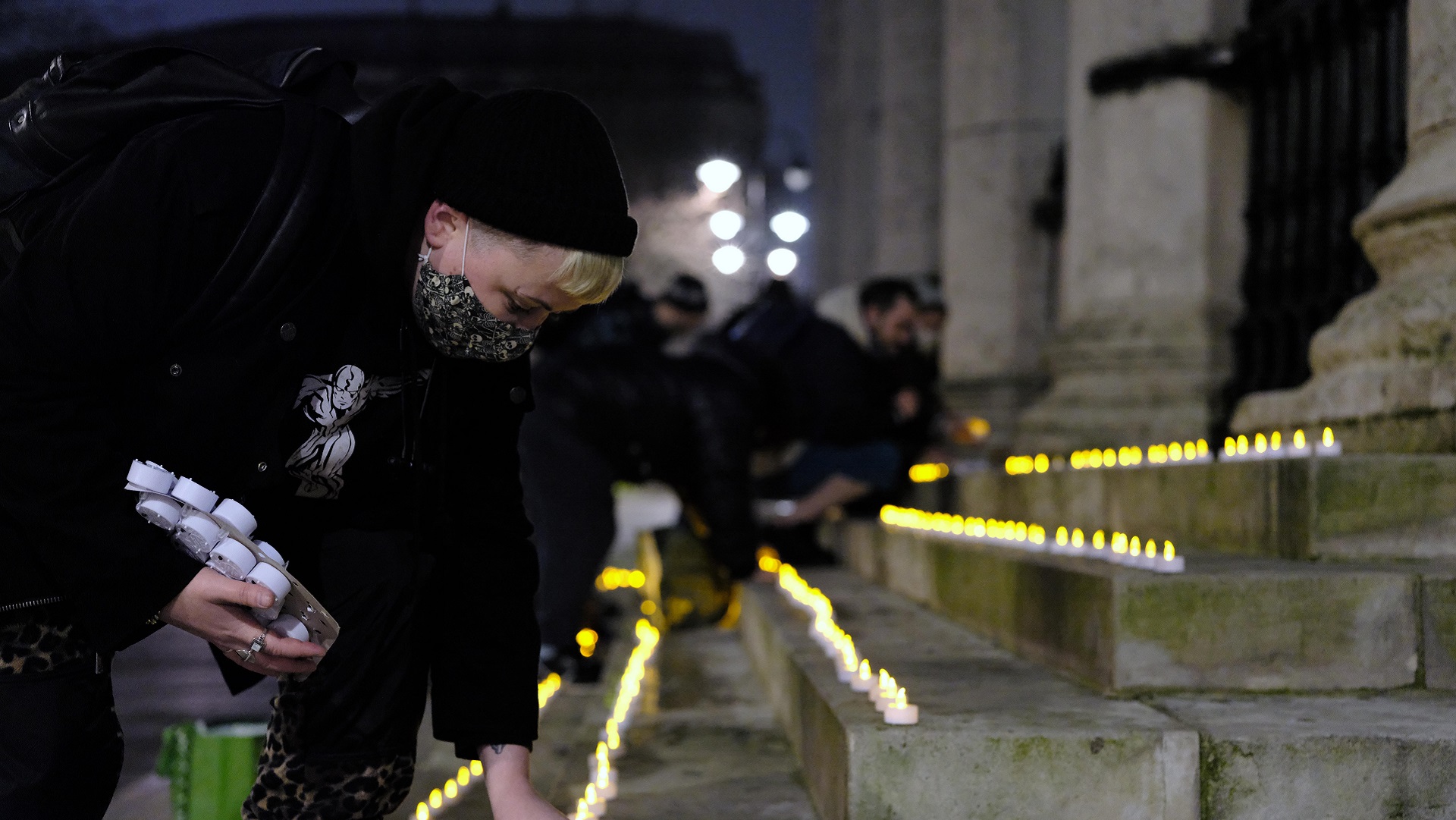
MOH and other frontline groups including the Simon Community, Streets Kitchen and The Outside Project will hold a vigil outside Downing Street from 6pm to 7.30pm on 15 October to remember the people who lost their lives while homeless.
People who can’t make the vigil are invited to light a candle there or at home and post it online with the hashtag #MakeThemCount Museum of Homelessness @Our_MoH.
Do you have a story to tell or opinions to share about this? Get in touch and tell us more.
Change a vendor’s life.
Buy from your local Big Issue vendor every week – and always take the magazine. It’s how vendors earn with dignity and move forward.
You can also support online:
Subscribe to the magazine or support our work with a monthly gift. Your support helps vendors earn, learn and thrive while strengthening our frontline services.