In recent weeks, the world’s largest island has been discussed in the language of warships, minerals and military strategy. At the Munich Security Conference earlier this month, Danish prime minister Mette Frederiksen warned that president Donald Trump remains “very serious” about acquiring the territory, while European leaders pledged to strengthen Arctic defences amid fears of a shifting global order.
The conversation is about land, sovereignty and power. But there is another way to understand Greenland, one that both Denmark and the United States already recognise within their own borders. Through homelessness.
Greenland’s first official homeless count, conducted in 2022 by researchers at the University of Greenland, identified 491 people without stable housing, almost 1% of the population. The study was led by Steven Arnfjord, head of the Centre for Arctic Welfare at Ilisimatusarfik, the University of Greenland, and carried out with colleagues including Kevin Perry, a British associate professor of social work. Perry says the 1% figure should be understood as a minimum estimate.
“I think it’s underreported,” he tells Big Issue on a video call from Greenland’s capital, Nuuk. “It might be closer to 2%. We’re doing a new count in April. We hope to get better cooperation and better coverage.”
Advertising helps fund Big Issue’s mission to end poverty
Advertisement
Even at 1%, Greenland’s homelessness rate already exceeds that of comparable wealthy countries. In England, around 43 people per 10,000 are estimated to be homeless, roughly 0.4% of the population, although broader definitions suggest closer to 0.6%. In the United States, the rate is around 0.2%. In Denmark, it is approximately 0.1%.
Greenland’s official rate is higher than all of them.
Life without a home in the Arctic
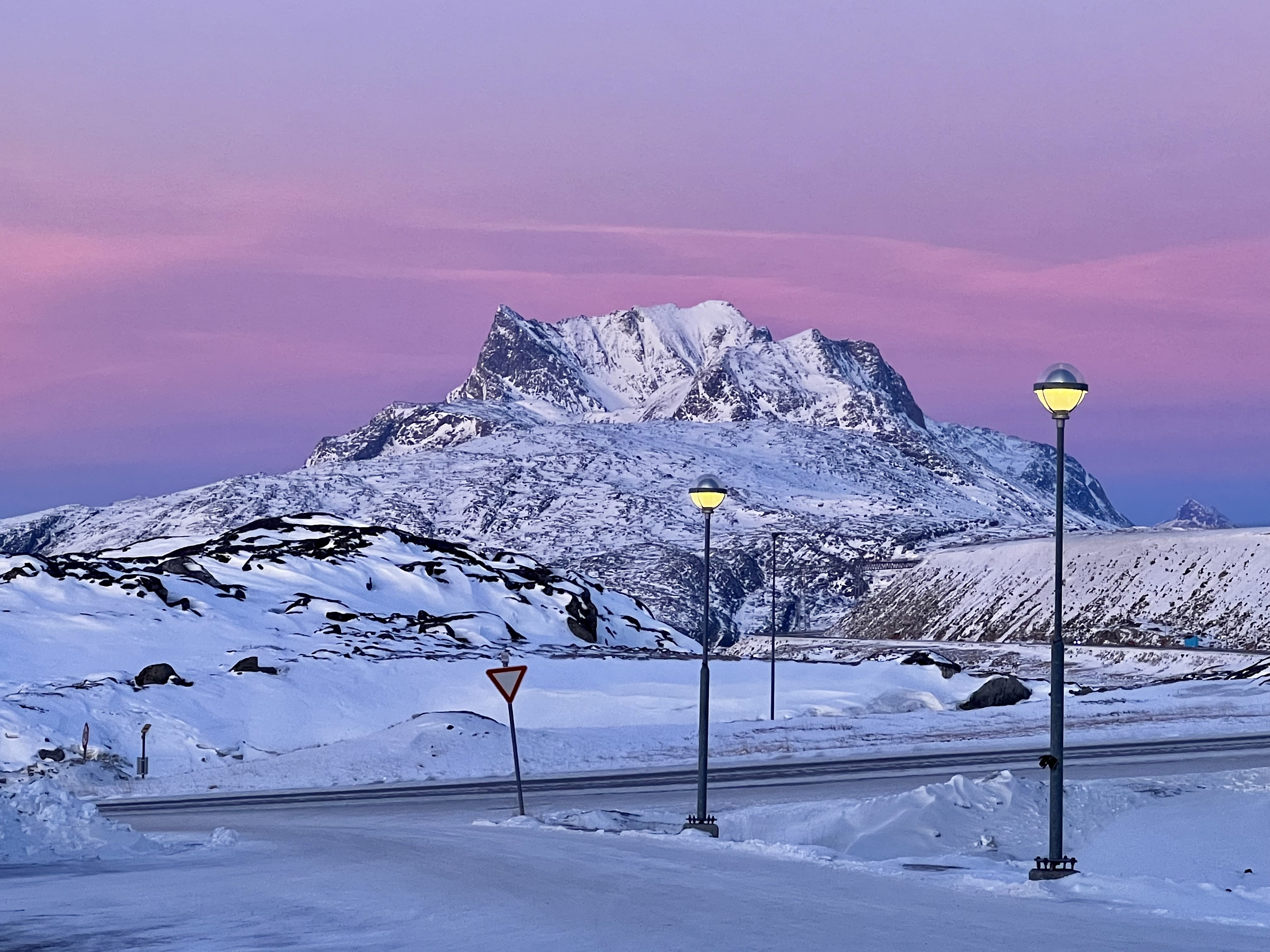
At this time of year, temperatures in Nuuk typically fall below minus 20 degrees Celsius, Perry explains.
“In Arctic conditions, you have to seek shelter from the cold and the wind,” says Perry, who has spent nearly a decade researching homelessness in Nuuk.
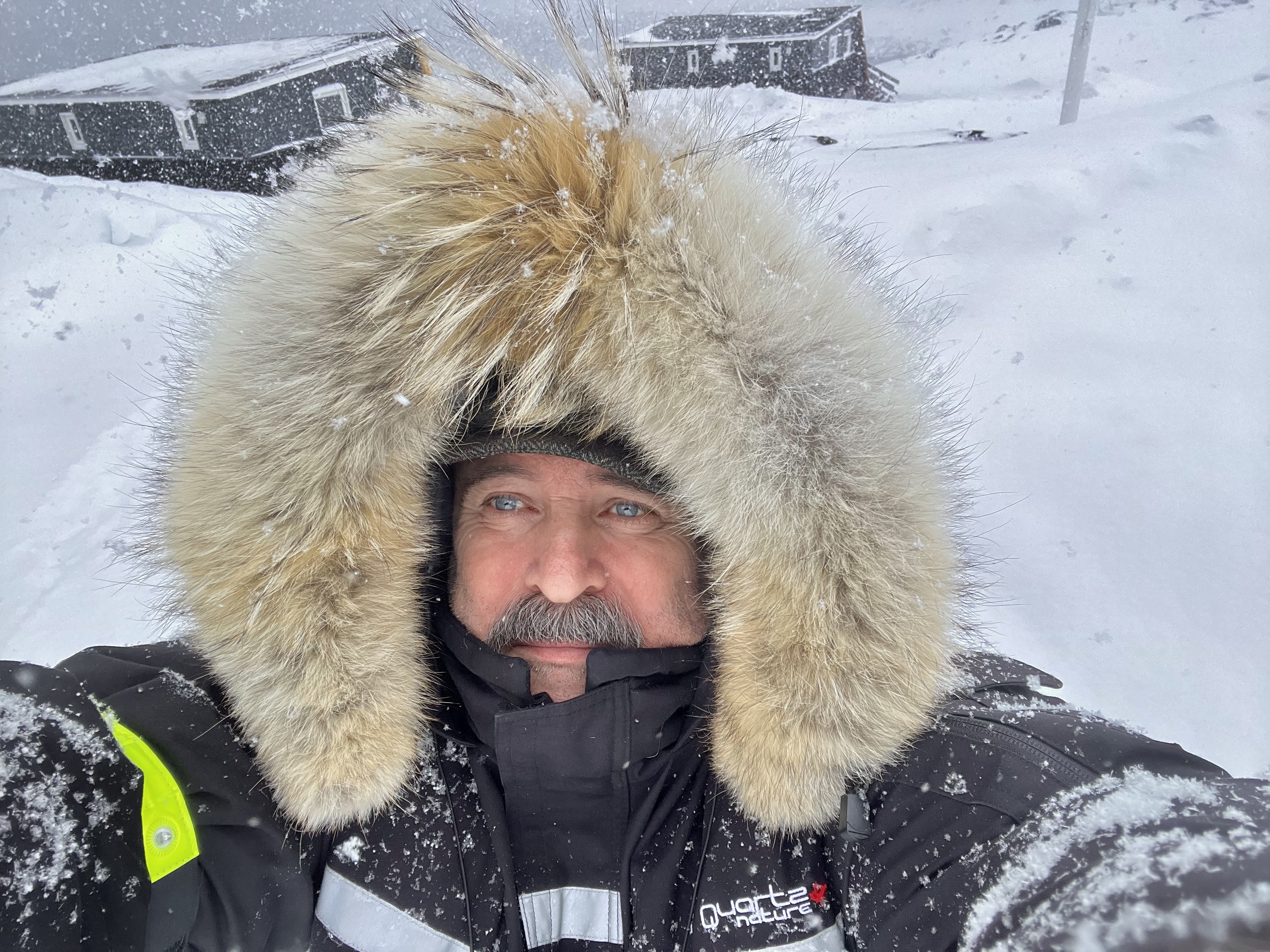
Associate professor Kevin Perry braves the cold in Greenland. The British national has lived on the world’s largest island for eight years and is fluent in Danish. Credit: Kevin Perry
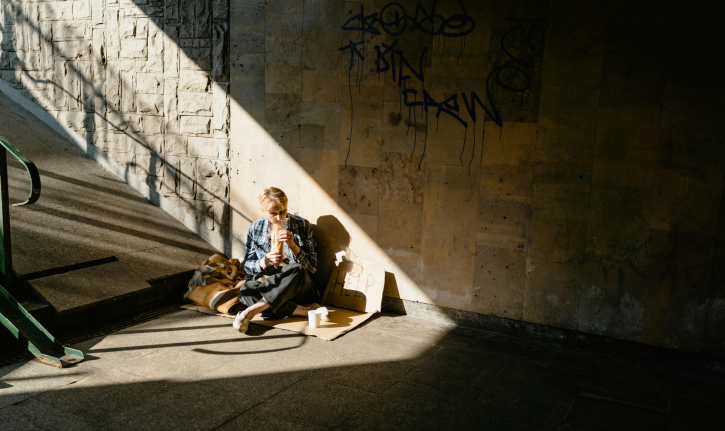
Exposure can be fatal, meaning homelessness doesn’t often present as rough sleeping and instead stays hidden.
“People sleep in stairwells, abandoned houses, or in boats,” Perry clarifies. “You have to do that if you want to survive the winter.”
Advertising helps fund Big Issue’s mission to end poverty
“On an average night, there were four people sleeping in various places, curled up in the fetal position on a piece of cardboard,” Perry recalls of one overnight homelessness count conducted in Nuuk.
“It is cold. The concrete in the stairwells absorb the heat from your body.”
Emergency shelters exist in Nuuk, but they operate on a nightly basis. Residents must leave each morning and return again in the afternoon, carrying everything they own with them.
“They call it an emergency shelter, but I don’t understand why,” Perry says. “Some of the people have been coming there for years.”
When the shelter closes, many head to the Salvation Army’s William’s Café, a daytime social space offering free tea, coffee and support.
“Basically, that’s the main NGO, and they help a lot of people every day,” Perry explains. “If you go in there, there’s probably around 70 people sitting there. They get tea, coffee and lunch. And then there’s free Wi-Fi.”
Advertising helps fund Big Issue’s mission to end poverty
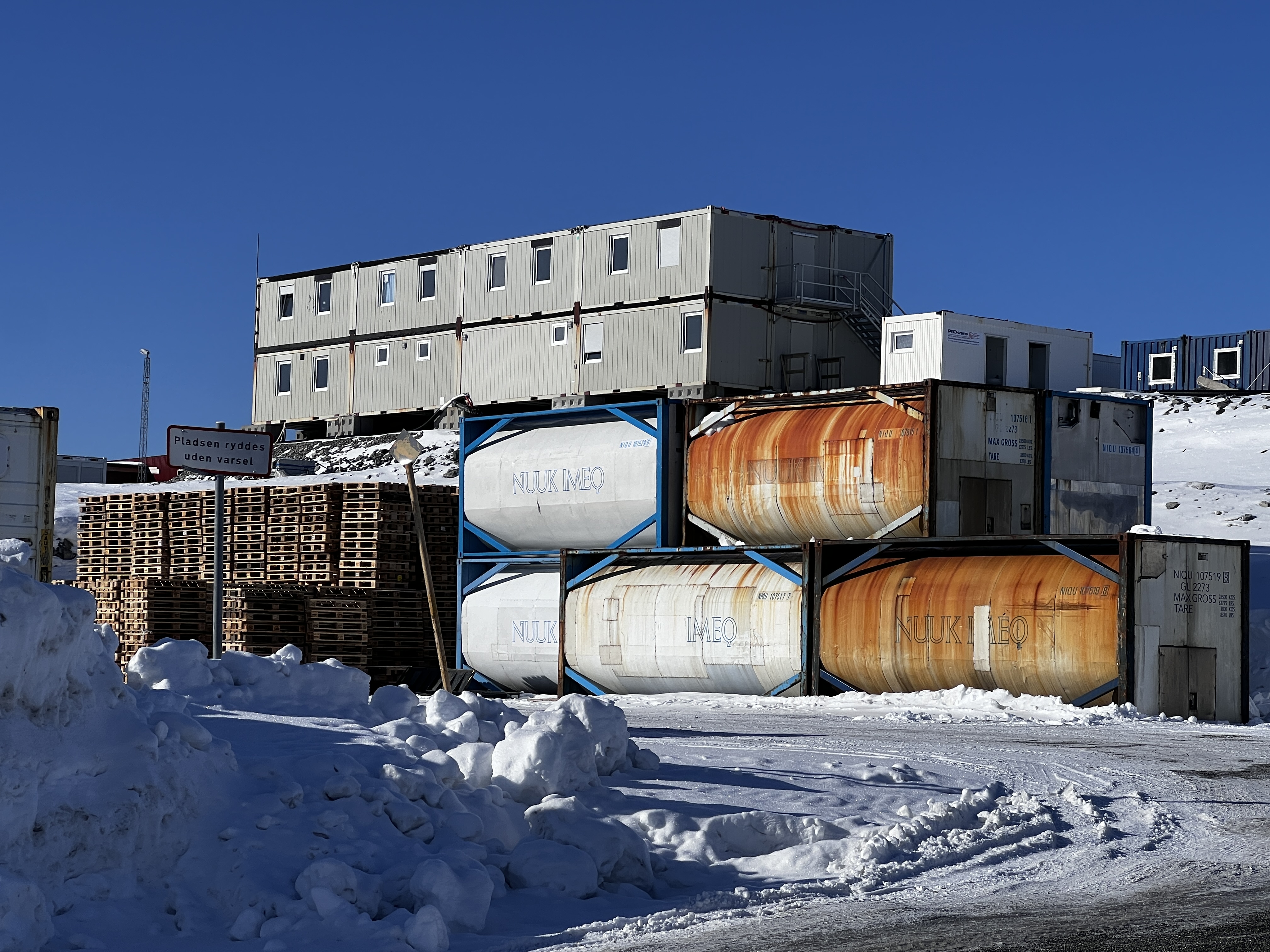
Custom-built insulated shipping containers have been used as a rapid-response solution to address the capital’s homelessness crisis. Credit: Kevin Perry
Others live in converted shipping containers on the edge of the city. Originally used by construction workers, the metal units have been repurposed as temporary housing. Around 20 people live in one such complex near Perry’s home in Nuuk. Inside, each person has a single room.
“I’ve been inside some of them,” he says. “They’re slightly smaller than a police cell.”
Residents pay around 1,500 Danish kroner a month, roughly £175, to live there. Despite the size, demand is high.
“People like living there because they can lock the door,” Perry explains. “They can lock their stuff in. It gives them some sort of security.”
Some of the newer containers, purchased second-hand by the local authority, are in better condition. But they remain, by design, temporary.
The country’s housing shortage has contributed significantly to the crisis. Waiting lists for social housing can stretch for decades.
Advertising helps fund Big Issue’s mission to end poverty
“If people sign up for a place to live, they might wait between five and 25 years,” Perry says.
Housing in Greenland is frequently tied to employment. Losing a job can mean losing accommodation at the same time.
Divorce, illness and mental health problems can also trigger housing loss.
“If you get divorced, somebody’s going to keep the place to live, and somebody’s got to get out,” Perry adds. “And if you don’t have a good network, then you might end up in the homeless shelter.”
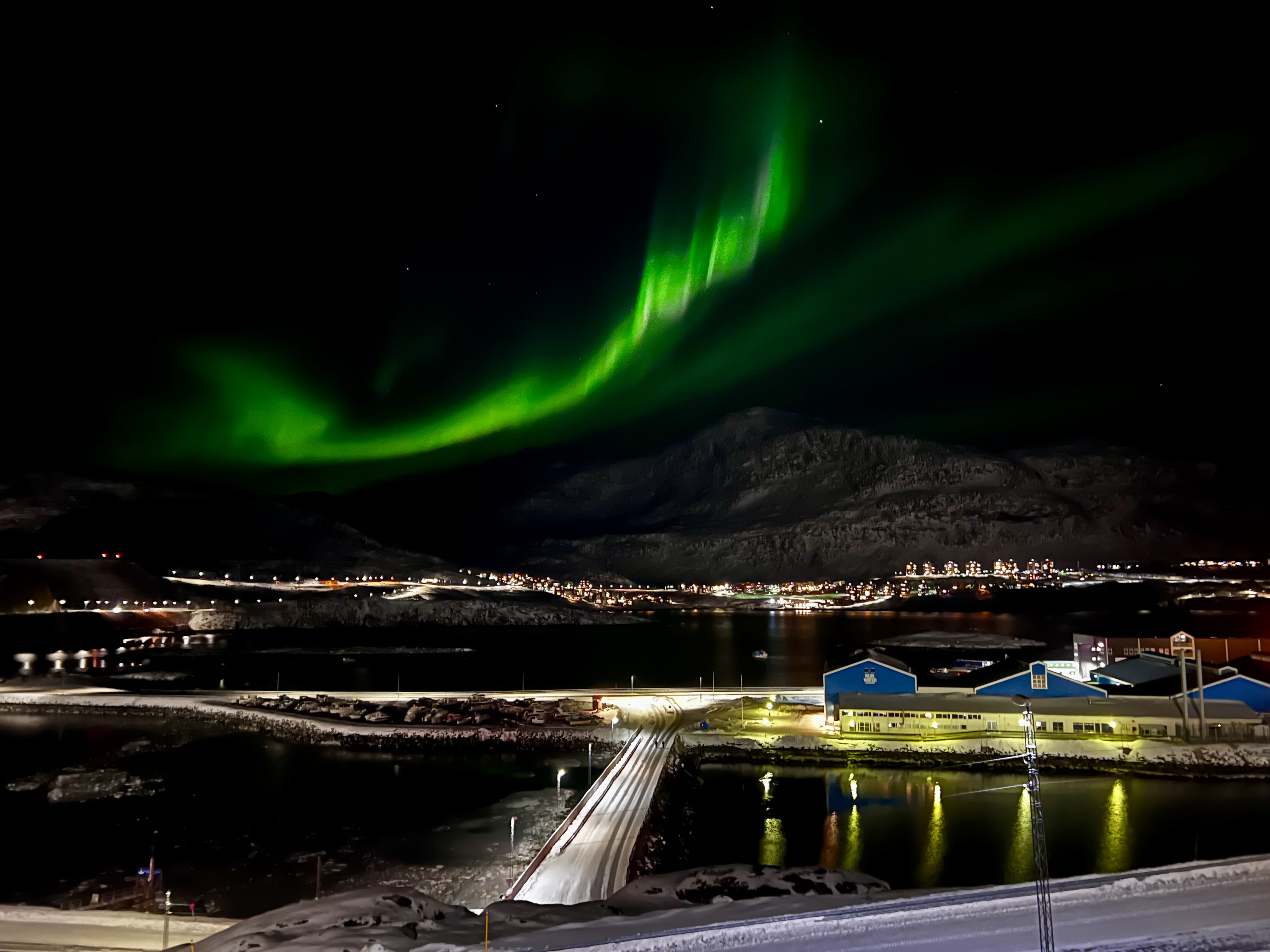
The Aurora Borealis seen dancing above Nuuk’s skyline. Credit: Kevin Perry
A modern housing crisis in an ancient landscape
Greenland’s homelessness crisis has developed alongside rapid urbanisation.
For centuries, Greenlanders lived in small coastal settlements, relying on fishing and hunting. That pattern has changed dramatically.
Advertising helps fund Big Issue’s mission to end poverty
In 1985, more than 7,000 people lived in settlements. Today, just over 4,100 do, around 7% of the population. Meanwhile, Nuuk has nearly doubled in size, growing from around 10,500 residents to almost 20,000.
More than 65% of Greenlanders now live in just five towns and housing construction has struggled to keep pace. Homelessness in Greenland is also closely tied to its colonial history and social structure.
Around 90% of Greenland’s population is Inuit. Indigenous Greenlanders are heavily overrepresented among those experiencing homelessness.
The pattern extends beyond the island. Greenlanders are also significantly overrepresented among homeless populations in Denmark, reflecting broader structural inequalities between the territory and its former colonial ruler.
“I’ve spoken to a lot of Greenlandic homeless people living in Denmark, and I asked them why they were there,” Perry says. “What they say is that it’s easier to be poor in Denmark than it is in Greenland. Coffee is cheaper. Beer is cheaper. It’s easier to get a place to stay. It’s easier to get breakfast, dinner and tea.”
Social security payments are also lower.
Advertising helps fund Big Issue’s mission to end poverty
“At the moment, single unemployed people in Denmark get around 11,000 or 12,000 Danish krone,” Perry says. “Here they get about 5,000, and the cost of living is much higher.”
Since 1980, Nuuk’s population has doubled and housing has struggled to keep up. Credit: Kevin Perry
Global attention
Greenland has become an increasing focus of international attention. During his first term, President Trump originally proposed purchasing the island in August 2019. Since returning to office, he has revived the idea, citing security concerns and access to natural resources, including rare earth minerals exposed by melting ice.
His comments have prompted a wider military and political response across the Arctic. European leaders have pledged to strengthen defence cooperation in the region, while Nato allies, including the UK, Germany and Sweden have announced increased deployments of ships, aircraft and personnel to the High North.
For Greenlanders, the sudden global focus has been deeply unsettling.
“The paradox is that the Greenlandic people never felt threatened until they were threatened by the US,” Greenland’s prime minister Jens Frederik Nielsen said at the Munich Security Conference this month.
Perry has watched that tension spill onto the streets.
Advertising helps fund Big Issue’s mission to end poverty
“I was in the first protest in Nuuk about a year ago,” he says. “It was the biggest demonstration in recent Greenlandic history. We marched down to the American consulate. When I looked back, it was like watching a line of ants. There were so many people.”
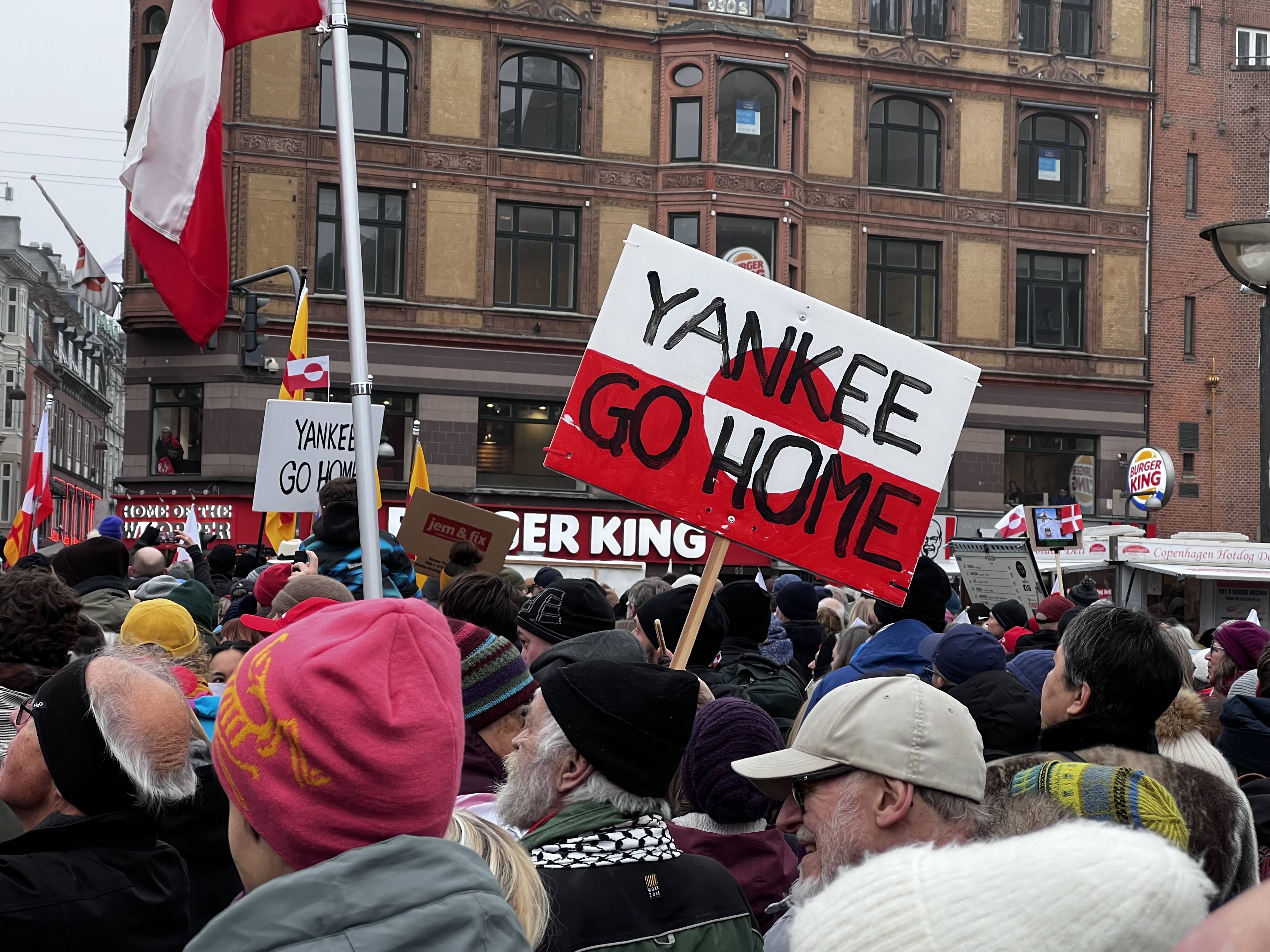
Perry is one of thousands to have attended the ‘Hands Off Greenland’ protests across Greenland and Denmark. Credit: Kevin Perry
Weeks later, he joined another protest outside the US embassy in Copenhagen.
“There were about 16,000 people. Greenlanders, Danes, international supporters. There was a lot of solidarity.”
Much of the anger, he says, is rooted in fears about sovereignty.
“A lot of people are talking about how they would rather die fighting than become American.”
A former British soldier, Perry reaches behind him during our video call and lifts a rifle into view.
Advertising helps fund Big Issue’s mission to end poverty
“There are at least 30,000 rifles in Greenland. It’s a hunting society,” Perry adds. “People grow up with them. They’re tools.”
The number refers only to civilian-owned firearms and doesn’t take into account the island’s long-standing military presence.
According to Perry, although the citizens of Nuuk know the military is nearby, personnel themselves tend to remain largely out of sight, stationed on ships or at remote installations.
For now, their presence has not displaced local communities, but Greenland previously experienced the consequences of military expansion.
In 1953, Inuit families living near Thule in the far north were forcibly relocated to make way for a new US air base. The community was moved more than 100 kilometres north to Qaanaaq, losing access to their homes and traditional hunting grounds. Denmark later acknowledged the relocation, and in 1999 the Danish Supreme Court ruled the displacement unlawful, awarding compensation to those affected.
The base, now known as Pituffik Space Base, still operates today as a missile defence and space surveillance station.
Advertising helps fund Big Issue’s mission to end poverty
A second count
The second national homelessness count will take place in April 2026, four years since the island’s first. Credit: Kevin Perry
A new national homelessness count will take place across Greenland this April, with researchers attempting to measure the scale of the crisis more accurately than ever before.
Because of Greenland’s size, the survey will run for an entire month rather than a single night, with teams travelling between towns and settlements to identify people without stable housing.
“We will use the whole of April to do it,” Perry confirms. “It’s a massive area to get around.”
The results will produce a number. But Perry already knows many of the people behind it.
Later that afternoon, he plans to cook chicken soup at a volunteer kitchen in Nuuk, part of a small network of services supporting the city’s homeless population.
“We can only cater for about 40 people today, so we will buy about 15 chickens, pluck them and cook them all,” Perry grins. “We make proper food.”
Advertising helps fund Big Issue’s mission to end poverty
In the months ahead, governments will continue negotiating Greenland’s future. Military planners will calculate its strategic value and politicians will debate who should control its land.
At the same time, Perry and his team will move across Greenland, counting the people who have no permanent address, but still call this island home.
Buy from your local Big Issue vendor every week – and always take the magazine. It’s how vendors earn with dignity and how we fund our work to end poverty.