Advertisement
Housing

‘I don’t fit the stereotype of a homeless person. My story shows how it can happen to anyone’

A mental health crisis left Dr Karishmeh Felfeli-Crawford rough sleeping in London, miles from home, her husband and everything she knew

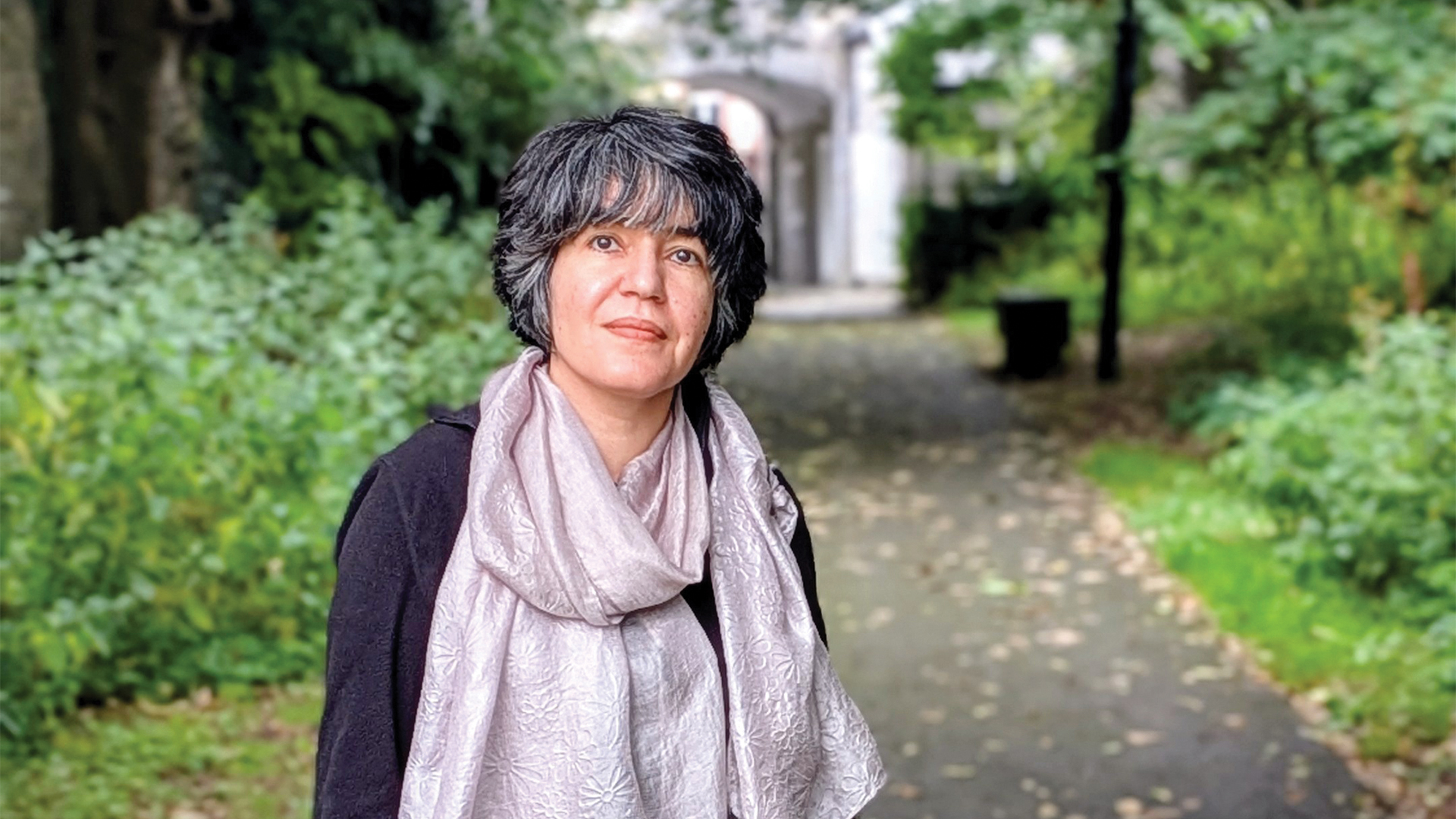
When I left India, aged 18, to pursue studies in western classical music, I never thought this would lead one day to me suffering from serious mental illness and becoming homeless. I never imagined how Type 1 bipolar disorder would cause me to run away from my Irish husband Stephen, and our home in Ireland, to London where I spent six months on the streets and a further seven months in a psychiatric hospital.

A studious, serious woman of petite stature, with a love of playing classical piano, I spent many years working in a variety of music jobs, from running my own piano studio in south Dublin, to presenting on BBC Radio 3. After suffering a psychotic episode while pursuing a music PhD, I was diagnosed with bipolar 1, leading to many tumultuous years for Stephen and me, as I struggled to remain in treatment, mainly because of negative attitudes against medication ingrained in me by my Iranian family. 

By 2018, the rental housing crisis had forced us to relocate from Dublin, where I’d lived, worked and studied, to County Mayo in the West of Ireland. Having grown up in Pune, a city of millions in India, and having spent 15 years in Dublin, I found it incredibly difficult adjusting to life in a small town. When I refused anti-psychotic medication because of side effects like weight gain and akathisia, I became manic and psychotic, and booked a flight to London, running away from our home with no clothes or baggage.

My few belongings (a phone, a wallet) got stolen within the first 24 hours, and as Stephen tried frantically to liaise with the police and the services, I refused to talk to him or anyone else who tried to locate me. By around early June 2018, I was basically untraceable as I began sleeping rough in Hyde Park, wearing the same flimsy clothes I’d left home in. My mind was ablaze with connections, in psychosis, everything appeared to be larger: cars and buses were supersize, the trees in Hyde Park were gigantic, names and faces interconnected with each other before fading into a blur.

My only concern each day was to find something to eat and drink. A few years ago I was studying for a PhD, but now I was eating out of bins and scouring the cafes around Oxford Street and Marble Arch for leftovers. Random acts of kindness sustained me: the Muslim community in Edgeware Road offered me trays of delicious hot food, but as soon as someone approached me with questions, I’d turn on my heel and walk away, relocating to a different place.

The Langham Hotel, across the road from BBC Radio 3 headquarters, allowed me to sit inside and take shelter from the pouring rain. The famous soprano Danielle De Niese, who found fame playing Cleopatra in Handel’s Julius Caesar, kindly offered to buy me lunch because she was surprised and happy to be recognised. The Hilton Hotel on Edgeware Road allowed me to use their bathroom facilities day after day, as did Harrods and Selfridges. 
Advertising helps fund Big Issue’s mission to end poverty
Advertisement

One night, after playing the piano at Tottenham Court Road station, a stranger tipped me a £20 note, my first feel of real money in over three months. While sleeping night after night in Hyde Park, I didn’t understand where I was, and I couldn’t recall anything about my life – not the past (that I’d worked as a radio presenter for BBC Radio 3 in this exact location),  nor the present (that I was homeless, and married to Stephen).

Read more:

A few times, I was approached by social workers and soup kitchen organisers, and as soon as anyone tried to make friendly small talk, I stuck my hands in my pockets and scampered off. The only exception is when an elderly lady had a fall on Oxford Street, and I was able to help her get into a taxi and bring her to St Thomas’ Hospital, where I remained with her until her son arrived. As I waited in A&E with her, it didn’t occur to me that I needed urgent medical help myself. 

Keep reading the journalism that powers our mission

Register free to continue and learn more about the stories, campaigns and the support we provide, helping people facing poverty across the UK.

In mania, time moves at a supersonic pace. In psychosis, which is a complete break from reality, time appears frozen. Many hours, days, weeks blend into a single timeframe. My memory of who I was, where I lived, my husband, our home, my family, his family, was totally wiped out. In its place, I remembered cafe and bathroom locations.

I paid no attention at all to my clothes, though I began to really struggle as the seasons changed from summer to autumn, and autumn to winter. I knew it was Christmas time, because Selfridges had a beautiful window display, the kind that I’d have given anything to see growing up in India.

Around St Stephen’s Day 2018, I saw a flyer with Julian Assange’s picture on it, for the ‘Free Assange’ movement. I barely had any idea who he was, but in a manic impulse, I followed the name connection ‘Julian’ all the way to the Ecuadorian Embassy, where he was living at the time, and where his supporters were camped. ‘Julian’ was my former PhD supervisor’s name, and in my manic, confused state, I too ended up sleeping rough at the embassy, around the corner from Knightsbridge and Harrods.

Advertising helps fund Big Issue’s mission to end poverty

Consequently, I found myself being woken up by concerned parents and teachers of Hill House, a prep school where I’d been sleeping rough for a few nights. One of the mums offered me a Pret coffee and a croissant, as some of the others tried to talk to me to figure out who I was and where I was from. 

As someone who had taught children music for many years, I was genuinely perplexed at how I’d ended up here, in such a vulnerable position. As children looked on confused, I grabbed my few bits and pieces and walked away, coffee and croissant in hand, struggling to stay warm in the freezing January cold. After freshening up in Harrods I was back outside, where I remained for the whole day.

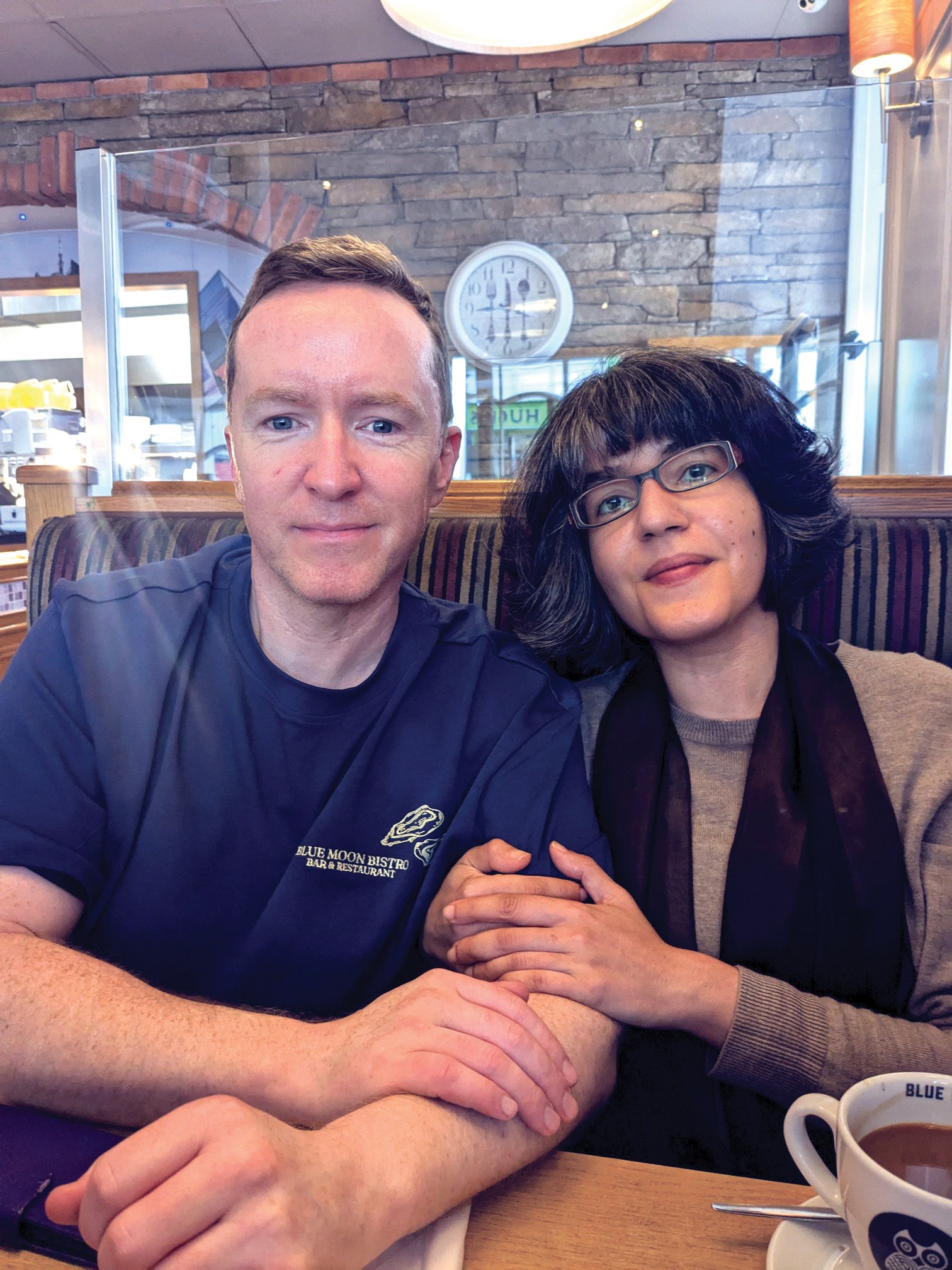
Dr Karishmeh Felfeli-Crawford with husband Stephen
Dr Karishmeh Felfeli-Crawford with husband Stephen. Image: Supplied

I walked in and out of shops, my mind now sluggish and bored. The high-octane excitement of being manic / psychotic in and around Oxford Street had faded: I was now fed up of the icy weather and depressed at having no money or place to call my home.

Later that night, something in me finally snapped and I dialled 999 from a phone box across the road from Harvey Nichols in Knightsbridge, begging the operator to send help as I was suffering from a bipolar episode. 

This moment of clarity allowed me to get the help I needed, and I was taken away from the streets by ambulance to St Charles’ Hospital in Kensington, where I remained for seven months.

 I eventually made it back home to Stephen, and over the past few years we’ve had to work hard to rebuild trust and repair our marriage. I managed to complete my PhD once I’d put my mental health first, and these days I’m volunteering as a writing tutor for One Community London via Zoom, where I get to work with inpatients of St Charles’ Hospital. 

Advertising helps fund Big Issue’s mission to end poverty

I want to give something back to people who share my experience of mental illness, who are at a risk of becoming homeless. I don’t fit the profile of a typical homeless person as I don’t drink or smoke, I rarely go out after 6pm and I come from a very conservative culture (Indian-Iranian). I love classical music! 

Homelessness can happen to anyone, irrespective of cultural background, or life circumstances. I hope my story encourages those who’re experiencing homelessness, as well as those affected by mental illness to seek treatment, even when all hope appears to be lost. 


Do you have a story to tell or opinions to share about this? Get in touch and tell us more. 

Change a vendor’s life.

Buy from your local Big Issue vendor every week – and always take the magazine. It’s how vendors earn with dignity and move forward.

You can also support online:
Subscribe to the magazine or support our work with a monthly gift. Your support helps vendors earn, learn and thrive while strengthening our frontline services.

Advertising helps fund Big Issue’s mission to end poverty

Do you know how Big Issue 'really' works?

Watch this simple explanation.

Recommended for you

Read All
If we are serious about ending rough sleeping, we must be honest about what needs to be done
From left to write: Big Issue founder Lord John Bird with Labour MP Paula Barker and Big Issue vendor Nathan Dale
Housing

If we are serious about ending rough sleeping, we must be honest about what needs to be done

Lives are being 'tragically cut short' due to homelessness. These are the numbers you need to know
a close-up view of four lit pillar candles against a dark blue background
Homeless deaths

Lives are being 'tragically cut short' due to homelessness. These are the numbers you need to know

Meet the homeless people living in hotel rooms miles from their home towns: 'It took its toll'
Miracle who was homeless and lived out of area in temporary accommodation
Housing

Meet the homeless people living in hotel rooms miles from their home towns: 'It took its toll'

Break Clause: Why living with an ex because of the housing crisis is more common than you think
Break Clause

Break Clause: Why living with an ex because of the housing crisis is more common than you think

Most Popular

Read All
Renters pay their landlords' buy-to-let mortgages, so they should get a share of the profits
Renters: A mortgage lender's window advertising buy-to-let products
1.

Renters pay their landlords' buy-to-let mortgages, so they should get a share of the profits

Exclusive: Disabled people are 'set up to fail' by the DWP in target-driven disability benefits system, whistleblowers reveal
Pound coins on a piece of paper with disability living allowancve
2.

Exclusive: Disabled people are 'set up to fail' by the DWP in target-driven disability benefits system, whistleblowers reveal

Cost of living payments: Where to get help in 2025 now the scheme is over
next dwp cost of living payment 2023
3.

Cost of living payments: Where to get help in 2025 now the scheme is over

Citroën Ami: the tiny electric vehicle driving change with The Big Issue
4.

Citroën Ami: the tiny electric vehicle driving change with The Big Issue