The devolved countries in the UK have engaged with the issue of rising rents more directly than Westminster in recent years. The Scottish government limited rent increases and banned evictions during the cost of living crisis and is planning long-term rent controls. The Welsh government has also consulted on the idea of bringing in rent controls.
But new prime minister Andy Burnham has opted not to introduce them. Housing secretary Angela Rayner confirmed the government will not introduce rent controls in England, arguing that the new Renters’ Rights Act offers tenants enough protections from rent hikes.
How much is rent in the UK?
Around 4.7 million households use the private rented sector in England with 11 million renters. Around 450,000 households in Wales are private renters while 887,000 households renting in Scotland, including 323,000 renting privately.
Keep reading the journalism that powers our mission
Register free to continue and learn more about the stories, campaigns and the support we provide, helping people facing poverty across the UK.
The private rented sector is now the second biggest tenure of housing in England behind owner occupiers, amounting to around a fifth of all households in the country.
The most recent ONS statistics show average rents increased 4% annually to £1,459 a month in England, rose 4.3% to £846 in Wales and 1.1% to £1,013 in Scotland in the year up to August 2026.
Renters in London are seeing rents 3.5% higher than in August 2025 at an average price of £2,332. Rent inflation in London had been rising at the lowest rate in the UK until July when the English capital overtook the South East which recorded a 3% rise.
The highest average rent across the UK is found in the London borough of Kensington and Chelsea at £3,690 a month. Outside London, average rents are highest in Oxford at £1,963 a month.
Private rents are rising at the fastest rate in the north-west and north-east of England, up 5.8% in the last year. However, rents in the North East are considered the lowest on average in England at £788 a month.
Green MP Hannah Spencer said: “The latest ONS figures show how completely broken the private rented sector is.
“The Renters’ Rights Act has not done enough for affordability. The temporary accommodation crisis we are seeing across the country is a direct result of a private rented sector spiralling out of control.
“The fastest rent rises in the North West and North East, at 5.8%, mean hundreds of pounds more a year transferred from families and individuals already stretched to breaking point straight into the pockets of private landlords.
“We need rent controls now, and council homes built at scale. Families in my constituency and across the country can’t afford to wait any longer. If Andy Burnham is serious about finally tackling the cost of living, he needs to act now.”
Around 1.2 million private rented households have reported finding it difficult to pay rent, according to the English Housing Survey.
The proportion of income that tenants typically spend on rent has been rising in recent years for renters in England.
In England, renters on the medium household income could expect to spend 36.3% of their income on an average-priced rented home. Analysis from Resolution Foundation found the average monthly rent in 2024 was more than £200 above affordable levels.
That rises to 41.6% in London, where all of the local authorities with the least affordable rents are located, according to the Office for National Statistics.
Housing is deemed affordable when renters spend less than 30% of their incomes on their housing costs.
Tenants typically spend 25.9% of their income on rent in Wales and 25.3% in Northern Ireland.
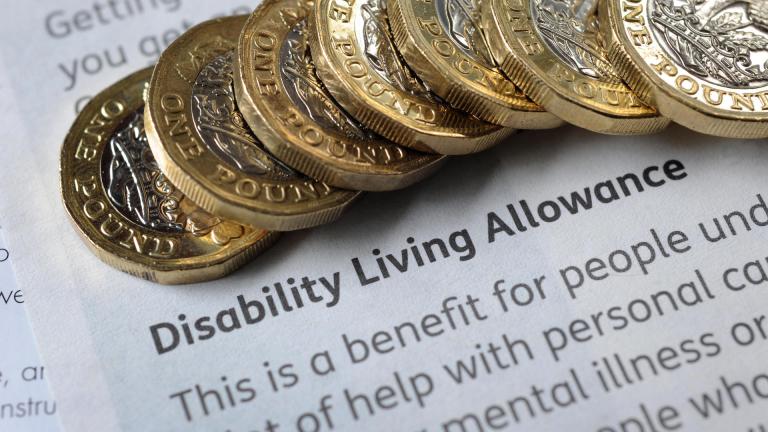
The Westminster government unfroze local housing allowance in April 2024 but tenants on low incomes are still facing a challenge to keep up.
Labour declined to help renters keep up with rising rents when chancellor Rachel Reeves opted not to raise local housing allowance in line with the bottom 30% of market rents.
With housing benefit frozen, people on low incomes are being locked out of the private rented sector with many facing homelessness.
Fewer than 2% of properties on the private rented market are affordable for people who claim housing benefit, recent research from Citizens Advice and Crisis found.
The shortfall between local housing allowance rates and the real cost of rents meant households living in a typical two-bedroom home were £403 short every month.
“Across Britain, people on low incomes are facing an impossible situation,” said Matt Downie, chief executive at Crisis. “With housing benefit frozen, more and more people are struggling to cover the cost of rent and essentials like food and bills – forcing them into a cycle of debt, poverty and homelessness.”
Analysis from Resolution Foundation found the affordability gap between the cost of local rents and local housing support sits at 22%, which is approaching the 23% gap when the government last uprated housing benefits in 2024.
Households have faced rising bills and food costs in recent years as part of the cost of living crisis and there is no respite when it comes to housing costs.
But there has been little action on the issues driving rising rents, namely high demand for properties and a lack of supply.
Read more:
Why is UK rent so high?
The short answer to why rent is so high is because there is a shortage of affordable housing.
There is a housing crisis in the UK because not enough homes have been built by successive governments in the last few decades at a time where social housing stock has been sold off to the private sector through Right to Buy or demolished and not replaced.
An estimate from the National Housing Federation found around 340,000 new homes should be supplied in England each year with 145,000 them to be affordable. Shelter has called for 90,000 social rent homes to be built each year for the next decade.
The previous Conservative government previously targeted building 300,000 new homes in England – a 2019 manifesto commitment – but failed to hit that mark.
There have also been gloomy projections for the number of homes set to be built in the short-term future.
Labour has committed to building 1.5 million homes by 2029, including prioritising social rent homes to ease the demand on the private rented sector in the long-term.
In England, 208,600 dwellings were added to the country’s housing stock in 2024-25, including 190,600 newbuild homes. That’s down 6% on the previous year.
Former chancellor Rachel Reeves announced £39bn would be invested in affordable housing at the 2025 spending review in a bid to boost the number of homes being built.
Meanwhile, areas like Cornwall where tourism has seen a surge in short-term lets through the rise of Airbnb in recent years faces even more pressures on demand.
The private rental sector has picked up the slack in recent years and has doubled in size over the last two decades.
The stiff competition has seen rents on the market increase but many landlords have kept pace by putting up rents for existing tenants.
While generally speaking there is a shortage of private rental properties across the UK, the difference between supply and demand changes from region to region.
Will rent prices go down in 2026?
The rate at which rents have been rising fell throughout 2025 but there are some signs that private rents could even decrease in 2026.
Rightmove suggested in April 2026 that private rents had stopped rising for the first time since 2017.
Zoopla estimates that rents will rise by between 4% and 5% over the rest of 2026.
The property site said the number of rental homes on the market fell for the first time in three years in July 2026.
Experts from the property portal stopped short of blaming the Renters’ Rights Act for rising rents, pointing to similar trends in Scotland.
Instead, higher mortgage rates have put off renters from buying a home while landlords have faced increased costs.
London is seeing the ‘greatest rental market squeeze’ but smaller towns in northern England and Scotland with fewer landlords and less new investment are seeing rents rise at the fastest rate.
Dumfries saw an 11.3% annual rise in rents while tenants were paying £8.8% extra Carlisle over the year, making them the two postal areas with the fastest increases.
Areas with average rents below £750 a month saw rents grow at double that of the national rate, up 5.4% compared to 2.6% nationally.
Zoopla said renters have more capacity to absorb rent rises before hitting an affordability ceiling in cheaper areas, whereas in the most expensive areas, rents are already stretching what tenants can pay, capping how much further rents can increase.
Richard Donnell, executive director at Zoopla, said: “Higher mortgage rates are not just impacting the sales market, they are keeping more would-be first-time buyers in rented homes for longer, reducing available supply just as the seasonal upturn in demand gets into full swing.
“This is pushing rents higher again, mainly in regions where the availability of homes for rent has declined the most, although affordability remains an important constraint on how far rents can rise.
“The upward pressure on rents is greatest in London, where higher mortgage rates have had the biggest impact on home buyers, and in more affordable rental markets where renters have greater capacity to absorb increases. “
Meanwhile, the National Residential Landlord Association continually warned of a landlord exodus ahead of the introduction of the Renters’ Rights Act.
Many of the new measures in the Renters’ Rights Act came into effect in England in May 2026, finally banning no-fault evictions more than seven years after Theresa May’s government promised to axe them.
The bill introduces a number of changes to boost renters’ rights and security in the homes but has faced criticism for its lack of action on making renting more affordable and the government has rejected introducing rent controls.
Labour has promised the bill will end bidding wars between tenants as well as giving renters stronger rights to keep pets and avoid discrimination if they have children or are in receipt of benefits.
But it remains to be seen whether the government will unfreeze local housing allowance at October’s autumn budget to help low-income households struggling to afford rent.
Hannah Aldridge, senior research and policy analyst at the Resolution Foundation, said the most recent ONS data “is a further reminder that while rents continue to rise, the support low-income families can get to pay those bills does not”.
“Without government action, this affordability gap will continue to press down on the living standards of poorer renters,” added Aldridge.
“Andy Burnham has made clear that housing and the cost of essentials are key priorities for his government. Fixing the way local housing allowance is set is crucial to tackle both problems.
“At the budget, the government should end the haphazard approach to setting local housing support and commit to annually adjusting it in line with local rent levels.”
With the long-term impact of the Renters’ Rights Act also an unknown, time will tell what it all means for private rents.
Do you have a story to tell or opinions to share about this? Get in touch and tell us more.
Change a vendor’s life.
Buy from your local Big Issue vendor every week – and always take the magazine. It’s how vendors earn with dignity and move forward.
You can also support online:
Subscribe to the magazine or support our work with a monthly gift. Your support helps vendors earn, learn and thrive while strengthening our frontline services.
Thank you for standing with Big Issue vendors.