Advertisement
Social Justice

Revealed: The areas set to be hit hardest by soaring energy bills

Friends of the Earth has produced a list of the areas in England and Wales with the most energy crisis ‘hotspots’, where the average salary is lower than the national average and poor insulation means bills are higher.

Birmingham, Bradford and Cornwall are the areas of England and Wales set to be hardest hit by soaring energy bills, according to a new study.

Environmental group Friends of the Earth has found there are 9,000 energy crisis hotspots in England and Wales. These are places where communities are at highest risk of financial hardship because energy use is high and the typical household income is below the national average.

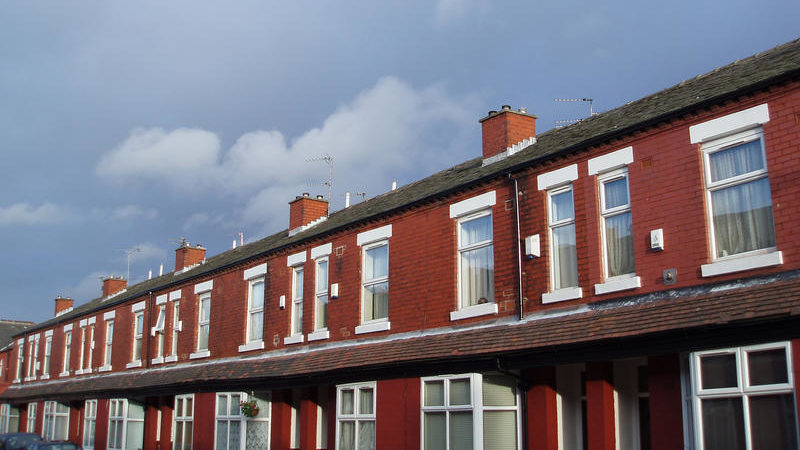
In most cases, energy use is high in these areas because homes are poorly insulated, meaning they need more energy to remain warm, Friends of the Earth said.

Birmingham had the most of these hotspots, with 415 – that’s 65 per cent of the city. Second was Bradford, with 162 – or 52 per cent of the city. Cornwall was third, with 150 hotspots, or 46 per cent of the county. Sandwell was fourth, with 116 hotspots – 62 per cent of the town, and Country Durham and Enfield were in joint fifth with 111 hotspots – equating to 34 per cent and 61 per cent of their neighbourhoods.

This searchable table allows you to see how many energy crisis hotspots there are in your area.

Birmingham and Bradford also top the list of places with the most homes that are missing basic insulation measures.
Advertising helps fund Big Issue’s mission to end poverty
Advertisement

It comes as consultancy Cornwall Insight estimates energy prices could be as high as £5,341 a year from April. The price cap is expected to rise to £3,582 this October and £4,266 in January. Earlier this year the cap was £1,277.

The analysis found these neighbourhoods have a higher proportion of children than others and that people of colour are twice as likely to live in them, highlighting the disparities that exist across local areas.

Alongside the study, a new report by the New Economics Foundation on behalf of Friends of the Earth shows how an emergency energy efficiency scheme for England and Wales could be delivered by councils, starting with the areas most in need.

The NEF found households could make savings of between £490 and £720 a year on their bills through the rapid roll-out of a council-led, street-by-street programme of insulation and other energy saving measures.

Friends of the Earth is now calling on the candidates vying to be the next prime minister to commit to a rapid programme of free, council-led street-by-street loft and cavity wall insulation and basic energy efficiency measures. It also wants the Welsh government to urgently roll out its Warm Homes Programme starting with those most in need.

Mike Childs, head of science, policy and research at Friends of the Earth, said: “There’s no downplaying how catastrophic this and following winters will be for millions of people if energy bills rise as high as they’re predicted to, unless the government meaningfully intervenes.

“Instead of woeful and poorly targeted cash handouts, or the promise of tax cuts that won’t help those who need it the most, the government must beef up its package of emergency financial support by channelling money to those least able to pay their energy bills.

“And while vital, this is only a short-term solution. The highest priority of all is fixing the UK’s leaky, inefficient housing stock, otherwise cash handouts will be required year on year.

“By rolling out a free programme of street-by-street energy efficiency measures, prioritising the most in-need neighbourhoods, we can help to bring bills down quickly, make homes warmer and slash Earth-warming emissions at the same time.”

Friends of the Earth estimates the total cost of the scheme would be £15billion, which is three times lower than what households could save over a 10 year period as identified in the NEF report. It wants the government to start rolling it out using the £5bn windfall levy on energy companies, and announce a “much tougher” windfall tax to pay for the rest of it.

Read our piece on why energy bills are so expensive, and where to get help.

Advertising helps fund Big Issue’s mission to end poverty

DO YOU KNOW HOW BIG ISSUE 'REALLY' WORKS?

Watch this simple explanation.

Recommended for you

Read All
Disabled journalist fears ‘secret cuts’ to Access to Work could force her out of employment
Access to Work

Disabled journalist fears ‘secret cuts’ to Access to Work could force her out of employment

Kinship carers forced to turn to food banks after taking in vulnerable children
Sarah, a kinship carer who took in her two-year-old nephew.
Kinship carers

Kinship carers forced to turn to food banks after taking in vulnerable children

Energy bills will fall in April. But will it be enough for people living in fuel poverty?
hob
Energy bills

Energy bills will fall in April. But will it be enough for people living in fuel poverty?

I'm worried that even more disabled children could get lost within the SEND system after reforms
Cara Roughani and her son Jayden.
SEND

I'm worried that even more disabled children could get lost within the SEND system after reforms

Most Popular

Read All
Renters pay their landlords' buy-to-let mortgages, so they should get a share of the profits
Renters: A mortgage lender's window advertising buy-to-let products
1.

Renters pay their landlords' buy-to-let mortgages, so they should get a share of the profits

Exclusive: Disabled people are 'set up to fail' by the DWP in target-driven disability benefits system, whistleblowers reveal
Pound coins on a piece of paper with disability living allowancve
2.

Exclusive: Disabled people are 'set up to fail' by the DWP in target-driven disability benefits system, whistleblowers reveal

Cost of living payments: Where to get help in 2025 now the scheme is over
next dwp cost of living payment 2023
3.

Cost of living payments: Where to get help in 2025 now the scheme is over

Citroën Ami: the tiny electric vehicle driving change with The Big Issue
4.

Citroën Ami: the tiny electric vehicle driving change with The Big Issue