Energy bills will fall in April. But will it be enough for people living in fuel poverty?
The Ofgem price cap will fall from April, bringing the average bill down by £117. But disabled people like Daniel Jones fear the relief may be short-lived
by:
25 Feb 2026
Energy bills could fall in April: Unsplash
Share
The annual energy bill for a typical household will fall by £117 from April after regulator Ofgem cut its price cap by 7%.
But costs remain far higher than before the energy crisis, and campaigners warn the new level is still unaffordable for many – including Geordie Daniel Jones.
When Jones’ chest turns blue, he doesn’t always notice.
“I don’t feel the cold, and I don’t feel the heat. So my wife’s got to say, like, ‘look at your chest. That’s blue,’” the 46-year-old from Newcastle told Big Issue.
Jones developed Guillain-Barré syndrome while recovering in hospital from a spinal stroke. The condition affects his nerve endings, leaving him highly vulnerable to temperature changes, but without the ability to feel them.
In winter, the heating has to stay on. In summer, he has to run fans constantly.
Advertising helps fund Big Issue’s mission to end poverty
Advertisement
“We have to use a lot of heat on the electric, because my immune system means I can’t get cold,” he said. “And I’ve been left to be incontinent, so we’ve got to use lots of water, and heating.
“We really struggle with the costs.”
Those costs are shaped by Ofgem’s energy price cap, which limits what suppliers can charge per unit of gas and electricity. From April, the regulator’s quarterly cap will fall by 7% – about £117 a year – for a typical household.
That brings the average annual bill for to £1,641, down from £1,758 under the January-March cap.
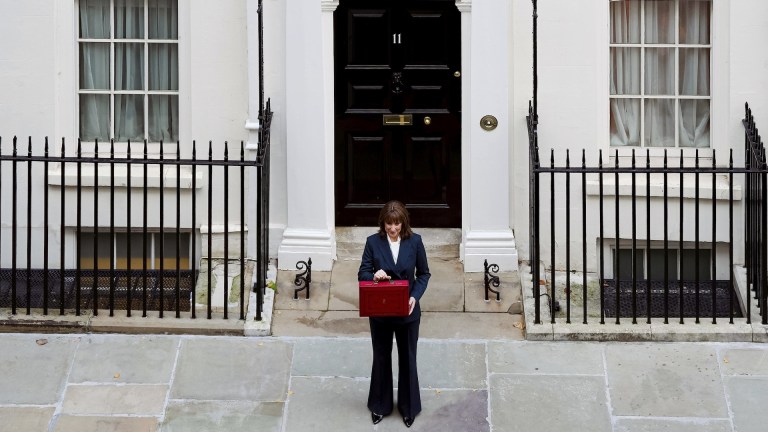
The reduction follows November’s autumn budget, when chancellor Rachel Reeves shifted some green levies from energy bills into general taxation. She promised households would see bills cut by £150.
Advertising helps fund Big Issue’s mission to end poverty
The Chancellor of the Exchequer Rachel Reeves said that today’s cap reduction was a result of that.
“Cutting the cost of living is this government’s number one priority and I know energy bills are one of the biggest concerns,” she said. “That’s why at the Budget I said we would bear down on energy bills.”
The £150 saving has been partially offset by rising “network costs”, which means the expense of maintaining and upgrading the UK’s energy grid, which is why it’s just £117.
Nonetheless, experts have cautiously welcomed the move. Jonathan Marshall, principal economist at the Resolution Foundation, said the change would “boost living standards” for lower-income households.
“Today’s price cap announcement is genuinely good news for families who’ve been squeezed hard by energy bills for years now with well targeted support that helps poorer families with the greatest need,” he said.
“But bills remain far higher than they were before the energy crisis hit, and the relief we’re seeing today won’t last forever.”
Advertising helps fund Big Issue’s mission to end poverty
Rising network costs and wholesale prices could push bills up by £60 by 2029, Resolution Foundation estimate, eating into the current discount.
How high are bills compared to before the energy crisis?
Even after April’s drop, the typical bill remains roughly a third higher than before Russia’s invasion of Ukraine spiked gas bills.
For Jones, the last few years have brought medical and financial upheaval.
In 2021 he suffered a heart attack and underwent triple heart bypass surgery. Then, he had a spinal stroke. While recovering in hospital, he contracted Guillain-Barré. He lost sight in his right eye and had to relearn how to walk.
He was signed off from his job in tech management and applied for benefits. “It was like a year of just nightmares,” he said.
Daniel Jones in hospital. Credit: supplied.
Applying for personal independence payment (PIP) was, he said, “also a nightmare”. He was initially awarded the lowest amount. With support from Citizens Advice, he eventually secured a higher award, including mobility payments – but it took a year and a half.
Advertising helps fund Big Issue’s mission to end poverty
“We’ve lost thousands out the household,” he said. “So we just end up cutting back and cutting back, and then inside of that we’ve had then ensure that the essential bills are paid. And you literally are just heating one room… right down under the tightrope, as they say.”
National Energy Action warned the new level is still unaffordable for people like Jones.
“Any fall in sky-high energy bills is welcome. Hopefully, it can take a little pressure off households who have been struggling in cold, unhealthy homes this winter,” said director of policy Peter Smith.
‘But the new level is still far from affordable. Those on the lowest incomes in the leakiest homes will face deep debt and will still struggle to stay warm and well at home.”
NEA also has concerns about unintended consequences. According to their analysis, shifting the cost of renewable energy schemes into general taxation has reduced the funding available for fuel poverty programmes by more than £1.5 billion per year.
‘We need to make sure this cut to bills isn’t just offering short-term relief at the expense of long-term action against fuel poverty,” said Smith. “The government’s Warm Homes Plan must be transformational, making homes warmer and positively changing the lives of the most vulnerable households for the better.’
Advertising helps fund Big Issue’s mission to end poverty
Jones is sceptical about the timing of the latest cut.
“It goes down a bit in the summer and then they put it up again, so I’m not too excited,” he said. “It’s like they’re laughing in your face.”
“It’s the government, Ofgem and the Big Six [energy companies] just taking the normal yearly mick.”
Prime minister Keir Starmer said he would work to bring bills down further.
“I promised to bring bills down and I meant it. And today – because of the actions this government took at the last budget – the price cap on energy bills has come down by £117,” said Starmer.
“That means lower energy bills for millions across the country. But I know there is more to do – and my government is pulling every lever to bear down on the cost of living and protect the pound in the pockets of working people.”
Advertising helps fund Big Issue’s mission to end poverty
Buy from your local Big Issue vendor every week – and always take the magazine. It’s how vendors earn with dignity and how we fund our work to end poverty.