Advertisement
Opinion

The dehumanising narratives around benefits need to stop in 2026 – for all our sakes

Negative rhetoric around the welfare system can do lasting damage. Ruth Patrick, a professor at the University of Glasgow and a researcher who leads the Changing Realities programme, explains what needs to change in the new year

It’s a playground chant all of us know well: sticks and stones may break your bones, but words will never hurt you. And while (I guess) it was penned to try and reassure those subject to childhood bullying, and to the name calling that so many of us have faced for not quite fitting in, it’s a line that really doesn’t stand up to close interrogation.

The incredibly sharp hurt and harm that words can and do cause has been especially evident in the aftermath of the autumn budget at which the Labour government announced the full abolition of the cruel two-child limit. This policy, which arbitrarily caps support to means-tested social security to the first two children in a household, has caused real and lasting harm to the families it has affected since it was introduced by the then Conservative government in 2017.

The words that were used  in an effort to defend its introduction were both stigmatising and derogatory. Time and time again, David Cameron and George Osborne pitted family against family, and drew on sensationalised media coverage and content, which was recycled to present ‘welfare’ itself as part of the problem, rather than a core feature of a socially progressive welfare state.

Read more:

These words did real and lasting damage, reinforcing what Tracey Jensen and Imogen Tyler describe as an ‘anti-welfare commonsense’ which normalises austerity and the continued decimation of social security support, and critically makes it almost impossible for counter narratives to emerge and gain ground.

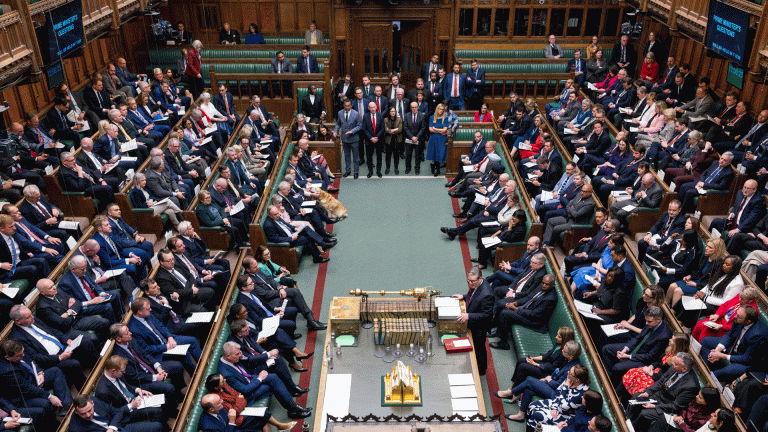
It was thus incredibly positive to see our current chancellor, Rachel Reeves, take to the dispatch box to announce the two-child limit’s abolition, making an impassioned and values-based argument about why no child should be punished, simply because of the number of siblings that they happen to have.


Advertising helps fund Big Issue’s mission to end poverty
Advertisement

Speaking with conviction, she tore into the incredibly cruel and degrading rape clause, which requires women to seek health care verification in order to claim an exemption to the two-child limit for a child conceived in the context of rape and/or domestic violence. And she set out the role of the state to do what it can to make sure all children have as good a childhood as they possibly can, for the sake of a happy childhood in and of itself, and not only because of the instrumental benefits that come with a country which ensures its population have enjoyed opportunities and decent living standards in their early years.

And she went further, reminding us that the social security system can and should be there for all of us. Any one of us could fall ill, lose our jobs, or experience relationship breakdown, and in these difficult times a decent social security system should step in to offer some protection.

So far, so positive. But then, in a hate-filled echoing of the austerity years, Kemi Badenoch delivered her scathing budget response, declaring to much of the media’s apparent delight that this was a ‘Benefits Street Budget’, returning to those unsustainable but seemingly popular binary divisions between those who work and those who don’t.

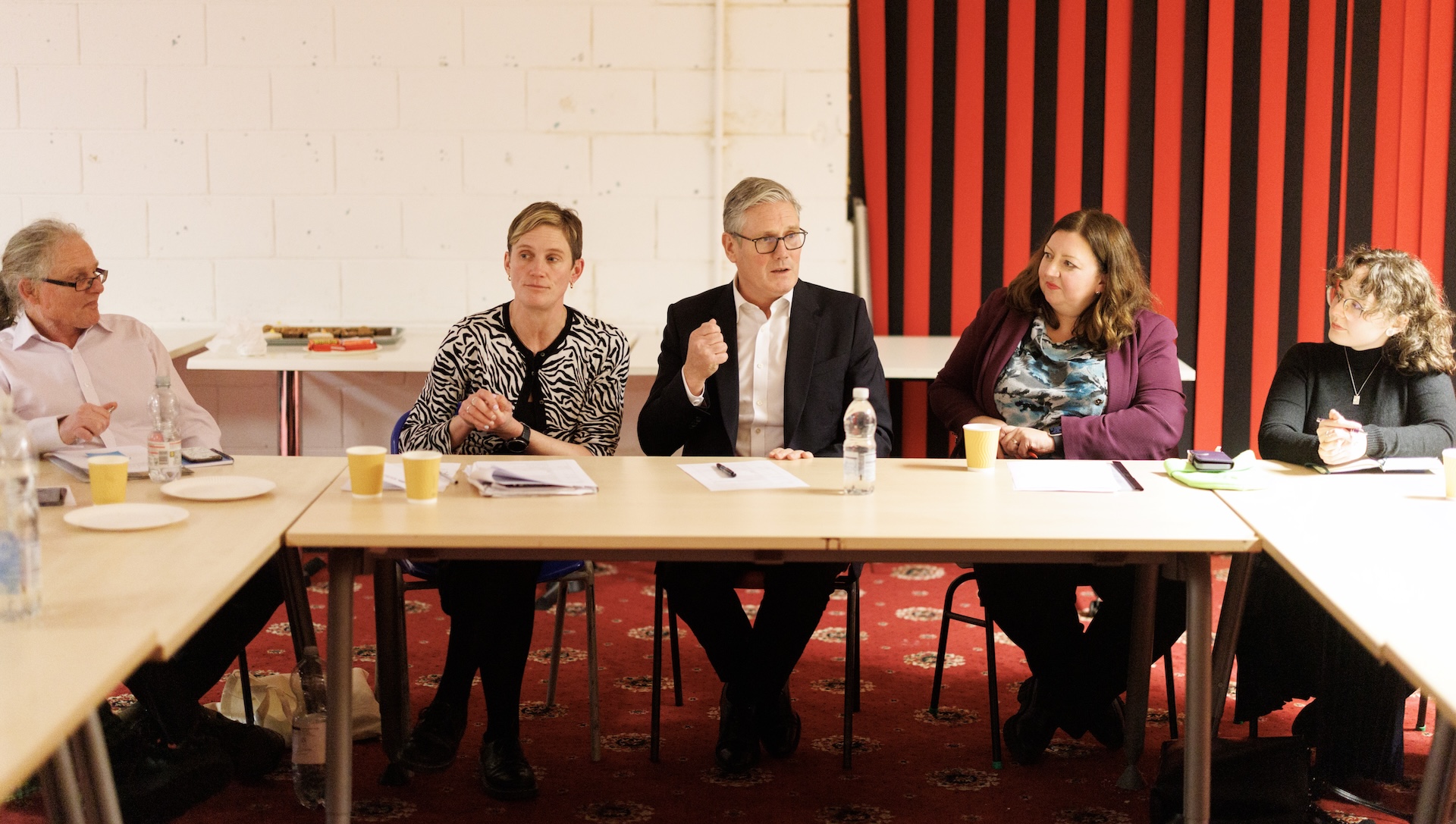
The morning after the budget, we organised an informal coffee morning for Changing Realities, a collaboration of over 200 parents and carers on a low-income, researchers from the University of Glasgow and the London School of Hygiene and Tropical Medicine, and Child Poverty Action Group.

We have learned never to assume how parents will respond to government set pieces, but were completely unprepared for the level of fear, anger and sadness that dominated the discussion, and which was rooted in the pejorative and dehumanising narratives circulating about ‘welfare’. Yes, parents were pleased – delighted even – to look towards a future without the two-child limit. But this was tempered by their fear, and quite visceral reaction, to being confronted by the negative headlines and stigmatising portrayals.

The negative rhetoric has continued in the fortnight since, but what has been noticeable, thus far, has been how Labour has, in the main, stood its ground, refusing to be cowed from speaking up for action on child poverty. There have been less positive moments, of course: the chancellor’s tabloid-friendly announcement on banning the use of Motability schemes to buy luxury cars was one, and the noises coming from the current Secretary of State for Work & Pensions, Pat McFadden which so often seem to suggest welfare reform is synonymous with cuts and restrictions in entitlement to support.

But now, and at long last, there is some clear blue water once again dividing Labour and its opposition on social security and poverty. And, while it is imperfect, the UK’s first child poverty strategy in over a decade is to be welcomed, and situated as a vital start in the much bigger, and bolder challenge that lasting reductions to child poverty require.

As we continue this effort, let’s all remember that words can and do matter, and let’s hope that Labour can hold its nerve here, and continue to speak positively and without stigma about the positive work that social security investment – welfare reform worthy of its name – can and must do. The words they’ve used to defend the scrapping of the two-child limit show they can do it, and now we  just need them to do it much more. Now that really would be welfare reform worthy of that name.

Do you have a story to tell or opinions to share about this? Get in touch and tell us more

Reader-funded since 1991 – Big Issue brings you trustworthy journalism that drives real change.

Every day, our journalists dig deeper, speaking up for those society overlooks.

Could you help us keep doing this vital work? Support our journalism from £5 a month.

Advertising helps fund Big Issue’s mission to end poverty

GIVE A GIFT THAT CHANGES A VENDOR'S LIFE THIS CHRISTMAS 🎁

For £36.99, help a vendor stay warm, earn an extra £520, and build a better future.
Grant, vendor

Recommended for you

Read All
Where JMW Turner wears me out, John Constable restores me
John Bird

Where JMW Turner wears me out, John Constable restores me

Disabled people faced a politically tumultuous 2025. What does next year have in store?
Disabled sign
Mikey Erhardt

Disabled people faced a politically tumultuous 2025. What does next year have in store?

Why we’re creating new housing union in 2026 to help renters, residents and leaseholders take on power
a raised fist
Suzanne Muna

Why we’re creating new housing union in 2026 to help renters, residents and leaseholders take on power

Our leaders must listen to scientists on climate change – or catastrophe is around the corner
Mark Wright

Our leaders must listen to scientists on climate change – or catastrophe is around the corner

Most Popular

Read All
Renters pay their landlords' buy-to-let mortgages, so they should get a share of the profits
Renters: A mortgage lender's window advertising buy-to-let products
1.

Renters pay their landlords' buy-to-let mortgages, so they should get a share of the profits

Exclusive: Disabled people are 'set up to fail' by the DWP in target-driven disability benefits system, whistleblowers reveal
Pound coins on a piece of paper with disability living allowancve
2.

Exclusive: Disabled people are 'set up to fail' by the DWP in target-driven disability benefits system, whistleblowers reveal

Cost of living payments: Where to get help in 2025 now the scheme is over
next dwp cost of living payment 2023
3.

Cost of living payments: Where to get help in 2025 now the scheme is over

Citroën Ami: the tiny electric vehicle driving change with The Big Issue
4.

Citroën Ami: the tiny electric vehicle driving change with The Big Issue