Advertisement
Opinion

The buildings our communities love are burning. We can’t keep losing them.

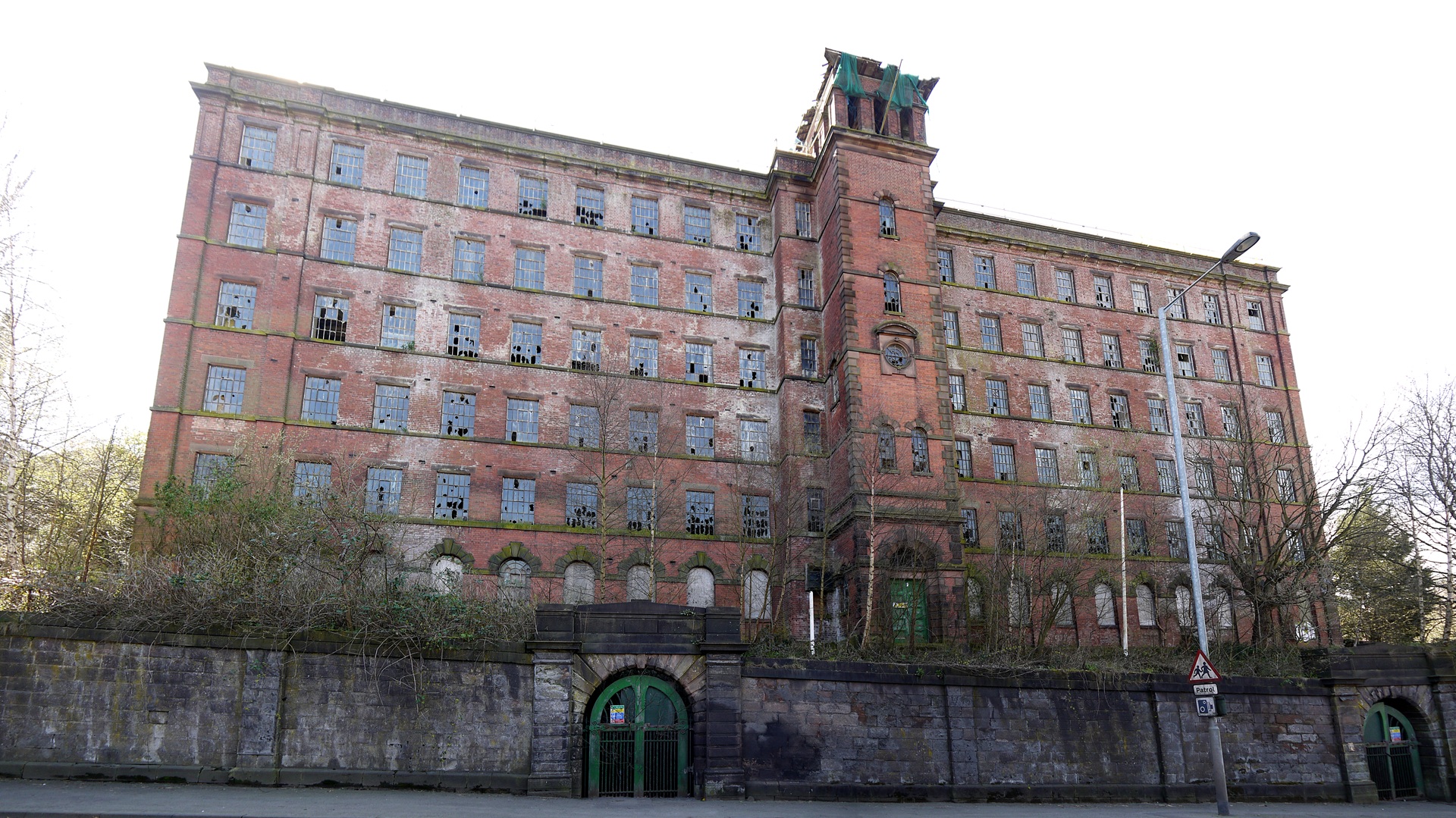
The Big Mill in Leek was vacant for over 50 years, but a key part of the town’s history. Historic England wanted to save it – but we were too late.

Last month, a six-storey silk mill that had watched over the Leek skyline for 165 years was set on fire. By the following morning, the Big Mill on Mill Street was lost. For working-class communities that had grown up in its shadow, the Big Mill had been a source of identity and pride – its loss reverberates throughout the community.

The mill was built in 1860 by the architect William Sugden – a man who shaped this corner of the Staffordshire Moorlands, designing everything from churches and schools to the Churnet Valley Railway. Inside its walls, the firm of Wardle & Davenport employed 2,500 people at its height, pioneering artificial silk stockings. The company went into receivership in 1970, and the mill fell into disuse, remaining the most recognisable landmark on the town’s skyline. It was listed at Grade II for protection in 1972, and there it has stood: monumental, inescapable, a proud symbol of Leek’s manufacturing heyday.

Read more:

For us at Historic England, the loss is especially felt because we were in the process of featuring the Big Mill in this year’s edition of our Heritage Investment Prospectus – a recent initiative designed to connect owners of at-risk historic buildings with developers and investors who can give them a future. The 2025 prospectus, launched in May, identified 17 sites across England where vacant or underused historic buildings could be brought back to life – many of them former mills and industrial buildings in the North and Midlands. The Big Mill would have joined that list. We were so close to finding a new life for this piece of working-class history.

And this is not an isolated tragedy. Over the years, many of our historic industrial buildings – which once supported whole towns – have fallen into disrepair. Vacant historic buildings sit in a precarious gap between the moment they fall empty and the moment investment arrives. In that gap buildings – and the stories they housed – can be lost forever.

Our research shows that over half of people say that local heritage raises their quality of life. When buildings like the Big Mill go, the damage is felt viscerally by the people who grew up with them. These are the physical memories of places that once made things; the architectural proof that working-class communities created wealth, skill and identity in equal measure. They belong to Leek, to Manchester, to Liverpool. Their loss is felt by us all.


Advertising helps fund Big Issue’s mission to end poverty
Advertisement

But it doesn’t have to be like this. Historic England’s research shows that the redundant textile mills of Yorkshire and Lancashire alone could provide around 42,000 new homes. Across all vacant historic buildings in England, we estimate the potential for up to 670,000 additional homes.

There are environmental benefits too. Retrofitting avoids the enormous carbon cost of demolition and new construction, preserves the embodied energy already spent across centuries of maintenance, and keeps communities intact rather than displacing them.

We can see where this has worked in Leek itself. Grade II-listed Waterloo Mill and Wellington Mill have both successfully been converted into housing. And just last year, the nearby London Mill was given planning permission for 28 new homes. These are not niche preservation projects; they are practical housing solutions in towns that desperately need them, creating characterful homes that people actively choose over new-build alternatives.

There is also an economic argument that goes beyond housing. Seven of England’s top ten visitor attractions are heritage sites. Heritage tourism generates around £18 billion annually. Historic high streets and regenerated industrial buildings attract investment and creative industries in ways that generic new builds cannot. When we talk about levelling up – the repurposing of industrial heritage in the towns of the North and Midlands is one of the most powerful tools available.

None of which brings back the Big Mill. What it does do, however, is clarify what we must do differently. Buildings like this need active stewardship. Owners need to secure vacant properties before they become targets. Developers and investors need to see the opportunity, and we need to work together to keep these properties alive. That’s how we show communities that when they say a building is part of who they are, we are listening.

Claudia Kenyatta and Emma Squire are co-CEOs of Historic England, the public body that advises the government on England’s historic environment.

Do you have a story to tell or opinions to share about this? Get in touch and tell us more

Change a vendor’s life.

Buy from your local Big Issue vendor every week – and always take the magazine. It’s how vendors earn with dignity and move forward.

You can also support online:
Subscribe to the magazine or support our work with a monthly gift. Your support helps vendors earn, learn and thrive while strengthening our frontline services.

Thank you for standing with Big Issue vendors.

Advertising helps fund Big Issue’s mission to end poverty

Do you know how Big Issue 'really' works?

Watch this simple explanation.

Recommended for you

Read All
How gambling and domestic abuse are plunging women into homelessness
Mercy Denedo, Liz Riley

How gambling and domestic abuse are plunging women into homelessness

The Iran crisis was decades in the making. You reap what you sow
John Bird

The Iran crisis was decades in the making. You reap what you sow

How did you keep safe when you were a child? Why I ask every podcast guest that question
Photo of a mother hugging a child
Ciaran Thapar

How did you keep safe when you were a child? Why I ask every podcast guest that question

The £184 billion question: What would happen if the unpaid carers stopped caring?
torn heart
 Emily Holzhausen

The £184 billion question: What would happen if the unpaid carers stopped caring?

Most Popular

Read All
Renters pay their landlords' buy-to-let mortgages, so they should get a share of the profits
Renters: A mortgage lender's window advertising buy-to-let products
1.

Renters pay their landlords' buy-to-let mortgages, so they should get a share of the profits

Exclusive: Disabled people are 'set up to fail' by the DWP in target-driven disability benefits system, whistleblowers reveal
Pound coins on a piece of paper with disability living allowancve
2.

Exclusive: Disabled people are 'set up to fail' by the DWP in target-driven disability benefits system, whistleblowers reveal

Cost of living payments: Where to get help in 2025 now the scheme is over
next dwp cost of living payment 2023
3.

Cost of living payments: Where to get help in 2025 now the scheme is over

Citroën Ami: the tiny electric vehicle driving change with The Big Issue
4.

Citroën Ami: the tiny electric vehicle driving change with The Big Issue