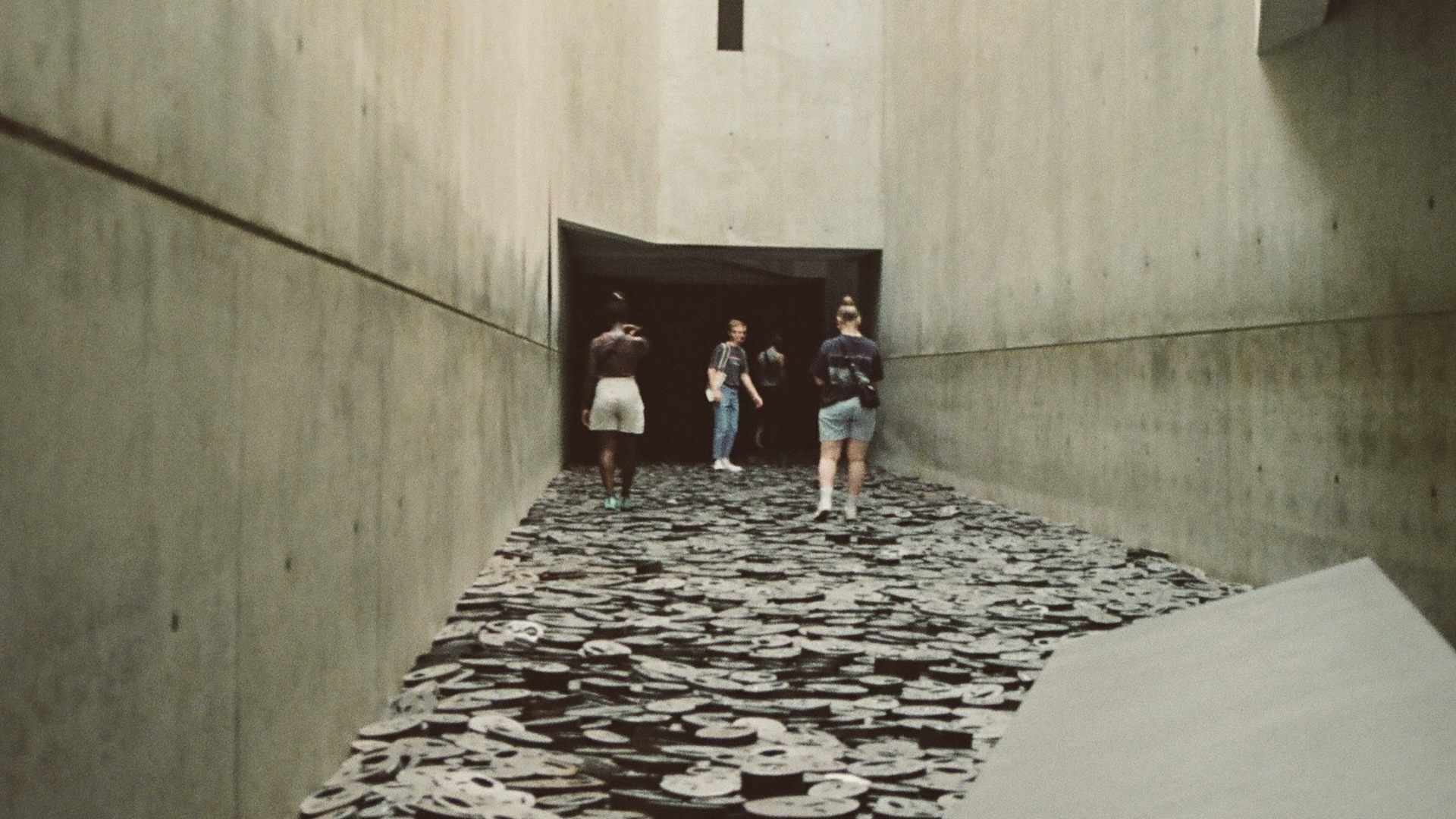
Jewish memorials, such as those found at museums or sites of historical significance, offer tangible spaces for remembrance. They stand as testaments to Jewish history, lives and faith.
On Holocaust Memorial Day, marked in the UK every year on 27 January, these monuments serve not only as physical reminders of the victims of the Holocaust and Nazi persecution, they also underscore the vital role of commemoration in ensuring this horrifying chapter of our shared past is never forgotten.
As time distances us from these events, preserving survivors’ testimonies becomes even more important, both to honour their experiences and to educate future generations about the lessons they teach us. Alongside these accounts, artefacts like letters, clothing and instruments are powerful resources for education and commemoration. Their preservation is increasingly urgent as the number of survivors sadly decreases over time.
Read more:
- Iranians in Britain call on UK government to stand with the people of Iran against brutal repression
- More and more women are being released from prison into homelessness. It’s an ongoing cruelty
- In this moment of geopolitical sword-dancing, words matter more than ever
This academic year, I became a Next Gen Ambassador for the Holocaust Memorial Day Trust (HMDT), with the opportunity to learn firsthand how Jewish exhibits and Holocaust commemoration events are developed and delivered in the UK. This experience led me to wonder, however, do Jewish museums exist because of the Holocaust and its violence, or do they celebrate life and culture? Would they exist without the events of the 20th century?
Many Jewish institutions and places of remembrance, such as the Jewish Museum Berlin, were founded after 1945, once the devastations of the Holocaust were revealed. The Holocaust also fundamentally reshaped the missions of Jewish museums that had existed before 1945. The Jewish Museum of Vienna, for example, originally established in 1895, was reconfigured in the 1990s to incorporate the history of the Holocaust. Other museums in Germany and Austria were similarly created to educate predominantly non-Jewish audiences, and so they often focus more on Jewish suffering than on the celebration and continuity of Jewish cultural life.