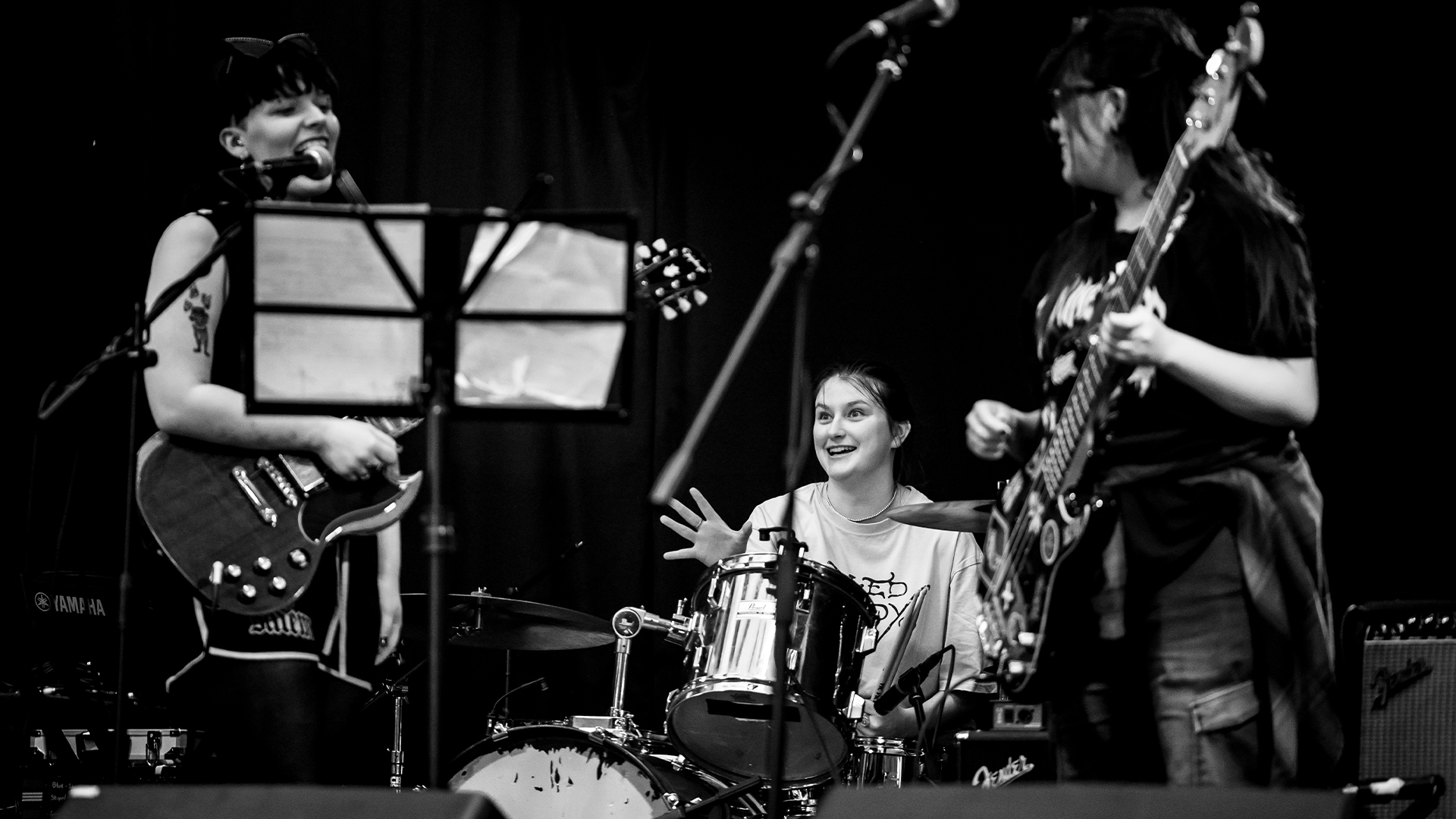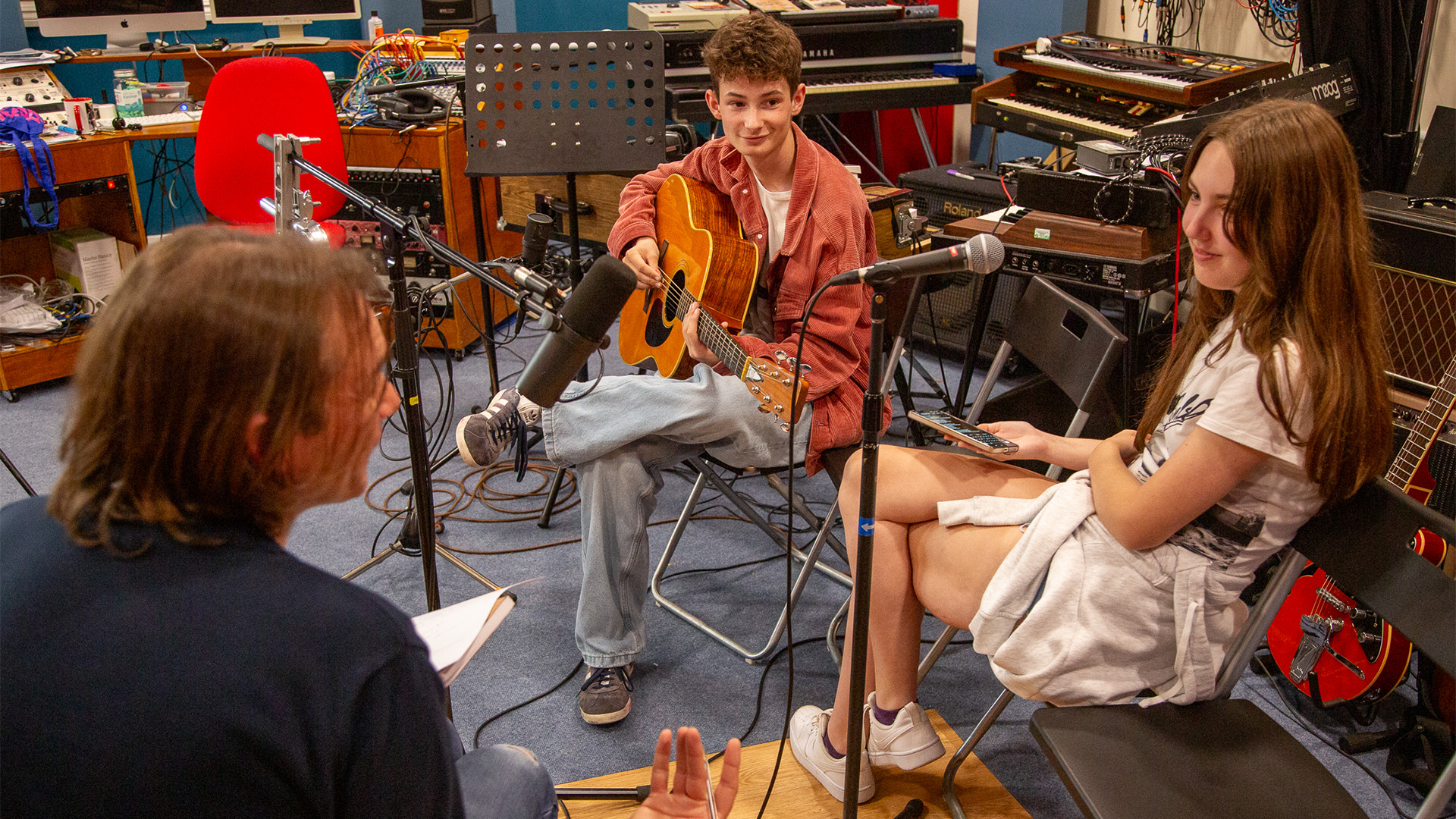
When we started Young Musicians Project in Sunderland eight years ago, we never thought of ourselves as youth workers. We were musicians who wanted to help young people write songs. We were setting up a music project. But as time went on, we realised there were other things going on. Music was the thing that got people though the door, but young people were getting far more out of it than learning how to play a guitar.
So, we talked a lot about the idea of creating a ‘third space’, somewhere that isn’t school and isn’t home. School wants you to behave and achieve. Even the most well-meaning parents want you to be happy, safe and doing well. But where do young people go to just be? We also talked about how we run sessions – relationship-based, youth-led, supporting participants to develop and take control of their own lives. Then we realised that we were running a youth project.
For the young people we work with, Young Musicians Project is their space: seven free, weekly music groups for 13–19 year olds. We open the doors, provide instruments, kit and professional musicians, and let them shape what happens. They choose what they want to (or don’t want to) make. They decide how quickly or slowly they do it. And they decide whether it’s for fun or because they want to do music in the future.
Read more:
- Alastair Campbell: ‘Young people need more than bursts of support to build their trust’
- Minister pressed on universal credit and child poverty targets as Labour reveals youth strategy
- Young people call on Rachel Reeves to bring in wealth tax: ‘Our generation is losing hope’
- Disability and poor health drives number of young people not in work or education to almost a million
We support them but, more importantly, they support each other. And they tell us it’s important by showing up week in, week out.
So, it’s brilliant to see the government finally acknowledge the importance of these kinds of spaces and this kind of work in the national youth strategy. In a decade where local authority youth services were cut by 73%, more than 1,000 youth centres closed, and more than 4,500 youth worker jobs disappeared, this renewed focus feels much needed and very overdue.