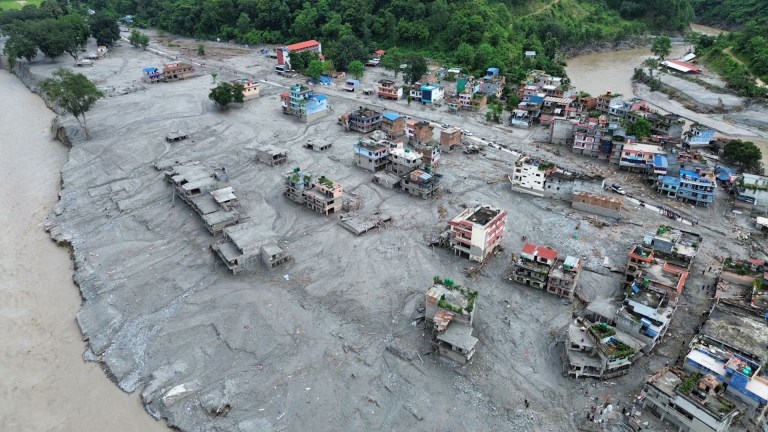
Of course, north Norfolk is not the only part of the country to suffer from chaos caused by excess rain in recent times, it’s just the most dramatic image.
And there is no doubt that this is due to climate change. Despite the best efforts of some deniers to claim it’s part of the cyclical nature of weather, the evidence is all around us. At the moment in deep puddles and swollen rivers. In March, it was in temperature. March was the 10th consecutive hottest month on record for global air and sea temperatures. Yet, despite the chaos brought by the weather, the impact on day to day lives of millions, on the crops in fields, I couldn’t find a line, at time of going to print, from Rishi Sunak, about commitments, new or simply reaffirmed, to doing something about it all.
Just a few months ago, he backed away from net zero and major British climate promises. He was, he said, on the side of drivers. The freak by election win in Uxbridge and South Ruislip that seemed to be fuelled by anger over the London ULEZ extension has a lot to answer for. When was the last time a by election changed the course of major government policy, and in turn all our futures?
Keep reading the journalism that powers our mission
Register free to continue and learn more about the stories, campaigns and the support we provide, helping people facing poverty across the UK.
At the time, Sunak also insisted that he’d back new North Sea oil drilling, green lighting the Rosebank development. His argument was that it would help stabilise energy production for the UK and keep jobs in the industry. He didn’t say a lot about the CO2 emissions that would come from burning the potential 300m barrels of oil. Or which nation would see their energy production stabilised.
The warning of 10s of thousands of jobs being lost is the big scare that is frequently used to slow down the green energy production move. It’s a legitimate fear. But it’s unlikely. In an interesting recent report on transition by PWC – yes, I know how to kick back and relax, it’s called The Energy Transition and Jobs report – there is a lot on timelines and how workers can move to fill the green skills gap from sunset jobs (such as jobs in coal-fired power stations). It provides interesting insight.
Among many stats, one jumped out. Even during the energy crisis, it says, quoting Stuart Wyness, CFO of Stena Drilling, one of the world’s biggest drilling contractors, when you’d expect a ‘huge asset push’ businesses didn’t want to commit to purchasing new drilling equipment. When those whose business is drilling are notifying us of slowdowns it does rather fly in the face of government chat and bluster and makes us question why the government would pull back from the inevitable.
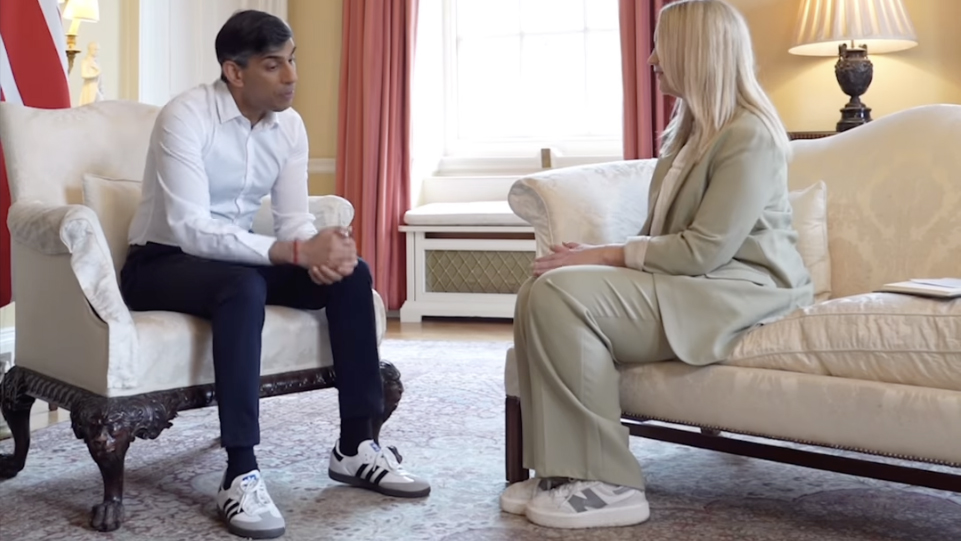
Perhaps Rishi Sunak would meet people whose homes are flooded or are crashing into the sea and tell them. Or maybe he doesn’t want to get his Sambas wet.
Paul McNamee is editor of the Big Issue. Read more of his columns here. Follow him on Twitter.
This article is taken from The Big Issue magazine, which exists to give homeless, long-term unemployed and marginalised people the opportunity to earn an income. To support our work buy a copy!
If you cannot reach your local vendor, you can still click HERE to subscribe to The Big Issue or give a gift subscription. You can also purchase one-off issues from The Big Issue Shop or The Big Issue app, available now from the App Store or Google Play