This week I turn 80. I’m fascinated as to why a poorly raised slum body who often ate nothing managed to survive to be an octogenarian. But here I am, on the eve of my big birthday, with my thoughts preoccupied with the Big Issue, like on many an eve before this.
My 80th, to me, is a celebration of 80 years of the Big Issue. But you might point out, it’s only been going 34 years! 35 in September. Well, look at it this way: if I hadn’t been through all that lived experience stuff – poverty, homelessness, rough sleeping, wrongdoing and incarceration – if I hadn’t inherited poverty – there wouldn’t have been the Big Issue. I wouldn’t have had the dispassionate drive to do something completely different from what the 501 other homeless groups were doing when we started in 1991.
Whichever way you look at it – 35 or 80 – the Big Issue has its own milestone birthday to celebrate this year. But sadly, it’s not all cakes and candles. 2026 will be one of the toughest years in our history. A multitude of factors are coming together to put pressure on our ability to deliver for our vendors. We will rise to the challenge, but the public has a big role to play in ensuring our survival too.
Read more:
- This is why Big Issue is ripe for reinvention
- Want a reason to be cheerful? Across Europe there are people trying to do the same thing as Big Issue
- I’ve written a Jane Austen spinoff for my 80th birthday. Help me sell a million copies
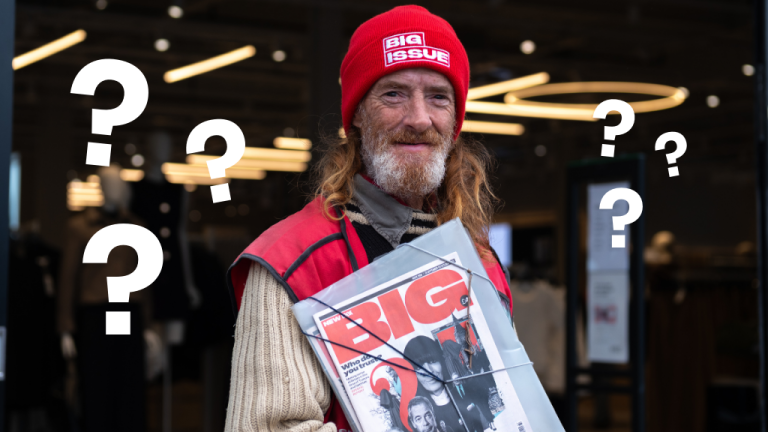
One reason for the Big Issue’s shifting fortunes is because of kindness. It would seem that the public do love our vendors – indeed many are giving their money, but choosing not to take the magazine. It is not poorly intended. I can appreciate why people may think they’re doing a good thing by leaving their vendor with a copy they can sell on to another customer. But this destroys the income Big Issue needs to make to run itself, and undermines the very principles we were established on back in 1991.
The whole point of the Big Issue was never charity. It was bringing homeless people to the marketplace to earn their own money through trade. Working, not begging. A way of restoring respect and dignity back to people left with none.