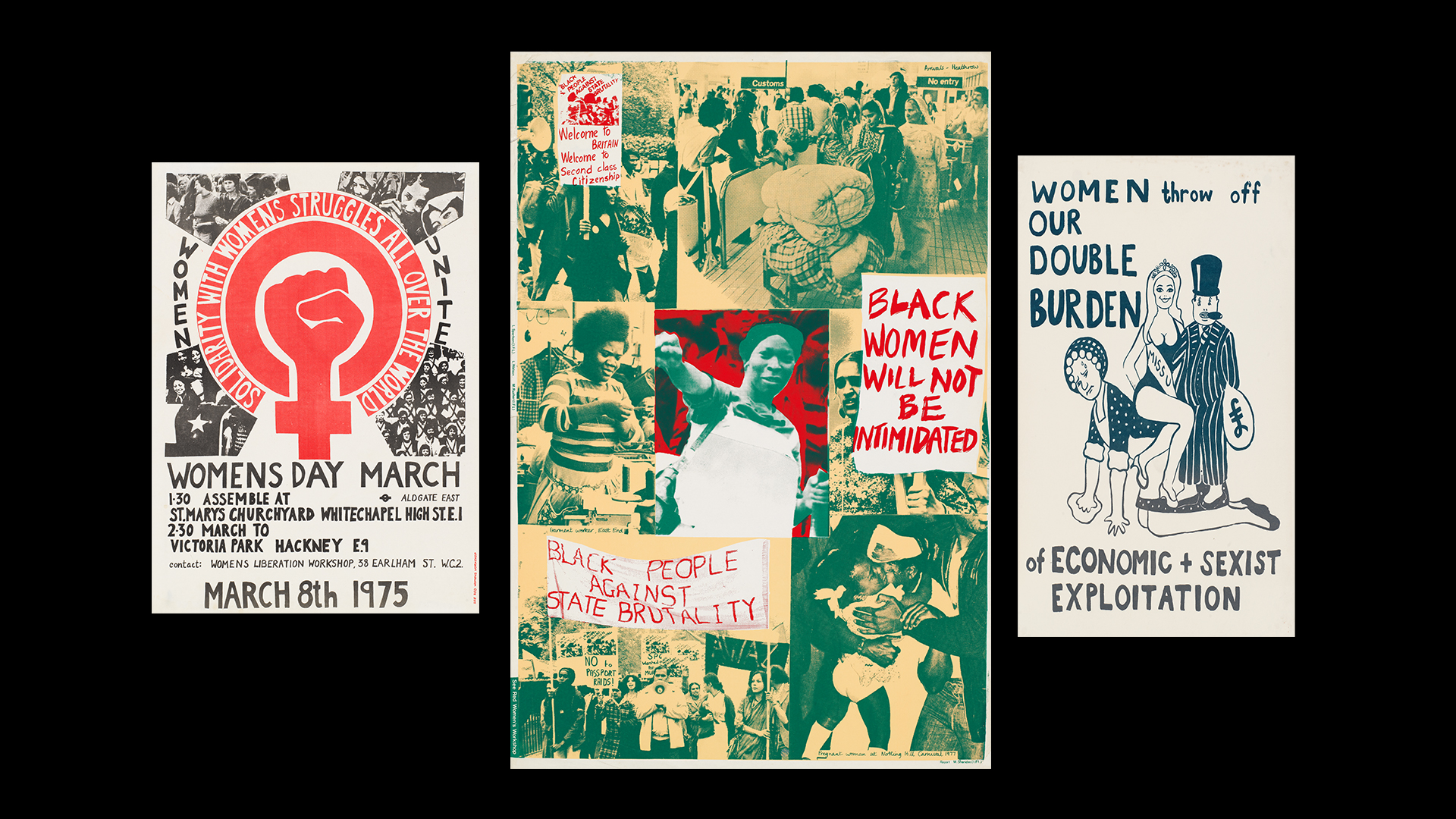
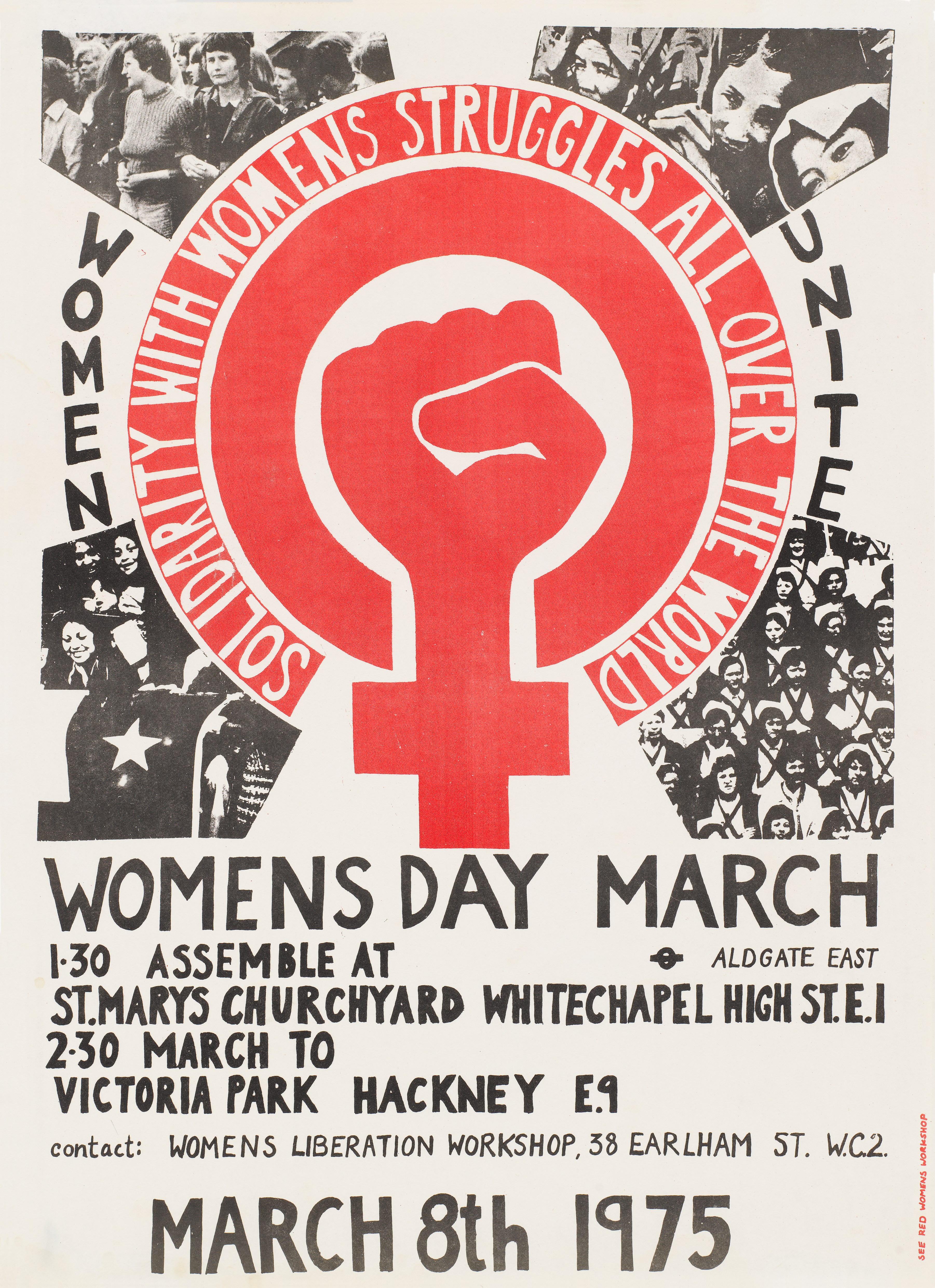
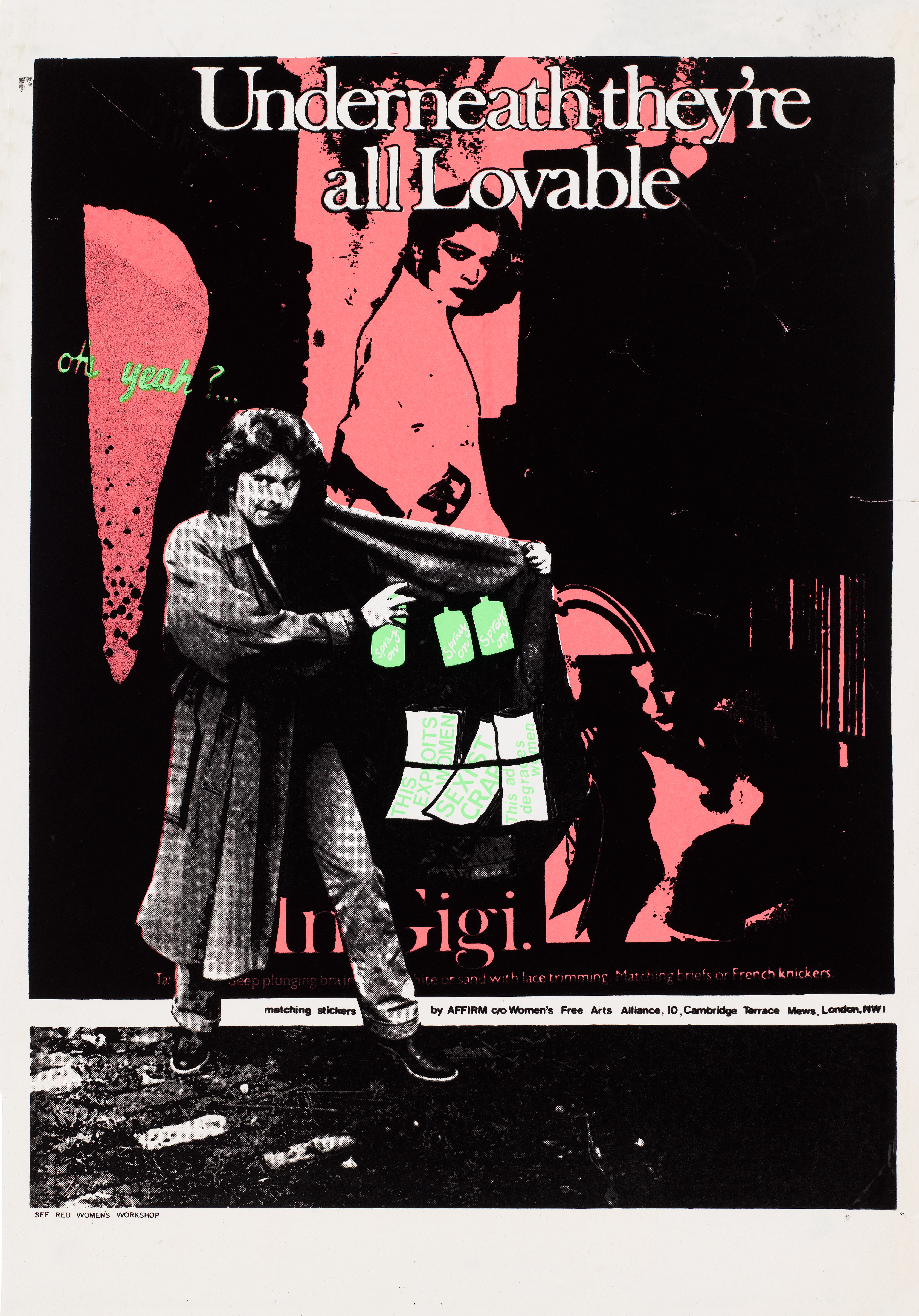
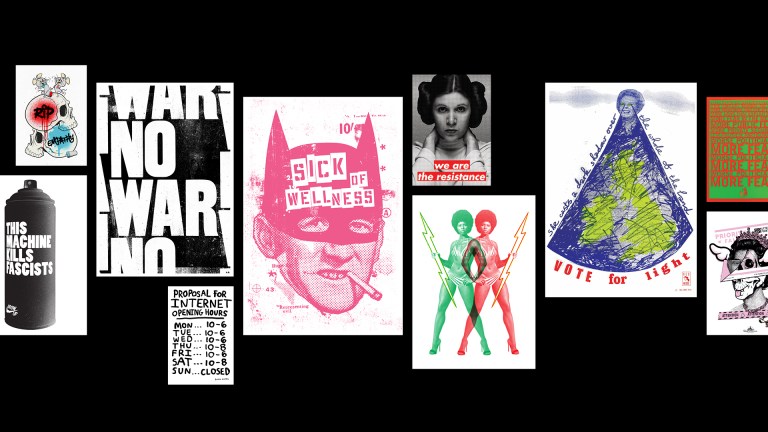
“And people would actually buy them,” says Robinson. “They were very cheap. I think the last ones I was involved in were about 90p each. It was very affordable at the time.”
Read more:
The posters in the exhibition were chosen to show “the visual impact of political posters that were on the streets and the range of issues covered”.
Keep reading the journalism that powers our mission
Register free to continue and learn more about the stories, campaigns and the support we provide, helping people facing poverty across the UK.
“I think the posters vary in terms of how very directly they speak now,” she says.
There were some which were rooted in a very specific period, such as one about the Greenham Common Women’s Peace Camp or other historical initiatives.
But Robinson suggests that these still can feel “relevant because of current protests and the rules around it, and also situations we’re in now with war and threats of war”.
A 1977 poster, Right on Jane, hits back at a Ladybird children’s book for suggesting that “Peter washes the car and Jane does the dishes”.
“Part of the value of preserving the legacy of See Red’s work is preserving those histories of things that happened,” Robinson adds.
She believes it’s important not to “lose sight of historical moments and struggles, and how these have developed, and to recognise the things that have changed and not changed”.
“Massively more women go into higher education and training and go on and have jobs. On the other hand, women in manual trades was a campaign at the time, and how many women builders do we see? How many female electricians do we see? Not very many. Equal pay we haven’t achieved yet.”
She says she feels particularly saddened by how relevant the anti-racist posters are today. “We really wish it wasn’t so relevant. We really wish it was a thing of the past,” she says.
There have been some who have tried to use the posters to promote anti-trans narratives, but Robinson says See Red is “absolutely not” anti-trans and has worked to distance itself from that movement.
“Feminism is still relevant, and people can argue about exactly how you can express that, but it’s so important, from equal pay to women’s health issues.”
“That’s one that’s changed. There’s a poster with a women’s body on it and the reproductive system, and nobody would bat an eyelid now. You would have to be in the heart of redneck America. But at the time, it was a really radical thing.”
See Red Women’s Workshop features in the Beyond the Streets exhibition, showing at Saatchi Gallery, London until 5 May 2027
Do you have a story to tell or opinions to share about this? Get in touch and tell us more.
Change a vendor’s life.
Buy from your local Big Issue vendor every week – and always take the magazine. It’s how vendors earn with dignity and move forward.
You can also support online:
Subscribe to the magazine or support our work with a monthly gift. Your support helps vendors earn, learn and thrive while strengthening our frontline services.
Thank you for standing with Big Issue vendors.